
农机制造

Search documents
价值股接过美股“反弹大旗”! 股息型防御策略受资金追捧 助力标普500指数四连阳
智通财经网· 2025-05-16 00:02
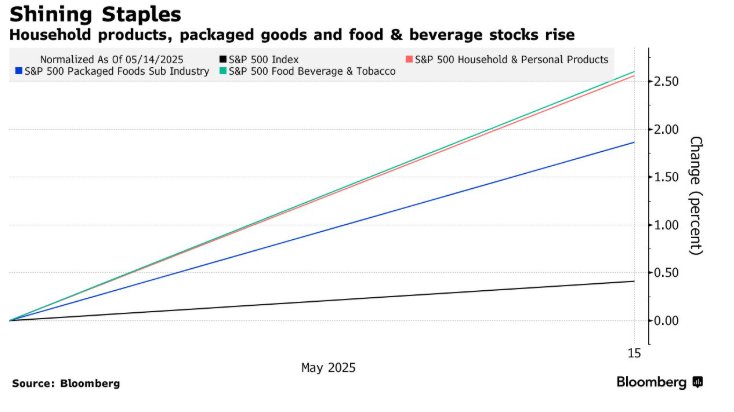
Market Performance - The S&P 500 index rose by 0.4% on Thursday, marking four consecutive days of gains, driven by strong performance in value stocks, particularly high-dividend stocks [1][2] - The Nasdaq 100 index only slightly increased by 0.1%, primarily due to declines in major tech stocks, which had previously led the market recovery [1] Sector Performance - Utility, consumer staples, and real estate sectors, characterized by relatively low valuations and stable dividends, led the market gains, with American Water Works, Campbell Soup Company, and Invitation Homes Inc. seeing significant stock price increases [2] - The consumer staples sector surged nearly 3%, real estate rose by 1.8%, and utilities increased by 2.1%, while technology and communication services sectors experienced declines of 0.7% and 0.4%, respectively [9] Economic Indicators - Weak retail sales and producer price data in April reinforced expectations for at least two interest rate cuts by the Federal Reserve this year, leading to a decline in U.S. Treasury yields [5] - Despite solid sales and profit growth, Walmart reported a drop in operating profit and warned of upcoming price increases due to rising tariff costs, resulting in a 0.5% decline in its stock price [5] Corporate Developments - Foot Locker's stock surged by 86% following news of its acquisition by Dick's Sporting Goods for approximately $2.4 billion, marking the largest single-day increase since at least 1980 [10] - Cisco provided a strong quarterly earnings outlook, driven by robust demand for AI network systems infrastructure, leading to a nearly 5% increase in its stock price [13] Trade Relations - Recent trade discussions between the U.S. and China resulted in a significant reduction of tariffs, with the new rates for most goods dropping from 145% to 30% [8] - Despite the positive trade developments, the average tariff rate in the U.S. remains at its highest level since 1934, indicating ongoing trade tensions [8]

麦浪伴青春——农田里的青年“发明家”
Xin Hua She· 2025-05-04 06:58
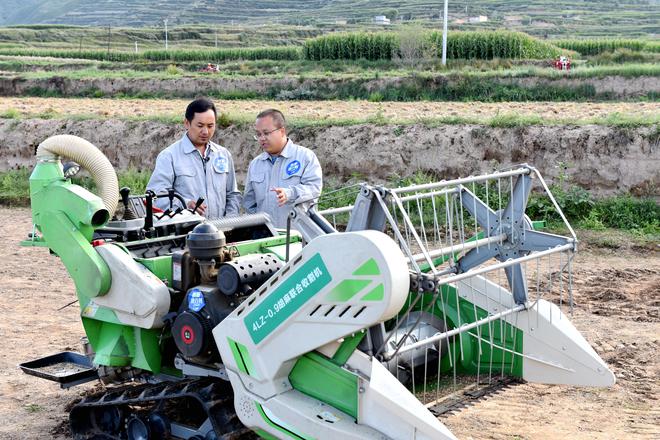
Group 1 - The core viewpoint of the article highlights the innovative contributions of Dai Fei and his research team in developing agricultural machinery tailored for specific crops in Gansu Province, China [1][2][5] - Dai Fei has been instrumental in the development of the first domestic sesame combine harvester and other specialized agricultural equipment, which have entered mass production [1][2] - The research team, consisting mainly of young professionals, emphasizes the importance of fieldwork in the design and improvement of agricultural machinery, dedicating significant time to practical testing in various conditions [2][3] Group 2 - Gansu Province has implemented a talent empowerment initiative, sending over 300 young talents annually to the industrial frontlines, fostering talent growth alongside industrial upgrades [3] - The agricultural innovations developed by Dai Fei's team are aimed at enhancing productivity in arid regions, with ongoing research focused on optimizing interactions between soil, machinery, and crops [5]
小农机发力“精准农业”大有可为
Jing Ji Ri Bao· 2025-05-01 22:03
Core Viewpoint - The development of small intelligent agricultural machinery in China is gaining momentum, particularly in hilly and mountainous areas, due to its lightweight, intelligent features, and adaptability to various agricultural scenarios [1]. Group 1: Industry Characteristics - The small intelligent agricultural machinery is designed to be compact and flexible, allowing it to navigate narrow paths and irregular plots, thus avoiding the inefficiencies of larger machinery [1]. - These machines incorporate advanced technologies such as intelligent sensors, remote communication, and Beidou positioning, which help reduce labor intensity and improve operational precision [1]. - Some models are multifunctional, capable of performing various agricultural tasks such as sowing, transplanting, fertilizing, and harvesting, offering high cost-performance ratios [1]. Group 2: Challenges and Opportunities - The industry faces challenges such as low concentration and an incomplete supply chain, leading to production costs that are significantly higher than traditional agricultural machinery, which deters many potential users [1]. - The complexity of machinery compatibility requires a higher skill level among agricultural workers, posing an additional challenge for widespread adoption [1]. - To establish a solid foundation for small intelligent agricultural machinery, breakthroughs in technology and collaborative efforts across the supply chain are essential [1]. Group 3: Policy and Support - Local governments are encouraged to enhance policy support through financial, tax, and fiscal measures to lower the R&D and manufacturing costs of small intelligent agricultural machinery [2]. - Initiatives such as promoting mechanization transformation and incentivizing enterprises and cooperatives to purchase these machines can help address the issues of availability and usability for farmers [2]. - Companies are urged to strengthen independent R&D, increase investment in technological innovation, and improve product quality while reducing production costs to elevate the intelligence level of small agricultural machinery [2].