
Food and Beverage

Search documents
Solving Brand Trade-Offs With Paradoxical Promises
Branding Strategy Insider· 2025-09-22 23:09
Core Insights - Cracker Barrel has reverted to its original brand proposition, while Jaguar is undergoing a significant rebranding effort, indicating a shift in brand strategies to address customer expectations and market demands [1][4][8] Brand Strategy - Brands are complex and multi-dimensional; a single-dimensional approach may not lead to profitability [2][20] - Customers desire brands that can satisfy conflicting needs without requiring trade-offs, indicating a preference for solutions that embrace paradoxes [3][11][20] Customer Expectations - Customers are uncompromising and seek brands that deliver satisfying and trustworthy experiences, maximizing both familiar and new benefits [4][11] - The notion that customers will accept a singular brand position is misleading; they prefer brands that can solve paradoxes in their offerings [3][12] Case Studies - Cracker Barrel's return to its original premise may not guarantee increased sales, as customers expect a blend of old and new [4][18] - Jaguar's rebranding strategy aims to attract a younger, affluent audience, but it risks alienating a significant portion of its existing customer base [5][8] Communication Challenges - Jaguar has struggled to effectively communicate its new business model and marketing strategy, leading to a shift towards long-form storytelling to convey its narrative [9][20] - The complexity of conveying a brand's story in a fast-paced environment poses challenges for effective marketing [9][20] Paradox Promise - A successful brand must recognize and address multifaceted customer problems, delivering a paradox promise that satisfies conflicting desires [11][20] - Historical examples, such as McDonald's and Coke, illustrate how brands can successfully navigate paradoxes to achieve enduring growth [12][13]


Starbucks workers take legal action after company refuses to reimburse them for items purchased after dress code changes
Yahoo Finance· 2025-09-22 21:18
This story was originally published on HR Dive. To receive daily news and insights, subscribe to our free daily HR Dive newsletter. Workers in Illinois, California and Colorado filed legal claims against Starbucks on Sept. 17, alleging the company violated state law when it refused to reimburse them for clothing purchased following a dress code change. Starbucks issued a new dress code in April, announcing the changes would take effect May 12. Per the new policy, workers would be required to wear solid bla ...

Magnum ice cream company to use NotCo AI for new products
Reuters· 2025-09-22 16:15
Group 1 - Unilever's Magnum ice cream business is planning to go public in November [1] - The company intends to utilize artificial intelligence from Chilean start-up NotCo to reformulate existing products and develop new ones [1]


A City Built on Corn Flakes Pins Hopes on New Kellogg Owner
WSJ· 2025-09-22 14:00
Core Insights - Declining cereal sales and job cuts have negatively impacted Kellogg's hometown, but the sale to Ferrero is seen as a potential revitalization for the business [1] Group 1: Company Performance - Kellogg's cereal sales have been declining, contributing to economic challenges in its hometown [1] - Job cuts at Kellogg have further strained the local economy [1] Group 2: Market Outlook - The acquisition by Ferrero is anticipated to provide a jolt to Kellogg's business operations and potentially improve local economic conditions [1]


Mars outlines EU capex plans
Yahoo Finance· 2025-09-22 13:27
Investment Plans - Mars is investing €1bn ($1.18bn) in production and R&D across 2025 and 2026, focusing on projects in France, Poland, and Spain [1] - The company has previously invested €1.5bn in its EU operations from 2020 to 2024 and plans further investments this year and next [1] Production Capacity Expansion - A project initiated in 2023 aims to increase production capacity at a chocolate factory in Janaszówek, Poland, with an investment of around €250m, expected to boost capacity by over 60% by 2027 [2] Strategic Focus - Mars is planning investments across all business segments in the EU, emphasizing modernization, innovation, and sustainability to ensure future-ready factories [3] - The CFO stated that the company's long-term view is to foster growth that benefits consumers in EU economies [4] Business Resilience and Community Impact - The investment strategy is aimed at building a stronger, more resilient business in Europe, enhancing innovation for consumers, and creating positive impacts in local communities [5] Merger Investigation Update - The European Commission has set a new deadline of 19 December to complete its investigation into Mars' planned $35.9bn takeover of Kellanova, following a previous suspension due to missing information [6][7] - Preliminary findings suggest that the merger could lead to higher prices for consumers due to Mars' increased negotiating power with retailers in the European Economic Area [7]
BRBR SECURITIES NEWS: Why did BellRing Brands Stock Drop 18%? Investors with Losses Reminded to Contact BFA Law
Globenewswire· 2025-09-22 11:07
Core Viewpoint - BellRing Brands, Inc. is under investigation for potential violations of federal securities laws, with concerns regarding the sustainability of its sales growth driven by temporary trade inventory loading rather than genuine consumer demand [1][2]. Group 1: Company Overview - BellRing Brands operates in the convenient nutrition category, primarily known for its brands Premier Protein and Dymatize, which offer ready-to-drink protein shakes and powders [2]. - The company reported that Premier Protein achieved an all-time high in household penetration, indicating strong demand and growth across all channels due to distribution expansion and promotional activities [2]. Group 2: Sales and Stock Performance - On May 5, 2025, BellRing disclosed that several key retailers reduced their weeks of supply, which would negatively impact growth in Q3 2025. Following this announcement, the stock price dropped by $13.96, or over 18%, from $77.34 to $63.38 per share [3]. - On August 4, 2025, the company announced disappointing quarterly consumption figures for Premier Protein RTD Shakes, leading to a stock price decline of $17.46, nearly 33%, from $53.64 to $36.18 per share [4].

Wall Street Breakfast Podcast: Berkshire Bids Farewell To BYD
Seeking Alpha· 2025-09-22 10:58
Group 1: Berkshire Hathaway and BYD - Berkshire Hathaway has fully exited its 17-year investment in Chinese electric vehicle maker BYD, marking the end of a significant partnership [2][3] - The investment was initially recommended by Charlie Munger, and BYD's shares fell approximately 3% following the news of the exit [3] - Berkshire Hathaway's investment value in BYD was reported as zero as of March 31, down from $415 million at the end of 2024, after initially investing $230 million for a 10% stake in 2008 [4] Group 2: Nissan's ProPilot System - Nissan is set to launch an updated version of its ProPilot driver-assist system in collaboration with UK-based Wayve Technologies, aiming to compete with Tesla's Full Self-Driving (FSD) [5][6] - The new system will still operate at Level 2 autonomy, requiring driver readiness to take control, with a rollout expected by March 2028 [6] - Nissan emphasizes safety features, including driver monitoring through internal cameras, and plans to introduce an autonomous vehicle ride-share service by 2027 [8][9] Group 3: Hamburger Helper Sales - Hamburger Helper has seen a sales increase of 14.5% in the year through August, attributed to consumers seeking budget-friendly meal options amid rising grocery prices [10][11] - The product's resurgence mirrors its popularity during the inflationary period of the 1970s, as consumers are also purchasing more economical food items like beans and rice [11]


The rise of connected food packaging
Yahoo Finance· 2025-09-22 09:29
Core Insights - Connected packaging is transforming the food industry by creating interactive and data-rich packaging that engages consumers and improves operational efficiency [1] - 89% of companies are adopting connected technologies, with smart packaging, especially QR codes, becoming essential in modern food retail and manufacturing [1] Group 1: QR Codes and Supply Chain Transparency - QR codes are enhancing traceability in the food supply chain, as demonstrated by Knorr's implementation of unique QR codes on seasoning packets that link to ingredient origins and production processes [2] - This initiative has increased consumer trust and helped Knorr regain market share despite competitive pricing pressures [2][3] Group 2: Allergen Safety - Allergen safety is a significant concern, with over half of individuals with food allergies in the UK reporting incidents due to mislabelled packaging [4] - Next-generation QR codes provide immediate access to detailed allergen information, thereby enhancing safety and consumer confidence [4][5] Group 3: Consumer Engagement - QR codes serve as a direct communication tool, allowing brands to share recipes, sustainability stories, and product information, thus fostering a deeper connection with consumers [6] - Tesco is trialling GS1 QR codes in select UK stores to provide real-time data from the supply chain to the shelf, enhancing the consumer experience and building brand loyalty [6][7] Group 4: Future of Connected Packaging - The growth of connected packaging is expected to continue, driven by consumer demand for transparency, sustainability, and enhanced engagement [8] - Future innovations may include augmented reality integration, personalized nutrition information, and seamless e-commerce experiences [8]
Apollo Global drops out of bidding for Coca-Cola’s Costa Coffee - report (APO:NYSE)
Seeking Alpha· 2025-09-22 09:26
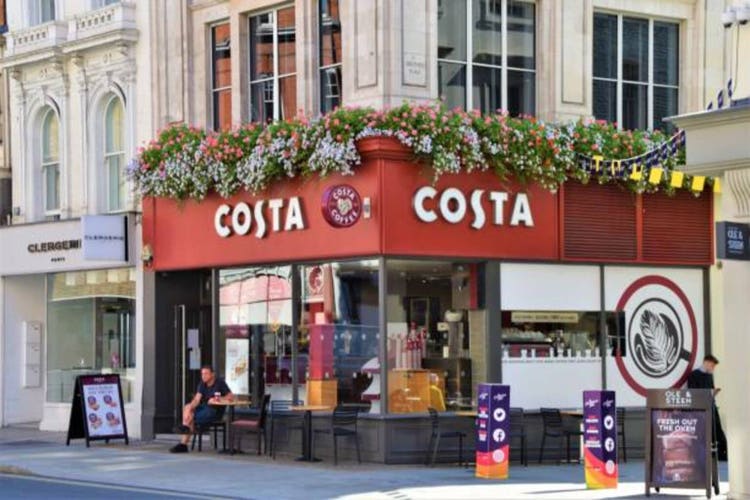
Group 1 - Apollo Global Management, a potential bidder for Britain's largest coffee chain, has opted not to submit a bid before the recent deadline [1] - The decision was reported by Sky News, indicating a shift in interest regarding the acquisition [1] - Coca-Cola was mentioned in the context of the bidding process, although further details were not provided [1]


The Economist-20.09.2025
2025-09-22 01:00
Summary of Key Points from the Conference Call Industry or Company Involved - The discussion primarily revolves around the **gig economy in China**, highlighting the transformation of the workforce and its implications for the economy and society [132]. Core Points and Arguments 1. **Growth of Gig Workers**: China's gig economy has expanded significantly, with **200 million** temporary workers, representing **40%** of the urban labor force, relying on flexible work arrangements [133]. 2. **Impact of Technology**: The rise of "superapps" has facilitated the growth of gig work, with **84 million** people engaged in platform-based employment, including ride-hailing and food delivery [134]. 3. **Manufacturing Sector Changes**: Gig work has infiltrated the manufacturing sector, with **40 million** casual workers filling jobs on-demand, indicating a shift from traditional employment models [135]. 4. **Flexibility and Earnings**: Many gig workers can earn more through job-hopping compared to traditional employment, with dedicated delivery drivers earning nearly **20%** more than migrant workers [135]. 5. **Challenges Faced by Gig Workers**: Despite the benefits, gig workers encounter difficulties such as lack of stable employment, limited access to public services, and challenges in settling in urban areas [136]. 6. **Lessons for Other Countries**: China's experience with gig work offers valuable lessons for other developing nations, emphasizing the need to rethink the social contract and provide better support for gig workers [137][142]. Other Important but Possibly Overlooked Content 1. **Youth Unemployment Concerns**: The youth unemployment rate in India stands at **16%**, raising concerns about the long-term implications of gig work and automation on job security [125]. 2. **Government Initiatives**: Both China and India are exploring ways to provide social security benefits to gig workers, indicating a shift towards recognizing the importance of this workforce [142]. 3. **Global Context**: The gig economy's growth in China reflects broader trends in emerging markets, where flexible work arrangements are becoming increasingly common [134]. This summary encapsulates the key insights from the conference call regarding the gig economy in China, its implications, and the lessons that can be drawn for other countries.