中式正餐连锁

Search documents
贾国龙的反思与百日风波后的西贝
第一财经· 2025-12-26 01:34
Core Viewpoint - The crisis faced by Xibei, triggered by a public criticism from a prominent figure, has led to a significant transformation in its operational strategy and business philosophy, emphasizing the need for a shift from scale-driven growth to a focus on quality and customer satisfaction [1][9]. Group 1: Crisis Response - Xibei has undergone a "100-day self-rescue" initiative, implementing measures such as product adjustments, price reductions, and enhanced food safety protocols in response to declining customer traffic and sales [1][4]. - The company has acknowledged the importance of customer feedback, leading to immediate changes in food preparation methods to improve quality and service [3][4]. - A significant price reduction of approximately 20% on over 30 menu items was executed to address customer complaints about high prices [4]. Group 2: Employee and Customer Engagement - Xibei has increased salaries for frontline employees by 500 yuan per month to boost morale and improve service quality [5]. - The company initiated a customer recall program offering various discounts and incentives to encourage repeat visits and regain customer trust [4][5]. Group 3: Strategic Shift - The crisis has prompted Xibei to reconsider its growth strategy, moving away from aggressive expansion towards a more sustainable model focused on quality and customer loyalty [7][9]. - The company is now prioritizing a "small but beautiful" approach, accepting a potential reduction in scale while enhancing the dining experience [9][11]. - Xibei's management is reflecting on the balance between standardization and the emotional value of freshly prepared food, recognizing the need to adapt to changing consumer preferences [11]. Group 4: Industry Context - The challenges faced by Xibei are indicative of broader issues within the Chinese dining industry, where many brands are grappling with growth anxiety amid rising costs and shifting consumer expectations [11][15]. - The need for a stable business environment has been highlighted as essential for the industry's long-term health, with recent government initiatives aimed at improving the operational landscape for restaurants [15][16].


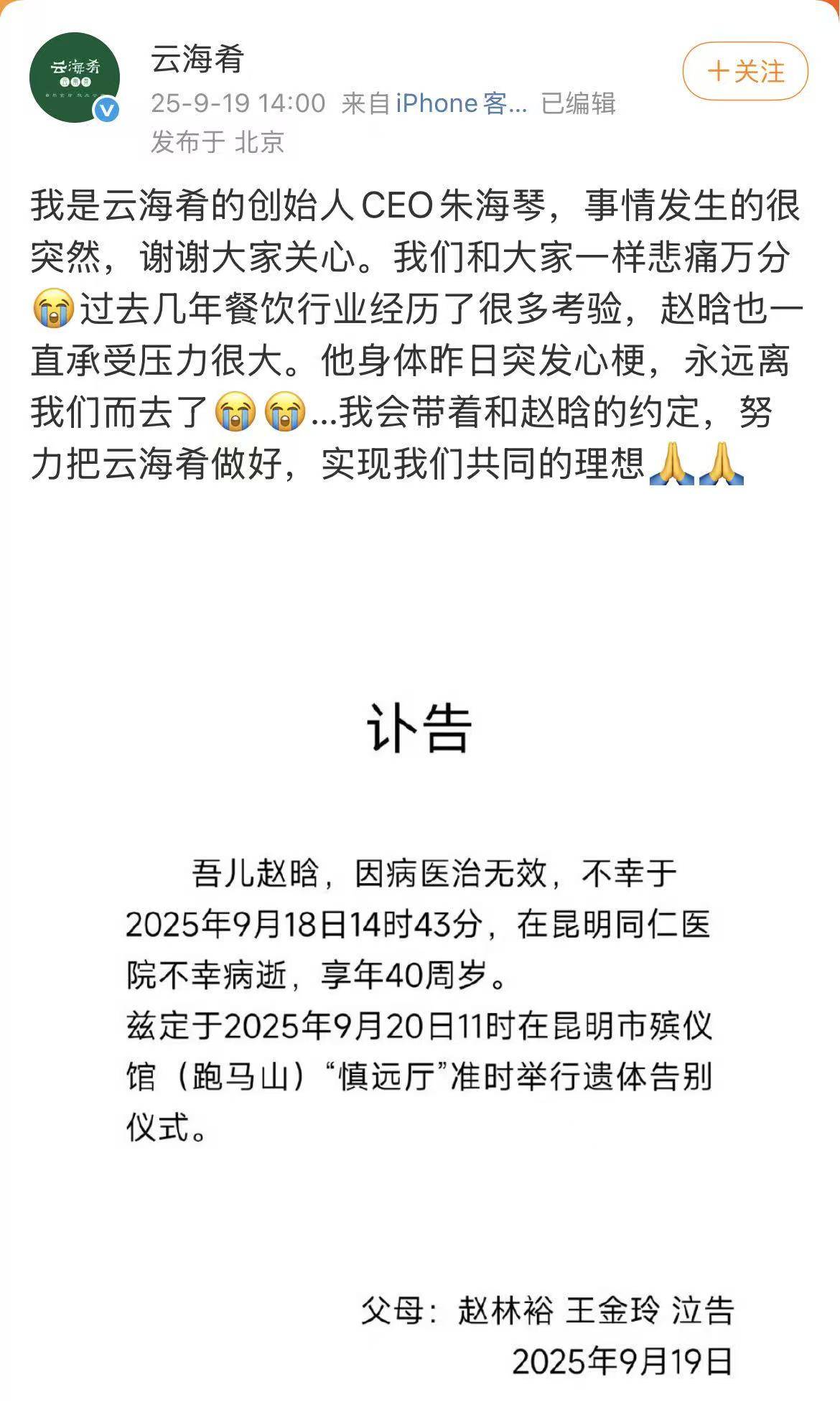
云海肴创始人赵晗去世,年仅40岁,他在中国人民大学读研期间创办了该品牌
Mei Ri Jing Ji Xin Wen· 2025-09-19 08:01
Core Points - Zhao Han, co-founder of Yunhaiyao, passed away, with the farewell ceremony scheduled for September 20, 2025, in Kunming [2] - Zhao Han was born in July 1985 in Kunming and was a graduate of Renmin University of China, where he co-founded Yunhaiyao in 2009 [3] - Under Zhao Han's leadership, Yunhaiyao became a well-known brand for Yunnan cuisine, promoting local food culture and ingredients [3][5] Company Overview - Yunhaiyao is a Chinese restaurant chain focusing on Yunnan cuisine, emphasizing fresh ingredients and diverse culinary culture [5] - The first Yunhaiyao restaurant was opened in Beijing in 2009, funded by personal savings from Zhao Han and his partners [5] - The company expanded its market presence with strategic openings, including a second restaurant in Zhongguancun in 2010 and its first restaurant in Singapore in 2019 [5] Achievements and Recognition - Yunhaiyao has received multiple awards, including being named a leading enterprise in Yunnan cuisine and recognized as one of the most popular restaurants by CCTV [7] - The brand has been acknowledged for its growth and innovation in the restaurant industry, receiving various accolades from industry organizations [7] - In 2024, Yunhaiyao was listed in the "Top 100 Chinese Restaurant Brands" by Hurun [7]
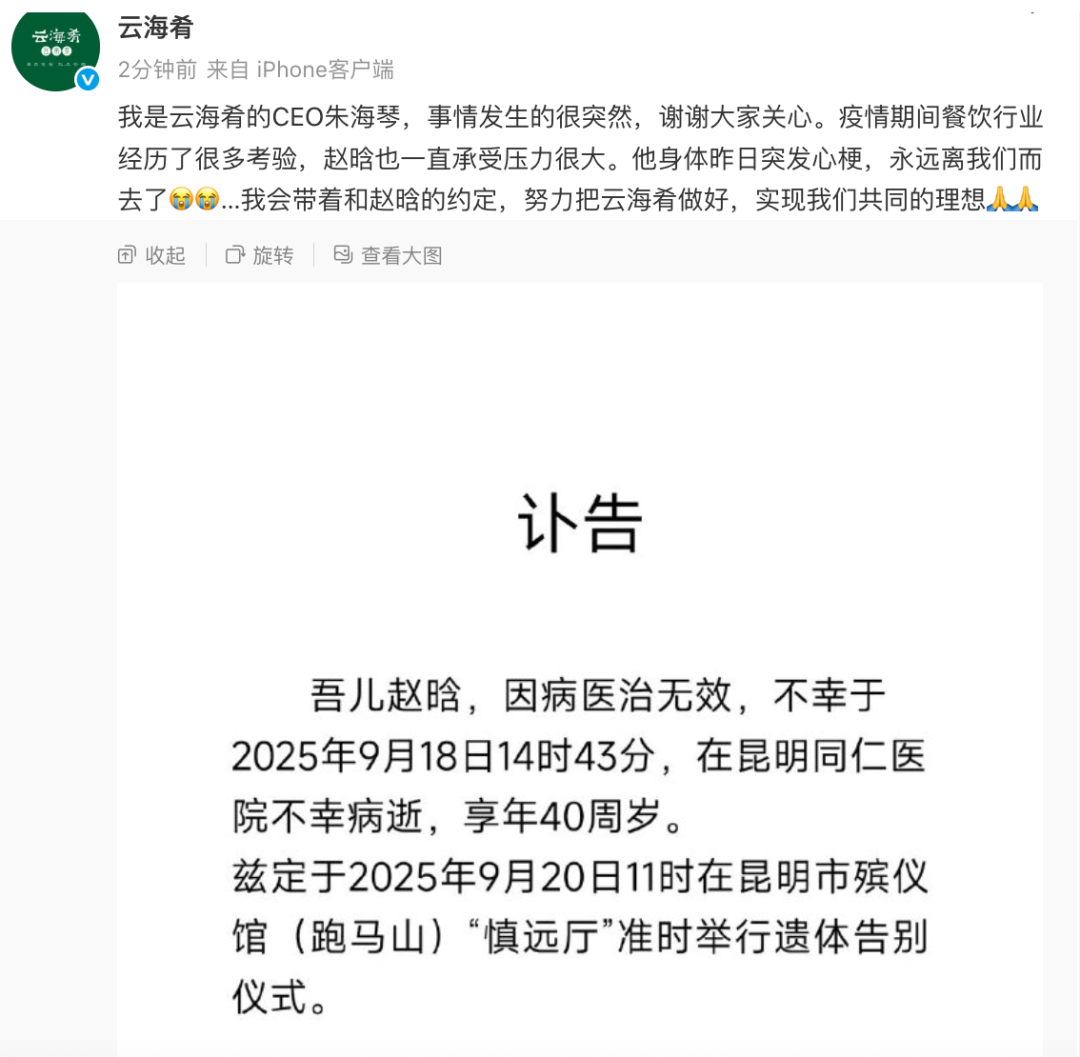
云海肴CEO朱海琴发文悼念赵晗
Sou Hu Cai Jing· 2025-09-19 07:24
Group 1 - The CEO of Yunhaiyao, Zhu Haiqin, announced the sudden passing of Zhao Han, expressing deep sorrow and gratitude for the support received [1] - Zhao Han was born on July 1, 1985, graduated from Renmin University of China, and co-founded Yunhaiyao in 2009 with his cousin and friends [3] - Yunhaiyao has rapidly expanded, opening over 100 restaurants in major cities like Beijing, Shanghai, Guangzhou, and Shenzhen within a decade, and currently operates 150 directly managed stores across nearly 20 cities [3]