会展经济

Search documents
陕西省人民政府新闻办公室举办新闻发布会介绍“聚焦打造万亿级文旅产业集群、聚力打好重点文旅产业链群建设硬仗”有关情况
Shan Xi Ri Bao· 2025-10-30 01:09
Core Viewpoint - The press conference focused on the development of a trillion-level cultural and tourism industry cluster in Shaanxi Province, emphasizing the importance of building key cultural and tourism industry chains as part of the provincial government's strategic initiatives [5][11]. Group 1: Industry Development Goals - The goal for 2025 is to achieve a total revenue of 910 billion yuan from key cultural and tourism industry chains, with expected growth rates of 6% for revenue and 5% and 7% for domestic tourist arrivals and total spending, respectively [6][32]. - The cultural and tourism industry's contribution to the province's GDP was 6.81% in the first half of the year, highlighting its growing significance in the overall economic landscape [5][31]. Group 2: Industry Performance Metrics - In the first three quarters, the total revenue from eight key cultural and tourism industry chains is expected to exceed 790 billion yuan, reflecting a year-on-year growth of 15.82% [6][32]. - The completion rate for 52 key tasks set at the beginning of the year has surpassed 85%, indicating strong progress in the implementation of initiatives [6][32]. Group 3: Infrastructure and Capacity Building - The province has seen the establishment of 598 A-level tourist attractions and the addition of 11 star-rated hotels, alongside the growth of 380 travel agencies [7][33]. - The cultural and creative industry has expanded, with the number of large-scale toy companies increasing from 45 to 52, and the annual output value of the plush toy industry in Ankang reaching 7.5 billion yuan [7][33]. Group 4: Economic Impact and Employment - The cultural and tourism sector has created over 145,000 jobs through various initiatives, including the establishment of 348 non-heritage workshops, with 28 of them generating over 30 million yuan in output [7][33]. - The integration of sports events into tourism has led to new consumption patterns, with sports events becoming a significant draw for tourists [8][34]. Group 5: International Engagement and Marketing - The province hosted 50 promotional events targeting inbound tourism, resulting in 584,600 inbound visitors and total spending of 943 million USD in the first three quarters, marking increases of 75.61% and 79.04%, respectively [9][35]. - The establishment of the cultural tourism consumption exhibition at the Silk Road International Expo has set new records for participation and engagement [9][35]. Group 6: Policy and Regulatory Environment - The government has introduced 16 measures to enhance the business environment for the cultural and tourism sector, focusing on safety, order, and integrity [10][36]. - Collaborative efforts between government, industry associations, and businesses aim to improve service quality and visitor experience [10][36].

瞭望·治国理政纪事|示范先行开创服务贸易新局
Sou Hu Cai Jing· 2025-08-02 02:57
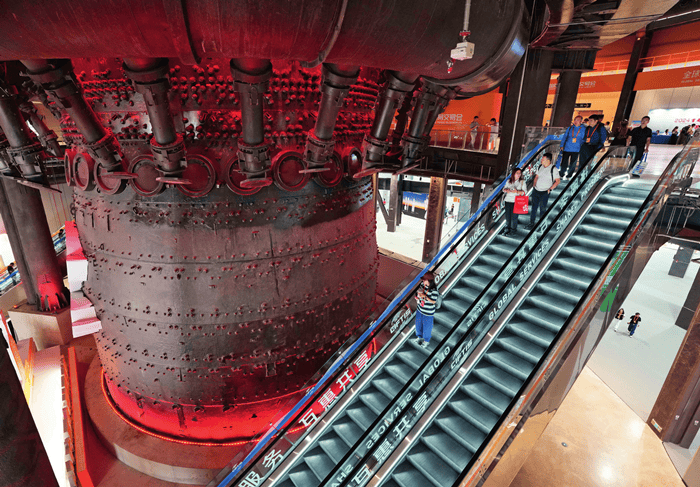
Core Viewpoint - Beijing is positioned as a national leader in the service industry opening up, with a focus on creating a comprehensive demonstration zone for expanding service industry openness and establishing a free trade pilot zone characterized by technological innovation, service industry openness, and digital economy [1][3][4]. Group 1: Economic Performance - Over the past five years, Beijing's open economy has shown resilience and vitality, with actual foreign investment reaching $66.18 billion, accounting for 8.4% of the national total, and over 90% of this investment coming from the service sector [5]. - The import and export volume is expected to exceed 3.6 trillion yuan for three consecutive years from 2022 to 2024, with the service trade scale ranking among the top three in the country, achieving an average annual growth rate of 9.4% since 2021 [5]. - The proportion of actual foreign investment in free trade pilot zones has increased from less than 10% to over 20% [5]. Group 2: Policy and Institutional Innovation - Beijing has implemented over 70 national breakthrough policies and promoted more than 80 innovative achievements, forming a virtuous cycle of pilot—breakthrough—promotion [2][15]. - The city is planning to deepen systematic and integrated institutional innovation, focusing on key areas to strive for early trials and promote international cooperation in industrial and supply chains [2][16]. - The service industry accounts for over 85% of Beijing's economy, with a focus on transforming abstract concepts of "institutional openness" into tangible, replicable institutional results [15][18]. Group 3: Infrastructure and Ecosystem Development - Beijing has constructed a multi-dimensional matrix connecting exhibition economy, high-end manufacturing, digital trade, and biomedicine, creating a three-dimensional open ecosystem [11][20]. - The city has established a permanent venue for the China International Fair for Trade in Services (CIFTIS) at Shougang Park, which has attracted over 1.2 million visitors and facilitated nearly a thousand cooperation agreements in various fields [8][9]. - The comprehensive bonded zones have expanded from 1 to 4, focusing on core industries and achieving significant growth in import and export values [10][11]. Group 4: Foreign Investment Attraction - In the past five years, nearly 7,900 new foreign-funded enterprises have been established in Beijing, reflecting the success of the "two zones" initiative [20][21]. - The city has optimized its business environment, focusing on the core demands of foreign enterprises to ensure they are willing to come, stay, and develop [20][21]. - The stable policy environment has significantly enhanced foreign investment confidence, with 2,012 new foreign-funded enterprises established in 2024, a year-on-year increase of 16.4% [21][22].