
高端制造

Search documents
【活动报名】“X-Day”西丽湖路演社国防科技专场
投资界· 2026-03-30 03:24AI Processing
ICBC (E) 中国工商银行 测115分行 " X-DI " 西丽湖后演社 硬 核 科技 筑 基 · 产业 融 合 发 2026/4/2 (星期四) 14:30-17:30 深圳大学城 国际会议中心2楼 EFFITSKE "X-DAY"西丽湖路演社国防科技专场 大容航空航天技术(深圳)有限公司以"深耕试训服务,打造智能蓝 军"为战略定位,以超音速靶机(无人机)作为公司无人智能系统战略的 突破口,同时布局无人车(靶车)和无人船(靶船),探索其他无人智能系 统装备,构建海陆空一体化的试训体系,打造"形神兼备"的智能蓝军。 西安数合信息科技有限公司 14:00-14:30 。 签到 14:30-14:35 ○ 主持人开场 14:35-14:40 @ "X-DAY"西丽湖路演社成果展示 14:40-15:30 。 深度对话:国防科技自主创新与 资本赋能产业转化 15:30-17:30 。 精品项目DEMO (12分钟路演,8分钟投资人Q&A) 西丽湖路演社国防科技专场暨南山区 14:30-17:30 0 产业投资和并购闭门对接会(定向邀请) ·大容航空航天技术(深圳)有限公司 · 西安数合信息科技有限公司 ·中科先 ...


顺义科创:能进能退,做一个“耐心”的产业培育者
FOFWEEKLY· 2026-03-16 10:00
Core Viewpoint - The article emphasizes the importance of being a long-term nurturer of industries rather than chasing short-term projects in a competitive market, advocating for a patient capital approach to foster sustainable growth in technology sectors [2][4]. Group 1: Industry Development and Investment Strategy - In 2025, China is accelerating its move towards the global technology frontier, with local hard-tech companies emerging in fields like AI, semiconductors, and biomedicine, supported by significant investments from state-owned enterprises [3]. - The investment strategy of Shunyi Technology Innovation Group focuses on being an "industry organizer" rather than merely a financial investor, aiming to create a complete ecosystem that integrates capital and services [7][11]. - Shunyi Technology Innovation Group has invested in 20 funds with a total scale exceeding 1000 billion yuan, contributing 2.5 billion yuan and supporting over 170 projects, showcasing its commitment to long-term industrial development [11]. Group 2: Unique Operational Model - Shunyi's operational model includes a clear division of responsibilities among its departments, ensuring a comprehensive support system for enterprises from incubation to industrialization [11]. - The "district-town linkage" model enhances Shunyi's reach in industry cultivation, with partnerships to establish town-level investment funds tailored to local industrial strengths [12]. - The focus on integrating government guidance with market mechanisms aims to create a closed-loop system of "fund + implementation + ecosystem," positioning Shunyi as a core capital engine for high-end manufacturing and technological innovation [12]. Group 3: Long-term Nurturing and Exit Strategy - The concept of "patient capital" is central to Shunyi's investment philosophy, emphasizing the need for a systematic nurturing process that respects industry rules and supports long-term growth [17]. - Shunyi's exit strategy is designed to be a natural outcome of the growth process, ensuring that exits align with the maturity of the invested enterprises [19]. - The nurturing system includes an online and offline integrated support framework, significantly reducing response times to enterprise needs and providing comprehensive assistance throughout different stages of development [18]. Group 4: Future Vision and Recommendations - The collaboration with Tsinghua alumni seed funds aims to create a high-precision radar for early detection of innovative projects, enhancing Shunyi's ability to identify and support potential industry leaders [16]. - The article advocates for a return to value creation in venture capital, encouraging more patient capital to support early-stage hard-tech projects that require long-term technological breakthroughs [23]. - The ultimate goal is to establish Shunyi as a preferred location for the industrialization of top-tier technological achievements, fostering a self-sustaining cycle of innovation and growth [16][24].

中金 | 提质谋新,砥砺前行——“十五五”规划纲要解读
中金点睛· 2026-03-15 23:48
Core Viewpoint - The article discusses the key points of the "15th Five-Year Plan" (2021-2025) of China, emphasizing its strategic goals, development indicators, and major tasks, which aim to guide the country's economic and social development in the coming years [1]. Overall Orientation - The "15th Five-Year Plan" is positioned as a critical period for achieving significant breakthroughs in strategic tasks related to Chinese-style modernization, moving from merely starting well to achieving major breakthroughs [2]. - The development environment has shifted from a period of significant strategic opportunities to one characterized by increased uncertainty and complexity, necessitating proactive and high-quality policy responses [2]. Development Goals - The plan outlines seven major goals, including achieving significant results in high-quality development, enhancing self-reliance in technology, and improving national security [3]. - By 2035, the plan aims for substantial increases in economic, technological, and defense capabilities, with a focus on achieving a per capita GDP level comparable to that of developed countries [3]. Development Indicators - The plan sets 20 key indicators across five areas: economic development, innovation-driven growth, social welfare, green low-carbon initiatives, and security [4]. - Economic indicators emphasize maintaining GDP growth within a reasonable range while focusing on structural optimization and quality improvement [4]. - Innovation indicators include a target for R&D expenditure to grow by over 7% annually and an increase in the digital economy's contribution to GDP from 10.5% in 2024 to 12.5% by 2030 [5]. Major Strategic Tasks - The plan prioritizes building a modern industrial system, emphasizing the importance of advanced manufacturing and the development of emerging industries such as AI, biotechnology, and renewable energy [6]. - It highlights the need for a strong domestic market and effective demand stimulation, with specific measures to boost consumption and investment [7]. - The plan also focuses on promoting common prosperity, improving population development strategies, and enhancing social welfare [8]. Security and Development - The plan emphasizes the modernization of the national security system and the importance of ensuring economic security, food security, and public safety [10]. - It outlines 109 major engineering projects aimed at supporting the strategic tasks, with a focus on modern infrastructure, green transformation, and urban-rural integration [11]. Capital Market Outlook - The "15th Five-Year Plan" is expected to reshape investment logic in China's capital markets, promoting a virtuous cycle of policy direction, capital allocation, and market ecology [12]. - The plan's clarity and long-term vision are anticipated to boost investor confidence and contribute positively to the capital market [13]. - Long-term conditions for a stable and gradual market growth are seen as more favorable, with a focus on new quality productivity and structural reforms [14]. Investment Opportunities - Key sectors for medium to long-term investment include digital technology, space economy, high-end manufacturing, new consumption patterns, and biotechnology [15]. - The plan's emphasis on modern industrial systems and green low-carbon initiatives presents significant investment opportunities in related industries [16].

2026年3月五维行业比较观点:把握成长机遇-20260310
EBSCN· 2026-03-10 07:21
Core Insights - The report introduces a "Five-Dimensional Industry Comparison Framework" that integrates market style, fundamentals, liquidity, trading, and valuation to analyze industry performance comprehensively. It emphasizes that a single indicator is insufficient for effective industry comparison and that future market drivers should be weighted more heavily [3][9]. - Historical backtesting from 2016 to February 2025 shows that industries with higher scores in the framework tend to perform better, with annualized returns of 11.8% for the top group and -10.5% for the bottom group. A long-short strategy between the top and bottom groups yielded an annualized return of 23.7% [21][23]. - In March, the report predicts a market style shift towards growth and balanced styles, with high valuation sectors expected to perform better. Key industries to focus on include electric power equipment, defense, electronics, and machinery [33][34]. Five-Dimensional Industry Comparison Framework - The framework consists of five dimensions: market style, fundamentals, liquidity, trading, and valuation, combining both objective data and subjective judgments to enhance flexibility [8][9]. - The scoring process involves adjusting weights based on market conditions, with a focus on subjective assessments in market style, liquidity, and valuation, while fundamentals and trading rely on objective data [12][20]. March Insights and Industry Recommendations - The report suggests that in March, the focus should be on growth and balanced styles, with high-scoring industries such as electric power equipment, defense, electronics, and machinery being highlighted for potential investment [34][39]. - Specific recommendations include companies like Shenghong Co., Yangguang Electric, and Siyi Electric in the electric power sector, which are expected to benefit from trends in energy storage and grid investments [37][39]. Market Style - The report anticipates fluctuations in economic expectations and market sentiment, leading to a rotation between growth and balanced styles. It predicts that financing funds will dominate the liquidity landscape in March [33][34]. Fundamentals - In March, the weight assigned to fundamentals is reduced to 20% due to it being a non-earnings season, with equal weighting applied to other dimensions [33][34]. Liquidity - The report indicates that financing funds are expected to be the main source of liquidity in March, with public funds likely to see net inflows [33][34]. Trading and Valuation - The trading dimension focuses on identifying industries with potential positive catalysts that have not yet been fully reflected in stock prices, while the valuation dimension assesses industries based on market sentiment and expected future performance [20][21]. Recommended Industries - **Electric Power**: Focus on hydrogen, ammonia, and integrated energy systems, with companies like Shenghong Co. and Yangguang Electric highlighted for their growth potential [39]. - **Electronics and Communication**: Companies such as Zhongji Xuchuang and ShenNan Circuit are recommended due to their roles in AI and data center infrastructure [41]. - **High-End Manufacturing**: Companies like Anpeilong and Jingjin Equipment are noted for their strong market positions and growth prospects in robotics and AI-related sectors [43]. - **Automotive**: Companies like Geely and NIO are recommended for their strategic advancements in smart and high-end vehicles [46]. - **Pharmaceuticals**: Continuous focus on innovative drugs and medical devices is emphasized, although specific companies are not detailed in the provided content [48].
策马逐牛9:把握一季报最强线索:涨价+出海
CAITONG SECURITIES· 2026-03-08 11:54
Group 1: Overview of the Two Sessions - The growth target has been adjusted downwards from 5% to a range of 4.5-5%, with a continued focus on consumption and domestic demand [2][9] - Fiscal spending is expected to remain close to last year's levels, with a total deficit of 11.9 trillion yuan for 2026, comprising a deficit of 5.89 trillion yuan, special bonds of 4.4 trillion yuan, and special treasury bonds of 1.6 trillion yuan [2][9] - Special treasury bonds of 2.5 billion yuan will be allocated for new consumption, with an additional 1 billion yuan for fiscal-financial collaborative special funds [2][9] Group 2: Performance Trading Period Post Two Sessions - The correlation between market trading signals and performance changes will strengthen after the Two Sessions, with a focus on price increases and overseas expansion [3][13] - The upcoming month will see a concentrated disclosure of annual and quarterly reports, which will significantly influence market trading styles and directions [3][13] - High-prosperity industries are expected to focus on overseas "offensive HALO" and domestic "defensive HALO" strategies [3][15] Group 3: Impact of Rising Oil Prices on Asset Classes and Industries - During the oil price upcycle, stocks and commodities tend to perform well, with a monthly increase probability of 73% for stocks and 68% for commodities [4][26] - In contrast, during the downcycle, gold becomes a focus, with a monthly increase probability of 62% [4][26] - Key cyclical industries during the oil price upcycle include food and beverage, banking, automotive, home appliances, coal, and chemicals, which show significant cyclical characteristics [4][26] Group 4: Investment Strategy Directions - The report recommends focusing on "offensive HALO" strategies, which include price increases and overseas expansion in sectors such as TDI, amino acids, and high-end manufacturing [5] - Defensive HALO strategies involve sectors with low fund holdings, such as coal and construction, as well as TMT sectors with low correlation [5] - Emerging technology sectors like commercial aerospace, domestic computing power, and quantum communication are highlighted as potential catalysts for investment [5]
深市代表委员热议深化创业板改革:制度包容再升级 精准赋能新质生产力
证券时报· 2026-03-06 12:59
Core Viewpoint - The China Securities Regulatory Commission (CSRC) is set to enhance the listing standards for the ChiNext board, aiming to support innovative enterprises in new consumption and modern service industries, thereby injecting stronger capital momentum into the cultivation of new productive forces [1][4]. Group 1: Reform and Impact - The reform of the ChiNext board is expected to improve the capital market's ability to serve technological innovation and the real economy, providing a more favorable environment for innovative enterprises [1][4]. - The introduction of more precise and inclusive listing standards is anticipated to alleviate financing difficulties for new business models and industries [1][2]. - The continuous enhancement of institutional inclusiveness is a key theme of the ChiNext board reform, allowing for a broader range of companies, including those with light assets and R&D-driven models, to access financing [2][3]. Group 2: Success Stories and Examples - Companies like Betta Pharmaceuticals have successfully utilized the ChiNext board's diverse financing channels to bring multiple new drugs to market, showcasing the board's role in supporting innovation [2]. - The ChiNext board's flexible standards have enabled firms like Maipu Medical to transition from organic growth to a dual growth strategy through capital operations [3]. - The reforms have allowed companies such as Zhifei Biological to optimize their debt structure and enhance R&D funding through various financial instruments [3]. Group 3: Future Outlook - The ongoing reforms are seen as a crucial step in implementing the new "National Nine Articles," which aims to refine institutional design and attract more high-quality innovative enterprises to the ChiNext board [4]. - The ChiNext board is positioned to play a vital role in fostering high-quality development for growth-oriented innovative enterprises, facilitating a high-level circulation of technology, capital, and the real economy [4].

响应2026年政府工作报告,汇通达网络(9878.HK)创新发展、促进循环、助力振兴
Ge Long Hui· 2026-03-05 05:43
Core Insights - The government work report outlines the overall requirements for economic and social development by 2026, emphasizing the role of companies like 汇通达 in aligning with national policies and enhancing the digital transformation of rural markets [1] Group 1: Economic Development and Market Strategy - 汇通达 is positioned as a leading industrial internet platform, integrating new technologies and models such as AI and innovative supply chains into urban and rural circulation, thereby accelerating the upgrade of county-level commercial systems [1] - The company is focusing on the digital transformation of rural stores, utilizing its self-developed "千橙云AI智能大模型" to provide precise product selection, intelligent replenishment, and marketing decision support, enhancing consumer experience in rural areas [1] - 汇通达 is expanding into new retail sectors like "hard discount" and "bulk snacks," employing a diversified model of self-operated, member store franchises, and socialized franchises to stimulate consumer demand in both urban and rural markets [1] Group 2: Technological Innovation and Industry Integration - 汇通达 leverages its "千橙云AI智能大模型" to empower the entire supply chain and retail sectors, creating smart manufacturing cases in industries such as home appliances and furniture, promoting the digital transformation of traditional industries [2] - The company has acquired a leading domestic "AI+BI" firm, "认知边界," to accelerate the smart transformation of e-commerce merchants and has taken control of a high-end manufacturing listed company, "金通灵," to facilitate the transition from high-end manufacturing to cutting-edge technology [2] - Looking ahead, 汇通达 aims to build a smart technology product service platform driven by "intelligent agents and big data," providing comprehensive support for hard tech companies in areas like AI, robotics, and brain-machine interfaces [2] Group 3: Rural Revitalization and Social Responsibility - 汇通达 is committed to its mission of improving farmers' lives by integrating technology and training resources to promote new skills and technologies in rural commercial markets, fostering new agricultural businesses and individuals [3] - The company focuses on talent revitalization and circulation revitalization to inject sustainable development into the rural economy [3]
两会前瞻及资本市场影响
2026-03-04 14:17
Summary of Conference Call Records Industry Overview - The conference call discusses the implications of the "14th Five-Year Plan" and the upcoming "15th Five-Year Plan" on the Chinese economy and capital markets, with a focus on GDP growth targets and industry priorities for 2026 [1][2][3]. Key Points and Arguments Economic Growth Targets - The GDP growth target for 2026 is expected to be between 4.5% and 5.0%, with local weighted targets averaging around 5.1%, indicating a slight decline from previous years [1][6]. - To achieve the long-term goal of doubling the economy by 2035, a GDP growth rate of approximately 4.4% is necessary during the "15th Five-Year Plan" period [2]. Industry Priorities - The "15th Five-Year Plan" prioritizes the construction of a modern industrial system over technological innovation, marking a significant shift in policy focus [2][3]. - Key industries highlighted include integrated circuits, industrial mother machines, and the promotion of AI-related initiatives [3]. Market Dynamics - The A-share market is expected to shift from valuation-driven growth to performance-driven growth, with non-financial profit growth projected to rebound from 4% in 2025 to 8% in 2026 [1][18]. - The focus will be on cyclical resource stocks benefiting from supply-demand reversals and price increases, alongside growth stocks in sectors like optical communication and high-end manufacturing [1][23]. Monetary and Fiscal Policy - The monetary policy is anticipated to favor reserve requirement ratio cuts over interest rate reductions, with a fiscal deficit rate expected to remain around 4% [1][8]. - The market will closely monitor the implementation of long-term special bonds and other fiscal tools to stimulate economic activity [8]. Risk Management - The conference emphasizes the need to address risks in the real estate sector and local government debt, with a cautious approach towards small-cap stocks due to high valuation levels [1][10]. - The focus on stabilizing the real estate market includes policies to control inventory and improve supply-demand balance [10]. Capital Market Outlook - The capital market is expected to see a shift towards a more balanced investment strategy, focusing on both growth and cyclical stocks [14][23]. - The historical performance of the "Two Sessions" indicates a generally positive market sentiment leading up to and following the meetings, with expectations for A-shares to maintain a relatively strong performance in early 2026 [12]. Investment Strategies - The investment strategy for 2026 will emphasize selective growth opportunities in technology, high-end manufacturing, and consumer sectors, while also considering cyclical resource investments [22][24]. - The focus on "going global" remains a long-term trend, with an emphasis on strategic resource sectors amid geopolitical tensions [24]. Additional Important Content - The conference highlights the importance of building a unified national market to enhance the flow of goods and resources, addressing local protectionism [9]. - The potential impact of external geopolitical conflicts on Chinese assets is discussed, with a focus on maintaining market resilience despite short-term volatility [15][16]. This summary encapsulates the key insights and strategic directions discussed in the conference call, providing a comprehensive overview of the anticipated economic and market developments for 2026.
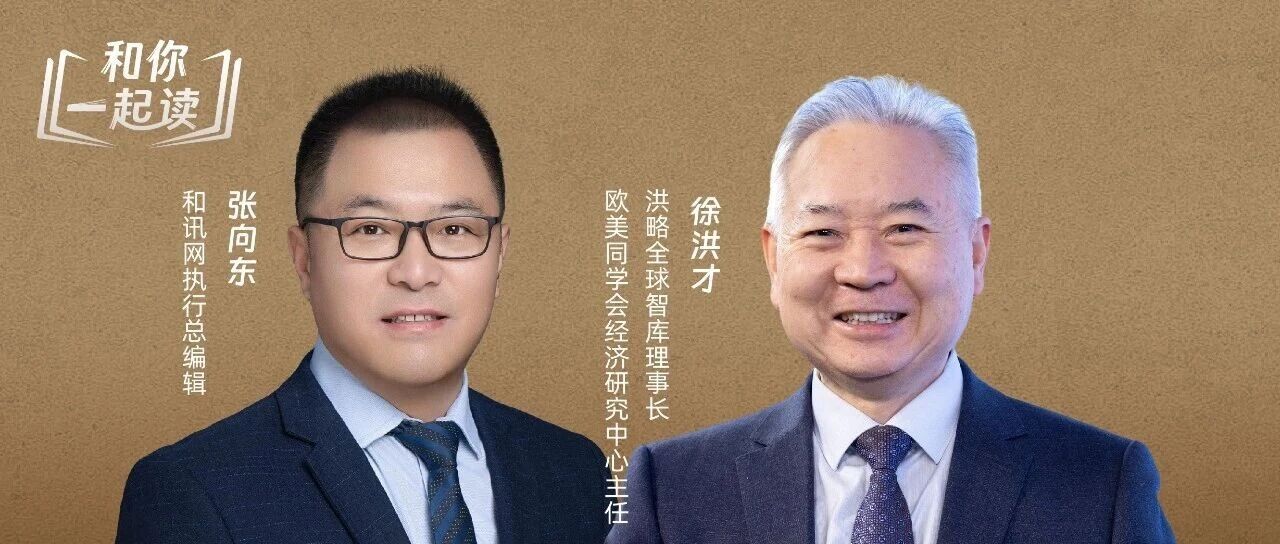
徐洪才:A股上涨的大逻辑与小风险
和讯· 2026-03-04 09:31
Group 1 - The article discusses the recent performance of the A-share market, highlighting a collective rise in major indices and significant gains in raw material sectors such as chemicals, oil and gas, steel, and non-ferrous metals [2] - Predictions indicate that the market may enter a "two sessions market" characterized by "oscillating upward" trends starting from March 4, with sectors related to commodities, consumer demand, AI computing, and infrastructure beginning to gain momentum [2] Group 2 - The article presents data from the National Bureau of Statistics showing that in January 2026, the Consumer Price Index (CPI) rose by 0.2% month-on-month and year-on-year, while the Producer Price Index (PPI) increased by 0.4% month-on-month but decreased by 1.4% year-on-year [3] - The analysis indicates that while consumer demand is recovering, the core CPI's mild increase reflects ongoing challenges in stabilizing domestic demand [3][4] Group 3 - The article emphasizes that rising prices signal a boost in demand, which can enhance corporate operating rates and stimulate investment expectations, thus serving as a positive signal for listed companies [5] - It is noted that persistent low PPI can dampen corporate investment enthusiasm, despite nominal interest rates being lowered, as actual financing costs remain high, affecting future expectations [12] Group 4 - The article outlines the need for proactive fiscal policies to drive demand, suggesting that fiscal spending should focus on public services and shortfall areas, while monetary policy should ensure relative liquidity [13][14] - It highlights the importance of increasing income levels for low-income groups to enhance consumption capacity, particularly through social security reforms [19] Group 5 - The article discusses the challenges of investment decline, attributing it to factors such as deep adjustments in the real estate sector, overcapacity in low-end manufacturing, and insufficient investment in high-end manufacturing [20] - It suggests that improving the business environment and encouraging private investment are crucial for reversing negative investment growth trends [20] Group 6 - The article mentions that the capital market's core attractions for 2026 lie in sectors driven by domestic demand, artificial intelligence, and new infrastructure, with a structural opportunity emerging from a new wave of technological innovation [22] - It notes that the recent bull market was driven by policy guidance and corrections of unreasonable pricing, with institutional investors playing a stabilizing role [22]
广佛联合出台大湾区首个外国人才异地互认措施
Xin Lang Cai Jing· 2026-02-28 02:43
Core Viewpoint - The article discusses the implementation of measures to facilitate the mobility of foreign talent between Guangzhou and Foshan, marking a significant step in the collaboration between the two cities' technology departments [1]. Group 1 - The measures are the first joint policy specifically targeting the cross-city movement of foreign talent since the implementation of the Guangdong Province Science and Technology Innovation Regulations [1]. - Guangzhou aims to create a market-oriented, law-based, and international first-class business environment, with the number of foreign talents working in the city ranking among the top three in the country [1]. - The new policy introduces a mutual recognition mechanism for high-end foreign talent (Category A) in the Guangdong-Hong Kong-Macao Greater Bay Area, allowing for "one approval, two cities recognition" without the need for repeated submission of identification materials [1]. Group 2 - The measures include an "exemption submission" list for foreign talents who have already obtained work permits in Guangzhou or Foshan when transferring between the two cities [2]. - Certain documents, such as the highest degree certificate, work experience proof (if the job position remains unchanged), and criminal record checks or health reports for internal transfers within multinational companies, are exempt from submission [2].