
农机制造业

Search documents
金融推动农机产业发展的探索与提升路径 基于吉林省四平市农机产业的调查
Jin Rong Shi Bao· 2025-11-27 05:11
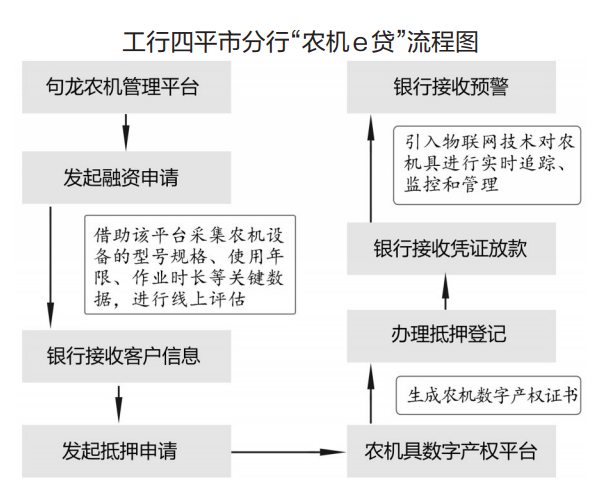
Core Viewpoint - The 2025 Central Document No. 1 emphasizes the promotion of high-quality development in agricultural machinery, highlighting its increasing role in agricultural production [1] Group 1: Current Development of Agricultural Machinery Industry in Siping - Siping is a significant agricultural machinery manufacturing base in China, with over 30 production enterprises, including 7 large-scale enterprises and 2 national-level specialized "little giant" enterprises. The total output value of large-scale agricultural machinery enterprises in 2024 is projected to be 800 million yuan, accounting for approximately 50% of the province's total [3] - The city is accelerating industrial clustering and platform construction, with a planned area of 4.4 square kilometers for the China Black Land Protection Agricultural Machinery Industry Innovation Demonstration Base, aiming for a total investment of 10.9 billion yuan [3] - Financial subsidies and policy support are being implemented, with the central government providing preferential subsidies for high-performance agricultural machinery, and Siping actively promoting enterprises to apply for various support policies [3] Group 2: Financial Support Practices for Agricultural Machinery Industry - Financial institutions in Siping have explored effective ways to support the agricultural machinery industry, with a total loan balance of 97.368 million yuan and cumulative investment of 181.517 million yuan as of September [5] - Four typical financing guarantee models have been established to support the agricultural machinery industry [5] Group 3: Financing Guarantee Models - The "Agricultural Machinery e-Loan" online mortgage model by ICBC Siping Branch utilizes a digital property rights platform to standardize and streamline the mortgage process, with a total of 30.266 million yuan disbursed [6] - The "Patent + Asset" combination pledge model by Jilin Bank Siping Branch allows for financing through the pledge of core patents and real estate, with a total of 75 million yuan in loans issued [7] - The "Real Estate Mortgage" loan model by Postal Savings Bank Siping Branch provides loans based on real estate collateral, with a total of 43 million yuan disbursed [8] - The "Online + Offline" credit quick loan model by Construction Bank Siping Branch offers flexible credit solutions for agricultural machinery enterprises, with a total of 21.062 million yuan disbursed [9] Group 4: Challenges Facing Financial Support for Agricultural Machinery Industry - The agricultural machinery industry faces significant cyclical risks, with a projected decline in output value of 16.7% in 2024 due to various factors, including reduced market demand and cash flow unpredictability [10] - Difficulties in valuing and disposing of collateral, particularly for rapidly depreciating agricultural machinery, pose risks for financial institutions [11][12] - Insufficient collaboration between financial institutions and government guarantee agencies leads to ineffective risk-sharing and support [13] - Poor information-sharing channels among agricultural departments, financial institutions, and enterprises hinder decision-making efficiency [14] Group 5: Recommendations - Establish a risk monitoring platform to predict industry risks and design differentiated credit products for cyclical enterprises [15] - Innovate mortgage methods and improve disposal channels for collateral to reduce loan loss risks [16] - Optimize cooperation between financial institutions and government guarantee agencies to clarify responsibilities and improve risk-sharing [17] - Create an information-sharing platform to enhance data accuracy and improve credit assessment efficiency [18]


金融精准支持“三夏”生产
Jing Ji Ri Bao· 2025-06-28 21:56
Core Viewpoint - The financial institutions are actively supporting the summer grain harvest by providing specialized financial services to ensure sufficient credit supply and facilitate the entire agricultural production chain [1][2][3]. Financial Support for Grain Harvest - Banks are optimizing financial supply to meet the concentrated funding needs of grain enterprises, ensuring that credit is available for grain storage and agricultural inputs [2]. - Major state-owned commercial banks are taking the lead in focusing on grain-producing areas, assessing funding needs, and arranging special credit plans [2]. - In Jiangsu, as of the end of May, the balance of inclusive agricultural loans reached 12.6 trillion yuan, with loans in key grain areas amounting to 454.345 billion yuan [2]. Agricultural Loan Initiatives - In Dong'a County, the Agricultural Bank's financial service team is actively engaging with farmers to understand their funding needs, resulting in a total of 72.62 million yuan in grain purchase loans granted to 90 households [3]. - The Agricultural Bank of Shandong Province reported a county loan balance of 573.3 billion yuan, an increase of 25.3 billion yuan since the beginning of the year [3]. Mechanization and Financial Challenges - Over 800,000 combine harvesters were deployed nationwide during the summer harvest, with a mechanization rate exceeding 75% [4]. - Despite the advancements, agricultural machinery dealers face financing difficulties due to long production cycles and slow downstream payments [4]. Innovative Financial Solutions - The Bank of China in Zhumadian has introduced an ecological chain service for agricultural machinery, providing comprehensive credit of 5 million yuan to address funding challenges [5]. - As of May 31, the bank has issued 1.25 billion yuan in agricultural machinery loans to support various aspects of the industry [6]. Digital Financial Services - Digital financial services are playing a crucial role in the summer harvest, with banks simplifying loan approval processes and ensuring rapid fund disbursement [6]. - Large state-owned banks are utilizing IoT and big data to offer online agricultural services, enhancing efficiency in serving farmers [6]. Future Directions for Agricultural Finance - There is a need to advance the digital transformation of agricultural credit services, utilizing big data to create agricultural credit profiles [7]. - Improving rural digital infrastructure and enhancing the adoption of digital financial services are essential for better support of agricultural financing [7].