刺绣机制造

Search documents
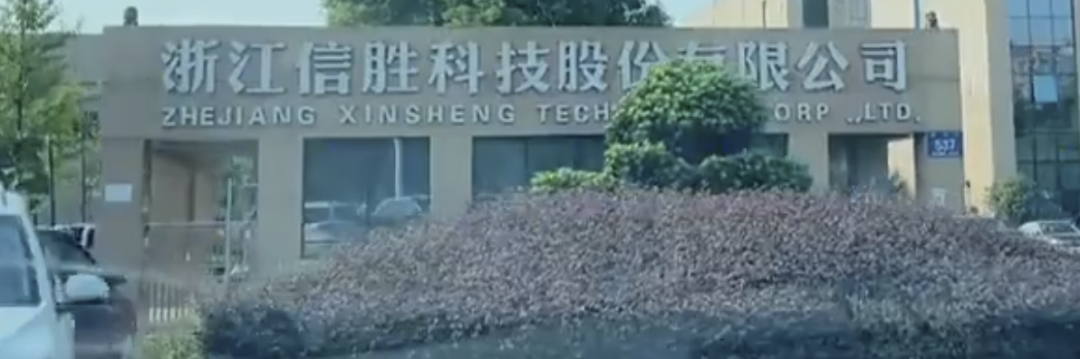
信胜科技IPO:刺绣机龙头,2025年净利润大涨87%,未来工厂加码智能转型
梧桐树下V· 2026-03-10 11:09
Core Viewpoint - The article highlights the upcoming IPO of Xinxing Technology, a leading company in the domestic computer embroidery machine industry, aiming to raise 449 million yuan for smart factory construction and to enhance its industry-leading position [1][17]. Industry Overview - China is the largest manufacturer of computer embroidery machines, accounting for over 80% of global production, with an estimated industry revenue of approximately 7.5 billion yuan in 2024 [4]. - The export value of Chinese embroidery machines has shown steady growth, with figures of 3.347 billion yuan in 2022 and projected increases to 4.864 billion yuan in 2025, reflecting year-on-year growth rates of 49.15%, 3.83%, 39.96%, and 63.52% respectively [4]. Company Positioning - Established in 2004, Xinxing Technology has become a core leader in the domestic computer embroidery machine sector, holding a market share of about 13% and recognized as a top enterprise in the industry [6]. - The company offers a comprehensive product range, including flat embroidery machines and specialty machines, catering to diverse customer needs [6]. Technological Advancements - Xinxing Technology has developed key technologies such as self-balancing and multi-axis transmission, addressing industry challenges like high head amplitude and synchronization issues [9]. - The company provides a variety of machine specifications, with head counts ranging from single to 270 heads and speeds from 900 to 1500 RPM, allowing for customized embroidery solutions [7]. Financial Performance - The company's revenue is projected to grow from 570 million yuan in 2022 to 1.481 billion yuan in 2025, with a year-on-year growth rate of 43.78% [10]. - The net profit attributable to the parent company is expected to rise from 50.16 million yuan to 220 million yuan during the same period, indicating a strong growth momentum [12]. Product Structure and Market Strategy - Flat embroidery machines are the main revenue source, contributing around 90% of total income, with clothing and lace machines accounting for over 80% of the main business revenue [14]. - Xinxing Technology is focusing on high-value-added products, such as multi-head and high-speed machines, which have led to an increase in gross margin from 20.27% in 2022 to 25.58% in the first half of 2025 [14]. Market Expansion - The company is strategically expanding both domestically and internationally, targeting key textile regions in China and emerging markets like India and Pakistan, where demand for embroidery machines is growing significantly [15][16]. - In 2024, overseas revenue is expected to reach 528 million yuan, accounting for 53.22% of total revenue, driven by strong demand in international markets [15]. Future Development Plans - The IPO proceeds will be used for projects including the construction of a smart factory with an annual production capacity of 11,000 embroidery machines and 330,000 machine parts, as well as upgrades to the company's information systems and R&D center [17][18]. - Xinxing Technology is collaborating with Meiyun Zhishu to implement advanced smart manufacturing practices, aiming to enhance product quality and operational efficiency [19]. Conclusion - The upcoming IPO represents a significant milestone for Xinxing Technology, marking its entry into the capital market and its commitment to transitioning from traditional manufacturing to high-end, intelligent production [22].


趋势研判!2026年中国刺绣机行业壁垒、产业链、产量、产值、出口额、竞争格局及发展趋势:技术更新迭代较快,行业进入恢复性增长的周期[图]
Chan Ye Xin Xi Wang· 2026-01-20 01:18
Core Viewpoint - The embroidery machine industry, particularly in China, is experiencing a recovery phase with significant growth in production and export values, driven by global economic recovery and increased demand in downstream industries [1][5]. Industry Definition and Classification - Embroidery machines, also known as sewing machines for embroidery, are categorized into ordinary mechanical embroidery machines and computer embroidery machines, with the latter being the dominant type in the market [2][3]. - Computer embroidery machines can be further divided into single-head and multi-head machines, showcasing advanced technology and automation capabilities [2]. Current Industry Status - China is the world's leading manufacturer of computer embroidery machines, accounting for approximately 80% of global production [3][4]. - The industry is entering a phase of recovery, with production expected to grow from 60,000 units in 2023 to 69,000 units in 2024, and further to 78,000 units in 2025 [4]. Industry Value - The industry value is projected to increase from 5 billion yuan in 2023 to 7.5 billion yuan in 2024, and potentially exceed 10 billion yuan in 2025 [4][5]. Export Growth - China's embroidery machine exports are expected to reach 4.864 billion yuan in 2024, marking a year-on-year increase of 39.96%, and further grow to 6.614 billion yuan in 2025 [5]. Industry Chain - The upstream of the embroidery machine industry includes raw materials like steel and electronic components, while the midstream involves manufacturing processes, and the downstream applications span various sectors such as fashion and home textiles [6]. Industry Barriers - The computer embroidery machine sector is characterized by high technical barriers, requiring strong R&D capabilities, as well as challenges related to production equipment, branding, and talent [7]. Competitive Landscape - The global market is dominated by brands from China and Japan, with Japanese companies like Tajima and Barudan leading in high-end segments, while Chinese brands are gaining ground in mid to low-end markets [9]. - Key players in the domestic market include Zhejiang Xinsong Technology, Zhejiang Yuelong, and others, with increasing concentration as leading firms enhance their competitive advantages [9][10]. Development Trends 1. **Market Growth Potential**: The downstream textile and apparel industries are expected to drive demand for embroidery machines, supported by government policies promoting consumption [11]. 2. **Concentration of Leading Enterprises**: The competitive landscape is shifting towards larger firms with better resources, leading to a decline in the market share of smaller companies [12]. 3. **Demand for High-Performance Machines**: There is a growing demand for multi-head and high-speed embroidery machines to improve efficiency in the competitive textile sector [13][14]. 4. **Intelligent and Green Development**: The industry is moving towards smart, digital, and environmentally friendly solutions, incorporating advanced technologies for production efficiency [15]. 5. **Expansion of Application Fields**: The scope of embroidery machines is broadening to include specialized applications, reflecting a shift towards differentiation and innovation in product offerings [16].

信胜科技IPO:夫妻控股99%、现金充裕却募资补流、低研发高毛利,带病闯关?
Xin Lang Cai Jing· 2026-01-15 03:28
Core Viewpoint - The IPO application of Xinxing Technology is characterized by impressive growth metrics, including revenue growth from 600 million to over 1 billion and a doubling of net profit, but underlying governance issues, fundraising contradictions, external dependencies, and growth uncertainties create a complex risk profile [3][11]. Governance Issues - The company is under near-absolute family control, with the actual controllers holding 99.05% of voting rights, undermining corporate governance mechanisms [4][12]. - Frequent changes in key management positions, including three changes in the CFO role, raise concerns about internal management stability and the authenticity of financial information [4][12]. - Related party transactions lack independence and fairness, particularly with overlapping business operations between the company and its related party, Shengong Machinery [4][12]. Fundraising Contradictions - Despite holding 372 million in cash and nearly 200 million in bank wealth management, the company plans to raise 50 million through the IPO for working capital, contradicting its claims of financial strain [5][13]. - The fundraising motives appear questionable, as the company has a history of significant dividends that primarily benefit the actual controllers [5][13]. Investment Projects - The core fundraising project, the construction of a facility for producing 11,000 embroidery machine frames, involves an investment of 250 million, which is over half of the total fundraising amount [6][14]. - The company plans to expand single-head embroidery machine production despite low utilization rates, which raises concerns about the feasibility of such expansion [6][14]. - The implementation of key projects is managed by subsidiaries with less than 60% control, indicating potential risks for minority shareholders [6][14]. External Dependencies - Approximately 40% of the company's revenue is derived from India and Pakistan, heavily reliant on two major clients, which exposes the company to geopolitical risks [7][15]. - Past events, such as a 50% drop in orders from one client due to a foreign exchange crisis in Pakistan, highlight the vulnerability of the company's revenue model [7][15]. Supply Chain Risks - The company relies almost entirely on two suppliers for critical components, creating a "bottleneck" risk that could severely impact production continuity [7][15]. - The lack of self-developed or alternative solutions for key components places the company in a precarious position regarding bargaining power and operational stability [7][15]. Profitability Concerns - The company boasts a high gross margin, which has increased against industry trends, but its R&D expense ratio has declined to 3.1%, significantly below the industry average [8][16]. - The increase in gross margin appears to be primarily driven by price increases rather than cost reductions, raising questions about the sustainability of this pricing strategy [8][16]. - The reliance on specific markets and clients for pricing advantages may expose the company to risks if competition intensifies or client bargaining power increases [8][16].