古树名木保护

Search documents
“十四五”时期广东擦亮古树名木保护招牌 建立电子档案 实现“一树一码”
Nan Fang Ri Bao Wang Luo Ban· 2026-01-08 08:06
Core Viewpoint - Guangdong is actively constructing a comprehensive protection system for ancient trees and famous trees, aiming for 100% coverage in four key indicators during the 14th Five-Year Plan period [1][2][3] Group 1: Protection System and Technology - Guangdong has conducted a comprehensive survey of over 85,000 ancient trees, establishing electronic archives for each tree, enabling digital management with a unique code for each tree [1] - The province has implemented video monitoring for 850 first-class ancient trees, with real-time data transmitted to the provincial information management system [1] - Smart systems have been developed in areas like Panyu District, utilizing 202 smart devices to monitor critical soil parameters and facilitate efficient maintenance [1] Group 2: Rescue and Restoration Mechanisms - A "one tree, one policy" rescue mechanism has been established, with over 900 weak and endangered ancient trees rescued during the 14th Five-Year Plan period [2] - An expert team was mobilized within 48 hours to restore a 550-year-old red fir tree affected by severe weather, successfully promoting new growth within a year [2] - A grid management system has been set up in Maoming, assigning dedicated caretakers for 4,389 ancient trees, ensuring regular health checks by expert teams [2] Group 3: Integration with Cultural and Tourism Development - Guangdong has built 55 ancient tree parks and 188 eco-friendly ancient tree villages, achieving coverage across 21 cities [2] - The development of themed parks, such as the love-themed park in Dajing Village, has boosted local tourism revenue by over 200,000 yuan annually [2] - The integration of ancient trees with local tourism, such as the 1,300-year-old ancient lychee trees in Maoming, has become a core attraction for rural tourism [2] Group 4: Community Engagement and Funding - There is a growing public awareness and consensus on ancient tree protection, with activities like the National Ancient Tree Protection Science Popularization Week and photography competitions [3] - A total of 880 ancient trees have been adopted, raising over 28 million yuan in funding for their protection [3] - The provincial forestry bureau plans to continue promoting ancient tree park construction and deepen the application of smart protection technologies [3]
全国首批“国保单位·古树名木”协同保护名录中 有一对上海“老搭档” 真如寺大殿“携手”古银杏上榜
Jie Fang Ri Bao· 2025-10-15 01:48
Core Viewpoint - The article highlights the recognition of the Zhenru Temple and its ancient ginkgo tree in Shanghai as part of the first national "Cultural Heritage Units · Ancient Trees and Famous Trees" collaborative protection list, emphasizing the importance of protecting both cultural relics and ancient trees as integral parts of historical heritage [1][2][3] Group 1: Recognition and Protection - The Zhenru Temple Hall and its 650-year-old ginkgo tree are the only combination in Shanghai included in the national collaborative protection list [1] - The ginkgo tree, recognized as a first-class protected ancient tree since 1986, is considered a "living relic" that has coexisted with Shanghai since the Yuan Dynasty [2] - The collaborative protection list aims to elevate the status and value of ancient trees, encouraging their protection on par with cultural relics [3] Group 2: Legislative Framework and Management - Shanghai has established a legal framework for the protection of ancient trees, with the "Shanghai Municipal Regulations on the Protection of Ancient Trees and Subsequent Resources" clarifying the responsibilities for their care [2][4] - As of now, Shanghai has a total of 2,841 ancient trees and subsequent resources, with 1,890 classified as ancient trees [4] - The regulations stipulate that trees over 100 years old are classified as ancient trees, and those over 300 years old receive special protections, including restrictions on transplantation [5] Group 3: Community Engagement and Education - The article discusses the need for better public understanding and connection with ancient trees, suggesting that traditional protection methods may isolate these trees from the community [6] - Initiatives such as the creation of ancient tree parks aim to foster interaction between the public and ancient trees, enhancing community engagement and appreciation [6]
我国已启动第三次全国古树名木资源普查
Zhong Guo Zi Ran Zi Yuan Bao· 2025-09-30 02:22
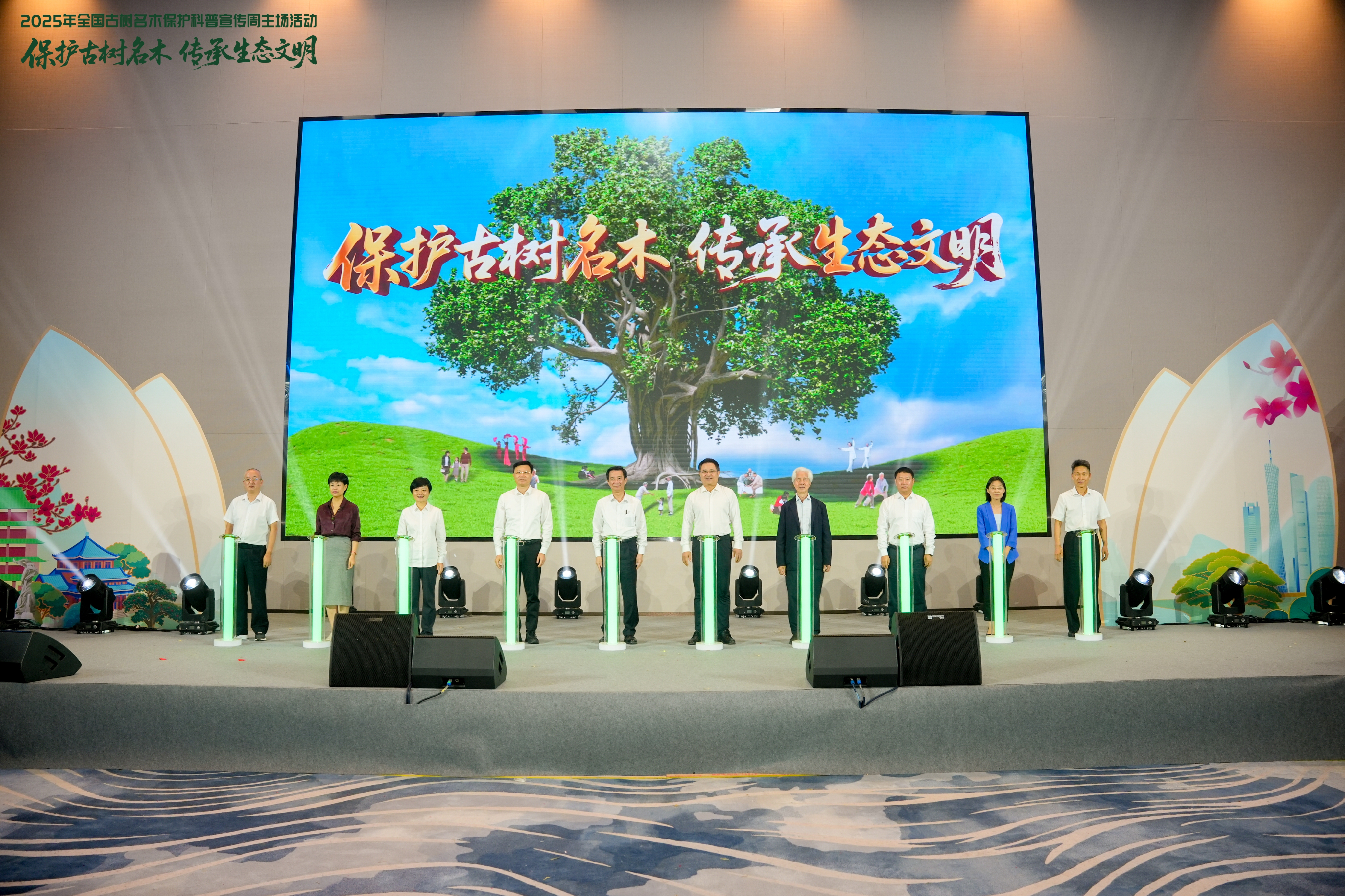
Core Viewpoint - The 2025 National Ancient Tree and Famous Tree Protection Science Popularization Week was launched in Guangzhou, emphasizing the importance of protecting ancient trees and promoting ecological civilization through a comprehensive national survey and management strategy [3][10]. Group 1: National Survey and Management - A third national survey of ancient trees and famous trees has been initiated to strengthen protection efforts, following the second survey, aiming to create a comprehensive management database [3][7]. - The survey will assess resource distribution, growth conditions, protection management, and historical and cultural aspects of ancient trees across the country [3][7]. Group 2: Legislative and Institutional Framework - The implementation of the "Ancient Tree and Famous Tree Protection Regulations" and the principle of "one tree, one policy" has been established to ensure systematic protection [7]. - Eighteen provinces have introduced local regulations or rules to support the national framework for ancient tree protection [7]. Group 3: Technological and Community Engagement - A smart management system for ancient trees has been developed, allowing for precise monitoring and management of each tree [7][10]. - Community engagement initiatives, such as the "Ancient Tree Donation" campaign, have garnered positive responses, promoting public awareness and participation in tree protection [10]. Group 4: Local Initiatives and Achievements - Guangdong Province has over 85,000 ancient trees, with significant efforts in ecological construction and the establishment of ancient tree parks and villages [10]. - The city of Guangzhou has created "digital IDs" for nearly 10,000 ancient trees, enhancing monitoring and enforcement of protection measures [10].