
古树名木保护

Search documents
村里的“定海神针”有了专属保护方案
Xin Lang Cai Jing· 2026-02-24 23:26
Core Viewpoint - The article highlights the successful efforts of the Pizhou City Procuratorate in protecting ancient ginkgo trees through a public interest litigation initiative, showcasing the collaboration between local authorities and volunteers to restore and maintain these historical trees [1][2][3]. Group 1: Background and Initial Concerns - In April 2025, a volunteer encountered ancient ginkgo trees in Yujia Village that were in poor condition, prompting concerns from local residents about their survival [1]. - The trees, some over 500 years old, were suffering from neglect, environmental damage, and lack of protective measures, leading to a significant decline in their health [1]. Group 2: Investigative Actions and Findings - Over the course of a month, the Pizhou City Procuratorate conducted thorough investigations across more than 20 towns, identifying common issues such as unclear responsibility for tree care and environmental threats [2]. - An administrative public interest litigation suggestion was issued to the city's Natural Resources and Planning Bureau to enforce the protection of ancient trees [2]. Group 3: Implementation of Protection Measures - Following a meeting between the Procuratorate and the Natural Resources and Planning Bureau, a budget of over 1.2 million yuan was allocated for the protection of ancient trees, with all 92 trees placed under specialized care [3]. - Individualized restoration plans were developed for each tree, addressing specific needs such as soil improvement and pest control [3]. Group 4: Outcomes and Future Monitoring - A follow-up visit in November 2025 revealed significant improvements in the trees' conditions, including protective barriers and proper care protocols [3]. - Each tree was assigned a caretaker and received identification tags detailing their age, height, diameter, and caretaker contact information, enhancing accountability and care [3].
四川新增一级古树及名木150株
Xin Lang Cai Jing· 2026-02-15 22:17
Group 1 - The Sichuan Provincial Government announced the addition of 150 new ancient trees and famous trees to the list for 2025, including 149 ancient trees and 1 famous tree [1] - The newly recognized ancient trees and famous trees are primarily located in five cities (Mianyang, Guangyuan, Leshan, Aba, and Ganzi) [1] - The famous tree recognized is a sweet osmanthus tree, planted in 1910 by the historical figure Xiong Kewu, located in Yanjing Street Community, Yanjing Town, Leshan City [1] Group 2 - Ancient trees are defined as trees that are over 100 years old, regardless of species or ownership, and are not limited to urban or rural areas [1] - The recognition of famous trees is based on their historical, cultural, scientific, landscape, or commemorative significance, with only one tree being recognized out of five applications for 2025 [1] - The total number of recognized famous trees in Sichuan Province has now reached 98 [1] Group 3 - The provincial forestry and grassland bureau emphasizes the high historical, cultural, ecological, scientific, landscape, and economic value of ancient trees and famous trees [2] - Any actions that could harm ancient trees and famous trees or their growing environment are prohibited, including illegal trade, transportation, and harmful practices [2]
它还能安全回家吗? 无数次救护总会留下心疼之问
Xin Lang Cai Jing· 2026-01-24 16:30
Core Viewpoint - The article highlights the establishment and effectiveness of a wildlife rescue network in Hunan, China, showcasing successful rescue operations and the growing public awareness and involvement in wildlife protection efforts [12][13][28]. Group 1: Wildlife Rescue Network - Hunan has developed a comprehensive wildlife rescue network consisting of 30 rescue organizations, covering 14 cities and 122 counties, which efficiently operates the rescue chain of "discovery—reception—rescue—release" [13][14]. - In 2024, the network rescued a total of 3,167 wild animals, with 2,323 successfully rehabilitated and released back into the wild [13]. Group 2: Key Rescue Cases - A leopard cat numbered "2025-013" underwent a successful amputation surgery after being critically injured by a trap, highlighting the center's capability to save wildlife that previously had little chance of survival [16][18]. - A student in Lanshan successfully reported a wild bird, a protected species, to the authorities, demonstrating the impact of educational initiatives on wildlife protection awareness [20][21]. Group 3: Community Involvement - The article emphasizes the role of community engagement in wildlife rescue, with citizens actively participating in reporting and assisting in rescue operations, leading to a significant increase in successful interventions [27][28]. - Educational programs in schools have been instrumental in teaching children how to respond appropriately to wildlife encounters, fostering a culture of conservation [21][23]. Group 4: Rescue Philosophy - The philosophy of wildlife rescue in Hunan emphasizes not only the immediate rescue but also the importance of proper rehabilitation and release strategies to ensure animals can survive in the wild [24]. - The article notes that not all rescued animals are immediately suitable for release, and a structured rehabilitation process is essential for their survival [24]. Group 5: Plant Rescue Efforts - The article also mentions the professionalization of plant rescue efforts, with significant initiatives aimed at preserving ancient trees and restoring their health, reflecting a broader ecological restoration commitment [26]. - In 2024, Hunan successfully rescued approximately 4,000 endangered ancient trees and rehabilitated around 30,000 weakened trees, showcasing the province's dedication to ecological conservation [26].

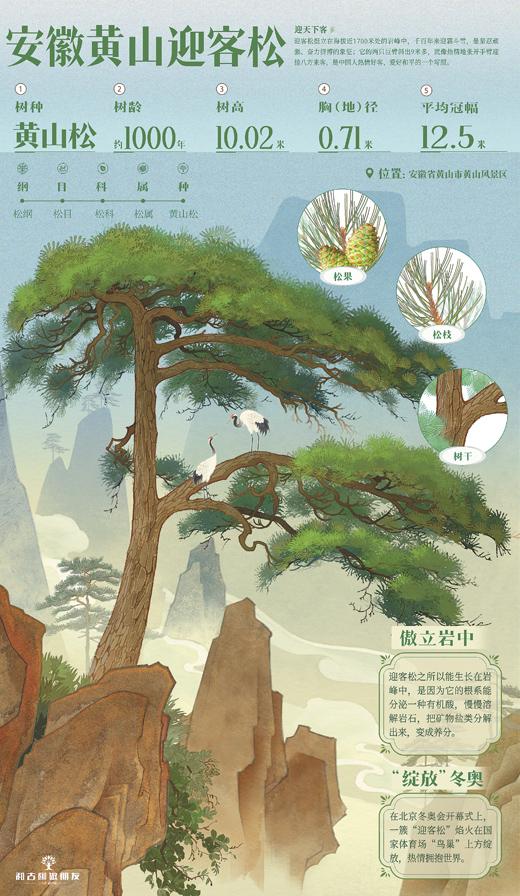
千年迎客松 广迎八方客(和古树做朋友)
Ren Min Ri Bao· 2026-01-22 23:42
Core Viewpoint - The article highlights the significance of the Huangshan Pine, particularly the "Welcoming Pine," as a cultural symbol and a natural heritage site, emphasizing the efforts taken for its protection and preservation over the years. Group 1: Description and Characteristics - Huangshan Pine is a unique tree species endemic to China, thriving in high mountain climates with good drainage and acidic soil [1] - The tree has a distinctive appearance with deep gray-brown bark and a flat-topped crown, and it flowers between April and May, with cones maturing in October of the following year [1] Group 2: Conservation Efforts - The "Welcoming Pine," estimated to be around 1000 years old, has been monitored and protected by dedicated personnel, with one individual documenting its condition for over 16 years, resulting in 96 notebooks and approximately 1.6 million words of records [3] - Advanced technology has been integrated into the conservation efforts, including a "two-way dual stiffness elastic support" system to help the tree withstand environmental stress [4] - A 3D digital modeling project was initiated to create a detailed digital archive of the tree and its surroundings, aiding in monitoring and protection [4] Group 3: Broader Conservation Initiatives - The conservation measures have expanded beyond the "Welcoming Pine" to include 137 ancient trees in the Huangshan Scenic Area, with a "tree chief system" established for better management [5] - Annual funding is allocated for the maintenance and restoration of ancient trees, ensuring comprehensive care and protection [5] Group 4: Cultural Significance - The "Welcoming Pine" symbolizes resilience and hospitality, often serving as a cultural emblem representing China's friendly relations [5] - Millions of tourists visit the "Welcoming Pine" each year, not just to see a tree but to experience the values it embodies [5]
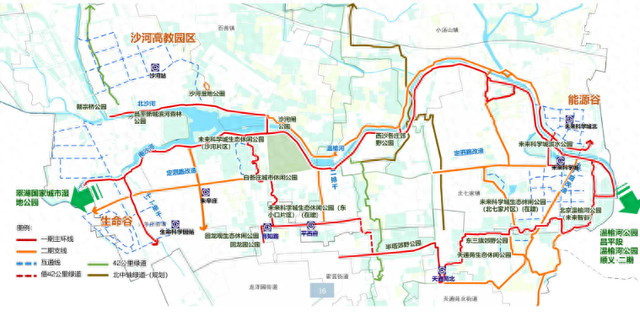
“奥北十园”将与奥森公园联通,构建奥北森林公园活力群
Bei Jing Ri Bao Ke Hu Duan· 2026-01-13 05:48
Core Insights - Changping District is focusing on enhancing its ecological infrastructure by connecting the "Aobei Ten Parks" with the Olympic Forest Park and accelerating the construction of various greenway projects, including a 42-kilometer greenway renovation and the Wenyu River ecological leisure greenway [1][3] Group 1: Ecological Development - Changping District aims to create a garden city surrounded by forests, with a current forest area of 66,000 hectares, an increase of approximately 9,000 hectares since the end of the 13th Five-Year Plan [3] - The forest coverage rate stands at 49.46%, up by 1.21 percentage points from the end of the 13th Five-Year Plan, ranking first among urban development zones [3] - The per capita park green space is 17.24 square meters, with a 93.39% coverage rate for park green space within a 500-meter radius, an increase of 3.1 percentage points since the end of the 13th Five-Year Plan [3] Group 2: Greenway Network - The district plans to develop a greenway network consisting of "one belt, two veins, three rings, and multiple corridors," integrating mountain views, water access, and city sightseeing [3] - Key projects include the first phase of the North Central Axis Extension Greenway (Changping section) and the first phase of the Jinghua Lansheng Forest Trail (Changping section) [3] Group 3: Park Development - The "Aobei Ten Parks" initiative involves the integration of ten parks into a cohesive ecological layout, enhancing the overall environment and connectivity with the Olympic Forest Park [3] - In 2026, the district plans to accelerate the construction of five suburban parks, including the first phase of Beiqijia and the third phase of Shahe, to create a park cluster in the Future Science City [5] Group 4: Cultural Heritage and Tree Protection - Changping District will establish the Ming Tombs Maoling Village Ancient Tree Habitat Garden and promote the overall protection of the Ming Tombs ancient tree group [7] - The district will also implement special rectification of non-permeable hard paving and enhance the protection and utilization of ancient trees, including those over a thousand years old [7]
“十四五”时期广东擦亮古树名木保护招牌 建立电子档案 实现“一树一码”
Nan Fang Ri Bao Wang Luo Ban· 2026-01-08 08:06
Core Viewpoint - Guangdong is actively constructing a comprehensive protection system for ancient trees and famous trees, aiming for 100% coverage in four key indicators during the 14th Five-Year Plan period [1][2][3] Group 1: Protection System and Technology - Guangdong has conducted a comprehensive survey of over 85,000 ancient trees, establishing electronic archives for each tree, enabling digital management with a unique code for each tree [1] - The province has implemented video monitoring for 850 first-class ancient trees, with real-time data transmitted to the provincial information management system [1] - Smart systems have been developed in areas like Panyu District, utilizing 202 smart devices to monitor critical soil parameters and facilitate efficient maintenance [1] Group 2: Rescue and Restoration Mechanisms - A "one tree, one policy" rescue mechanism has been established, with over 900 weak and endangered ancient trees rescued during the 14th Five-Year Plan period [2] - An expert team was mobilized within 48 hours to restore a 550-year-old red fir tree affected by severe weather, successfully promoting new growth within a year [2] - A grid management system has been set up in Maoming, assigning dedicated caretakers for 4,389 ancient trees, ensuring regular health checks by expert teams [2] Group 3: Integration with Cultural and Tourism Development - Guangdong has built 55 ancient tree parks and 188 eco-friendly ancient tree villages, achieving coverage across 21 cities [2] - The development of themed parks, such as the love-themed park in Dajing Village, has boosted local tourism revenue by over 200,000 yuan annually [2] - The integration of ancient trees with local tourism, such as the 1,300-year-old ancient lychee trees in Maoming, has become a core attraction for rural tourism [2] Group 4: Community Engagement and Funding - There is a growing public awareness and consensus on ancient tree protection, with activities like the National Ancient Tree Protection Science Popularization Week and photography competitions [3] - A total of 880 ancient trees have been adopted, raising over 28 million yuan in funding for their protection [3] - The provincial forestry bureau plans to continue promoting ancient tree park construction and deepen the application of smart protection technologies [3]
从抢救复壮到文旅融合:“十四五”广东擦亮古树名木保护招牌
Nan Fang Nong Cun Bao· 2026-01-07 07:01
Core Viewpoint - Guangdong is enhancing the protection of ancient trees and famous trees during the "14th Five-Year Plan" period, integrating ecological construction with cultural tourism to create a comprehensive protection system [2][36]. Group 1: Protection System Development - Guangdong has established a comprehensive protection system for ancient trees, focusing on legal support, technological empowerment, cultural tourism integration, and public participation [3][11]. - The province aims for 100% coverage of four core indicators: investigation and archiving rate, protection rate, monitoring rate, and rescue and restoration rate [4][3]. - Over 85,000 ancient trees have been documented with a dynamic management system, and 850 first-class ancient trees are under 24/7 video surveillance [4][16]. Group 2: Technological Empowerment - The province has implemented digital management for ancient trees, allowing for real-time monitoring and data collection through advanced technologies [15][16]. - Various technological tools, such as soil moisture sensors and drones, are used to create "electronic health records" for precise and efficient protection [20][21]. Group 3: Rescue and Restoration Efforts - Guangdong has adopted a "one tree, one strategy" approach for the rescue and restoration of weak and endangered ancient trees, successfully restoring over 900 trees during the "14th Five-Year Plan" [25][24]. - Specific cases include the restoration of a 1,200-year-old tree and a 350-year-old tree through targeted interventions [27][29]. Group 4: Cultural Tourism Integration - The province has built 55 ancient tree parks and 188 beautiful ancient tree villages, promoting the integration of ecological protection with cultural tourism [38][36]. - Initiatives such as themed parks and local tourism projects have generated significant economic benefits, with some areas reporting annual income increases exceeding 200,000 yuan [39][40]. Group 5: Public Participation and Awareness - There is a growing public awareness and participation in ancient tree protection, with various activities and fundraising efforts contributing over 28 million yuan for the cause [44][45]. - The province has hosted events to promote ancient tree conservation, transforming the responsibility from solely governmental to a societal consensus [43][44]. Group 6: Future Plans - Guangdong plans to continue developing ancient tree parks, deepen the application of smart protection technologies, and explore the cultural value of ancient trees to enhance their role in ecological construction [50][51].

陈小玲:以初心护古树 用行动传绿意丨古树守护人手记
Nan Fang Nong Cun Bao· 2025-12-26 09:03
Core Viewpoint - The article highlights the efforts of individuals, particularly Chen Xiaoling, in the protection and promotion of ancient trees in Guangdong, emphasizing community involvement and innovative approaches to conservation [2][5][42]. Group 1: Community Involvement - Over 85,000 ancient trees are growing in the Lingnan region, representing both natural heritage and cultural significance [2][3]. - Various individuals contribute to the protection of ancient trees through different methods, including grassroots management, technological support, and public advocacy [4][5]. - Chen Xiaoling has successfully mobilized community participation in tree protection through the "Green Beauty Forest Trace" volunteer service project, engaging families and organizing regular activities [12][14]. Group 2: Educational Initiatives - Chen Xiaoling has conducted educational activities to raise awareness about tree protection, reaching approximately 300 students through classroom initiatives [28]. - She has created informative content about ancient trees, with eight articles published in various public platforms to enhance public understanding [29][30]. - The project has been recognized for its innovative approach and high community engagement, serving as a model for other regions [16][23]. Group 3: Professional Contributions - As an engineer, Chen Xiaoling integrates her professional expertise into the management and protection of ancient trees, successfully incorporating tree data into a comprehensive resource management system [33][34]. - She has collaborated with experts to develop rescue plans and has participated in the restoration of over ten ancient trees, promoting their healthy growth through scientific methods [39][40]. - Chen Xiaoling's contributions have been acknowledged with multiple awards, reflecting her significant impact on ancient tree conservation [23][42].
安徽省现有3.6万余株古树名木
Xin Hua Wang· 2025-12-22 00:51
Core Viewpoint - The province has a total of 36,666 ancient trees, ranking 20th nationally and 2nd in the Yangtze River Delta, highlighting the ecological and cultural significance of these natural heritage resources [1] Group 1: Ancient Tree Statistics - There are 823 first-class ancient trees, 4,325 second-class ancient trees, 31,370 third-class ancient trees, and 148 famous trees, with a total of 519 ancient tree groups [1] - During the "14th Five-Year Plan" period, the provincial and higher levels allocated 27.676 million yuan for the restoration of 415 first-class ancient trees and famous trees [1] Group 2: Protection Measures - The province has implemented a management and protection system for ancient trees, incorporating it into the responsibilities of local forestry officials [1] - The issuance of the "Ancient Tree Protection Responsibility Notification" clarifies the responsible units and individuals for ancient tree protection [1] Group 3: Future Plans - The provincial forestry bureau plans to conduct the fourth comprehensive survey of ancient tree resources and ensure funding for the survey [1] - There will be an emphasis on exploring the cultural value of ancient trees and enhancing scientific research and cultural collection related to them [1]
广东建成古树公园、绿美古树乡村161个
Nan Fang Nong Cun Bao· 2025-12-19 09:02
Core Viewpoint - Guangdong Province has made significant progress in the protection and management of ancient trees, establishing 161 ancient tree parks and beautiful ancient tree villages, enhancing ecological construction and cultural heritage [2][4][24]. Group 1: Protection and Management Achievements - Over the past three years, Guangdong has effectively protected more than 85,000 ancient trees through comprehensive management and protection actions [3][8]. - The province has established 55 ancient tree parks and 106 beautiful ancient tree villages, contributing to the ecological landscape of Guangdong [4][23]. - The installation rate of ancient tree protection signs, the implementation rate of "one tree, one file," and the signing rate of maintenance agreements have all reached 100% [15][16]. Group 2: Legislative and Institutional Framework - Guangdong has introduced specific regulations for ancient tree protection, including a dedicated chapter in the "Guangdong Forest Protection Management Regulations" and clear responsibilities for county and town-level forest chiefs [9][10]. - The province has unified and standardized protection management at the provincial level, promoting harmonious coexistence between ancient trees and urban-rural development [11][14]. Group 3: Technological and Community Engagement - The province encourages research institutions to conduct key technology studies for ancient tree protection, enhancing the scientific and effective management of these trees [18][20]. - Community engagement initiatives, such as the "Ancient Tree Donation for a Beautiful Guangdong" project, have raised over 28 million yuan in donations, promoting a culture of public participation in ancient tree protection [24][25]. Group 4: Local Innovations and Practices - Huizhou has integrated ancient tree protection into its rural revitalization strategy, creating tourism and residential areas around ancient trees, thus enhancing their ecological and cultural value [28][29]. - Maoming has implemented a comprehensive management system for ancient lychee trees, establishing the country's first legal framework for their protection, which safeguards 20,000 ancient lychee trees [33][36]. Group 5: Future Directions - Guangdong aims to deepen the long-term mechanisms for ancient tree protection, focusing on the integration of systems, technology, and management to enhance ecological value and promote education and tourism [41][42].