人文关怀

Search documents
马上评|《飞驰人生3》票房何以“飞驰”
Xin Lang Cai Jing· 2026-02-18 08:02
Core Insights - The total box office for the Spring Festival this year has exceeded 1.7 billion yuan, with "Flying Life 3" leading the pack, grossing over 800 million yuan and receiving a score of 7.6 on Douban [2] - The diversity of films released during the Spring Festival, including genres like drama, fantasy, and comedy, caters to various audience preferences, showcasing high-quality productions [2] - Director Han Han's unique storytelling style, which focuses on relatable "small characters," has resonated with audiences, providing emotional value, especially for younger viewers [2] Group 1 - "Shanghai-produced" films have become a recognizable brand that embodies cultural attitude and aesthetic persistence, allowing for creative freedom and diversity among filmmakers [3] - Recent films like "Good Things," "Blossoms," and "Meat Dumplings" have successfully balanced genre innovation, artistic individuality, and thematic depth, contributing to the success of "Flying Life 3" [3] - The emergence of AI video generation models, such as Seedance 2.0, has prompted discussions about the essence of film creation, emphasizing that visual spectacle is not the core message of the "Flying Life" series [3] Group 2 - Despite the increased technological sophistication and visual effects in "Flying Life 3," the central theme remains unchanged: teamwork and unity are essential for success, serving as a metaphor for the importance of valuing others in a fast-paced society [4] - The protagonist's journey emphasizes the pursuit of freedom and self-discovery, highlighting that the narrative's focus is on the experience of striving for dreams rather than merely winning competitions [4] - The film's appeal lies in its ability to connect with audiences who wish to share in the protagonist's journey, experiencing the ups and downs of chasing dreams together [4]


美好出行,让理性购票温暖回家路
Zhong Guo Jing Ji Wang· 2026-02-15 09:56
Core Insights - The railway department has implemented a "long-distance priority, short-distance consideration" ticketing principle to manage the high passenger flow during the Spring Festival, ensuring maximum resource utilization while addressing the needs of various travelers [1][2] Group 1: Ticketing Strategy - The ticketing strategy includes a three-phase management system: pre-allocation of 20% of tickets for nearby stations, dynamic adjustment of remaining tickets based on demand, and open sale of remaining tickets one day before or on the day of departure [2] - The introduction of a ticket reservation service allows travelers to use up to 60 combinations of "date + train number," alleviating the anxiety of ticket scarcity and enabling more travelers to return home [2][3] Group 2: Emotional Connection and Data - The emotional significance of returning home for the New Year is highlighted, with data showing that 12.8 million tickets have been successfully issued through the reservation system, achieving a success rate of over 70%, with 51% of these being short-distance tickets [3] - The railway department's rules reflect an understanding of the emotional connection travelers have with their homecoming, blending operational efficiency with humanistic care [3] Group 3: Enhancements in Travel Experience - To further improve the travel experience, the railway department has increased train services and introduced discounts, particularly during peak travel times, to encourage staggered travel and balance passenger flow [3][4] - The department's ongoing optimization of rules and services aims to create a warmer and more qualitative travel experience for all passengers [4]
江苏各地医疗机构进入“迎新时间”
Xin Hua Ri Bao· 2026-02-10 21:54
Group 1 - The core idea of the articles emphasizes the importance of medical services during the Spring Festival, ensuring that healthcare remains accessible and responsive to the needs of the community [1][2][5] - Jiangsu's medical institutions are fully prepared for the holiday, providing continuous support for patients, especially vulnerable groups like cancer patients and pregnant women [2][3] - The "No Pain New Year" initiative by Jiangsu Provincial Cancer Hospital aims to provide compassionate care for cancer patients during the festive season, expanding its reach through a collaborative network of over 100 healthcare units [2][9] Group 2 - Online healthcare services are operational 24/7 during the Spring Festival, with hospitals like Nanjing Gulou Hospital offering telemedicine consultations and medication delivery to enhance patient convenience [4][5][6] - The integration of online and offline medical services ensures that patients can receive timely care, with emergency services available around the clock [6][8] - The establishment of specialized clinics, such as the fishbone clinic, addresses common holiday-related health issues, ensuring that patients have access to necessary treatments without delays [7][8] Group 3 - The use of drones for medication delivery in Dongtai City significantly improves access to essential medicines for elderly and chronic disease patients in rural areas, reducing their reliance on distant healthcare facilities [8][9] - The drone service operates efficiently, with an average of over 20 flights per day, ensuring timely delivery of medications and medical supplies to local health centers [9] - The implementation of personalized health plans in nursing homes, along with emergency preparedness measures, enhances the quality of care for elderly residents during the holiday season [10]

精准攻坚儿童血液肿瘤:以技术革新为利刃,以人文温度护童心
Sou Hu Wang· 2026-02-10 07:35
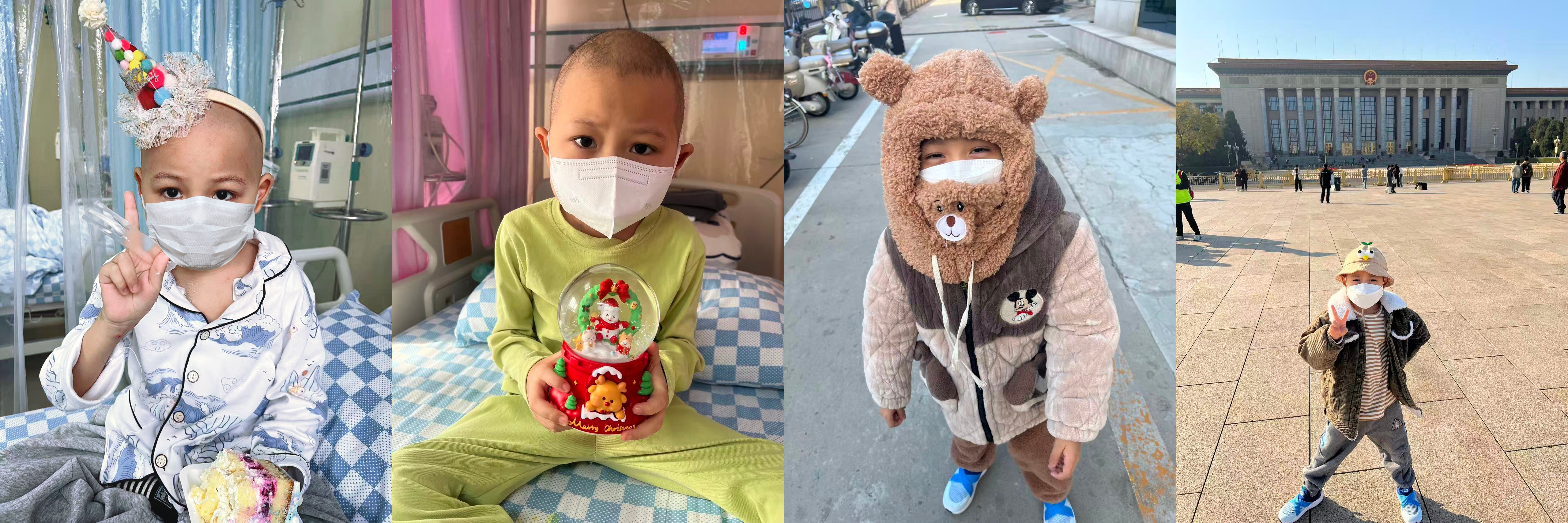
Core Insights - The rapid development of precision medicine and continuous humanistic care are providing hope for families facing the severe challenge of pediatric hematological tumors [1] - Beijing Borin Hospital's Pediatric Hematology and Oncology Department, led by Professor Zhang Yonghong, integrates cutting-edge diagnostic and treatment technologies with a holistic care philosophy, achieving breakthroughs in treating difficult cases and advancing China's pediatric hematological oncology system [1][4] Group 1: Case Study of a Pediatric Patient - A 7-year-old boy, Xiao Le, diagnosed with high-risk T-cell lymphoblastic lymphoma/leukemia, faced treatment challenges after multiple rounds of standard chemotherapy [2][3] - After a remote consultation with Professor Zhang, Xiao Le was transferred to Beijing Borin Hospital for comprehensive evaluation and targeted treatment, leading to the identification of a rare NRAS gene mutation as the core issue [3][4] - A personalized treatment plan was developed, incorporating targeted therapies and chemotherapy, resulting in effective disease control and successful stem cell transplantation [3][4] Group 2: Clinical Achievements and Innovations - The Pediatric Hematology and Oncology Department has become a national benchmark center for pediatric lymphoma treatment, achieving a cure rate increase from below 50% to over 90% in high-level centers through precision treatment [7] - The department has treated over 500 cases of difficult-to-treat relapsed lymphomas, achieving an overall remission rate exceeding 80% and a long-term progression-free survival rate of around 70% [8] - The team is innovating treatment paradigms by integrating targeted therapies and immunotherapies, significantly improving outcomes for patients with relapsed T-cell lymphoblastic lymphoma [11][12] Group 3: Research and International Collaboration - The department emphasizes a "clinical problem-driven research" approach, leading to significant contributions in molecular profiling and treatment target exploration, with multiple publications in prestigious journals [16][17] - The team has actively participated in international conferences, showcasing their research and gaining recognition for their contributions to pediatric lymphoma treatment [17] - The collaboration with the National Children's Lymphoma Collaborative Group (CNCL) has standardized treatment protocols across 46 major pediatric oncology centers in China, enhancing overall treatment outcomes [7][8] Group 4: Humanistic Care and Support - The department prioritizes humanistic care, ensuring that treatment extends beyond the disease to support the emotional and psychological needs of patients and their families [21] - Initiatives such as educational workshops for parents and community support events foster open communication and emotional support among families [21] - This combination of advanced medical techniques and compassionate care has significantly enhanced patients' confidence and resilience in battling their illnesses [21] Group 5: Future Directions - The department aims to continue advancing precision medicine and expanding treatment boundaries while maintaining a focus on humanistic care for pediatric patients [23] - Ongoing efforts will be made to integrate new treatment modalities and enhance the overall quality of life for children undergoing treatment [23]
亲哥去世不批假,于心何忍?
Xin Lang Cai Jing· 2026-02-10 03:34
Group 1 - The core issue revolves around the dismissal of an employee, Chef Qiao, who was terminated for taking leave to attend his brother's funeral, highlighting a lack of empathy from the company [2][3] - The company argued that the leave policy only applies to immediate family members and that Qiao's absence affected normal operations, showing a rigid adherence to rules without consideration for employee emotions [2][3] - The court ruled that the company's dismissal was unlawful, ordering them to pay over 7,000 yuan in compensation to Qiao, emphasizing the need for companies to act with kindness and understanding in labor relations [2][3] Group 2 - The court's judgment underscored that termination is a severe measure that impacts an employee's livelihood and must be exercised with caution, adhering to principles of goodwill and reasonableness [3] - The ruling reflects a broader concern regarding the management practices of some employers, stressing that rigid adherence to rules should not override human compassion and societal norms [3][4] - The case serves as a reminder that successful companies foster employee loyalty through humane treatment rather than strict penalties, promoting a culture of respect for emotional needs [4]
保障外卖骑手权益 传递城市暖心关怀
Xin Lang Cai Jing· 2026-02-08 00:58
Core Viewpoint - The rapid development of the new economy in Nanning has led to a growing number of delivery riders, creating an instant delivery network that supports citizens' lives, promotes consumption growth, and stabilizes social employment [1] Group 1: Rights Protection - A comprehensive support system should be established focusing on rights protection, career development, and humanistic care for delivery riders [1] - Innovative social security payment methods are needed to enhance the social security level for flexible employment personnel, considering the characteristics of new employment forms [1] - Strengthening industry regulation is essential to ensure platforms and agents standardize employment practices and facilitate complaint channels [1] Group 2: Career Development - It is important to stimulate the intrinsic motivation for career development through measures such as enhancing vocational skills training and broadening career development pathways [1] - Positive publicity and guidance should be reinforced to support the professional growth of delivery riders [1] Group 3: Service Optimization - Service facilities and support should be optimized, focusing on increasing service station locations while ensuring convenience and practicality [1] - The shift in service supply should move from "quantity" to "quality" [1] Group 4: Humanistic Care - Cross-departmental collaborative services should be deepened to integrate resources for providing legal consultation, health services, skills training, and community activities for delivery riders and their families [1] - Enriching the spiritual and cultural life of delivery riders can enhance their sense of belonging to the city [1]
暖心护航团圆路 北京三车站春运便民服务升级
Zhong Guo Jing Ji Wang· 2026-02-05 13:15
Core Insights - The article emphasizes the integration of technology and human care to enhance travel experiences during the Spring Festival travel rush, focusing on convenience, safety, and warmth for passengers [1] Group 1: Service Enhancements - Beijing Station, Beijing Chaoyang Station, and Beijing Tongzhou Station are implementing various passenger-friendly services, including electric vehicle pick-up services for special groups and luggage handling services to ease transfer burdens [1] - AI robot customer service machines have been introduced at Beijing Chaoyang Station to quickly respond to passenger inquiries through voice and facial recognition [1] - New business seating areas and facilities have been added at Beijing Chaoyang Station to cater to business travelers, including additional seating and dedicated workspaces [1] Group 2: Flow Management - The three major stations are optimizing entry and exit organization to ensure orderly passenger flow, including green channels for urgent and special needs passengers [2] - Dynamic adjustments to security checks have been made to keep wait times under five minutes and limit queues to no more than 20 people [2] - Beijing Station has completed renovations to increase waiting area space by 666.75 square meters and has implemented a 24-hour service policy to accommodate late-night arrivals [2] Group 3: Passenger Volume Projections - During the Spring Festival in 2026, Beijing Station is expected to send 4.3045 million passengers, an increase of 393,300 compared to 2025, representing a growth of 10.1% [3] - February 14 is projected to be the peak travel day, with a single-day passenger volume of 214,500 [3] - Specific forecasts include 2.3826 million passengers at Beijing Station, 1.7849 million at Beijing Chaoyang Station, and 137,000 at Beijing Tongzhou Station, with respective increases of 3.9% and 10.3% [3]
新五丰党委书记、董事长万其见到养殖板块郴永广大区调研指导
Xin Lang Cai Jing· 2026-02-05 12:18
Core Insights - The chairman of Hunan New Wufeng Co., Ltd., Wan Qijian, conducted a field study in the breeding sector of the Chenyongguang District to understand the production and operational status [2][6] Group 1: Current Operations and Challenges - The Chenyongguang District reported on the operational status of core businesses including sows, fattening, and contract breeding, as well as annual goals, challenges, and future work plans [2][6] Group 2: Strategic Requirements - Wan Qijian acknowledged the efforts and achievements of the Chenyongguang District in a complex market environment and proposed five key requirements for future development: 1. Clarify strategy and development direction, aligning with the company's overall strategy and regional market characteristics [3][7] 2. Optimize management and innovate internal mechanisms to enhance performance and cost control [3][7] 3. Focus on professional development and enhance core capabilities in biosecurity, production skills, and team building [3][7] 4. Ensure safety and environmental protection by adhering to safety management systems and promoting green development [3][7] 5. Provide care and support for employees, ensuring a safe and pleasant working environment during the upcoming Spring Festival [3][7] Group 3: Participation in the Study - The study included participation from the office head, management team members, farm managers, and department representatives from the breeding sector of the Chenyongguang District [4][8]

“大思政课”视域下农村订单定向医学生医德教育实践路径
Xin Lang Cai Jing· 2026-02-03 19:46
Core Viewpoint - The article emphasizes the importance of cultivating medical ethics among rural-oriented medical students through a comprehensive educational approach that integrates professional skills with moral education [1][2][3][4] Group 1: Educational Strategies - The cultivation of rural-oriented medical students requires not only the enhancement of professional skills but also a strong emphasis on medical ethics education [1] - Schools should integrate moral education into medical courses, helping students understand the ethical responsibilities and social missions behind their profession [1][2] - Experts should be organized to explore the ideological elements within medical courses, linking them to the spirit of selfless service and respect for life [1][2] Group 2: Practical Training - The combination of situational simulations and clinical practice is crucial for deepening students' sense of responsibility and mission [2] - Schools should create realistic medical scenarios that reflect rural conditions, allowing students to experience the complexities of clinical work [2] - Early internships in rural hospitals should be arranged to help students understand the challenges of rural healthcare and the actual needs of patients [2] Group 3: Humanistic Care - Establishing good relationships with patients and conveying humanistic care are essential for improving medical quality and ethics education [3][4] - Schools should actively cultivate communication skills and empathy among rural-oriented medical students through dedicated courses [3] - Engaging students in understanding the humanistic values of medicine will help them become compassionate healthcare providers [3][4]
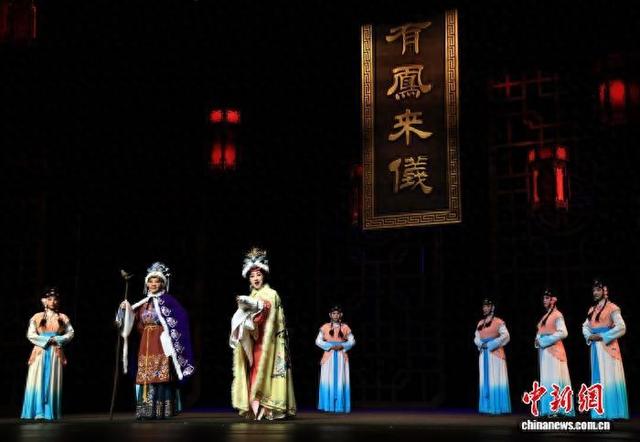
川剧《红楼之凤》在成都首演 呈现王熙凤复杂人性内核
Xin Lang Cai Jing· 2026-01-31 01:56
Core Viewpoint - The Sichuan opera "The Red Chamber's Phoenix," created by the Chengdu Sichuan Opera Research Institute, offers a unique interpretation of the classic "Dream of the Red Chamber," focusing on the decline of a noble family through innovative artistic techniques rather than adhering strictly to the original text [1][3]. Group 1: Production Details - The play is written and artistically guided by 93-year-old playwright Xu Zhen, directed by Li Zenglin, and features music by Wang Wenxun, with renowned Sichuan opera artist Chen Qiaoru in the lead role [1]. - Unlike previous adaptations, "The Red Chamber's Phoenix" does not confine itself to specific chapters or events from the original work, instead exploring the overall spirit of the narrative [1]. Group 2: Character Development - The storyline centers on the relationship between Wang Xifeng and You Erjie, incorporating deep humanistic concerns and portraying the tragic fates of various characters, including You Erjie and other supporting roles [3][4]. - Chen Qiaoru emphasizes that Wang Xifeng is a tragic character shaped by the feudal society, highlighting her inner turmoil and complexity beyond her outwardly shrewd persona [3]. Group 3: Artistic Techniques - The production employs unique artistic methods, such as the "water sleeve" movements during You Erjie's abortion scene, enhancing the emotional impact of the tragedy [4]. - Supporting characters, traditionally seen as mere background figures, are given independent singing segments to express their reluctant compliance, thus avoiding a one-dimensional portrayal [4][5]. Group 4: Themes and Messages - Xu Zhen's works often focus on women's issues, and "The Red Chamber's Phoenix" continues this trend by addressing the survival struggles and complex humanity of women in historical contexts [7]. - The play's climax features a dramatic representation of Wang Xifeng's despair, using innovative staging and music to evoke the essence of the original text, aiming to leave a lasting impression on the audience [7].