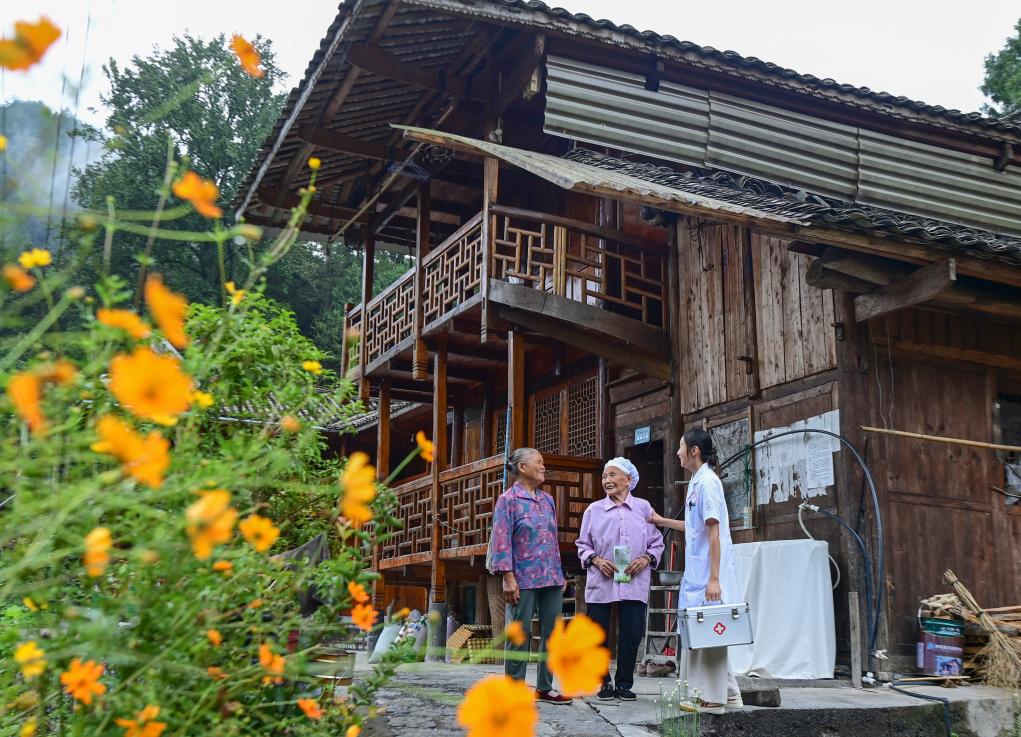
基层医疗卫生服务

Search documents
自治区持续优化基层医疗卫生机构布局
Xin Lang Cai Jing· 2026-01-06 19:29
Core Viewpoint - The Xinjiang Health and Wellness Committee, along with 11 other departments, has issued a notice to optimize the layout and construction of grassroots medical and health institutions, aiming for full coverage by 2027 and improved infrastructure by 2030 [1] Group 1: Goals and Objectives - By 2027, there will be full coverage of grassroots medical and health institutions in towns and streets, and basic medical services in administrative villages and communities [1] - The plan aims to ensure that residents can reach the nearest medical service point within 15 minutes, considering urban-rural integration, population changes, health needs, and resource planning [1] - The ultimate goal is to resolve daily health issues at the grassroots level [1] Group 2: Implementation Strategies - The notice emphasizes the need for local authorities to adapt dynamically to achieve the optimization of grassroots medical institutions [1] - It calls for strengthened organizational leadership, inter-departmental collaboration, and policy coordination to promote a tiered diagnosis and treatment system [1] - Financial support is crucial, with responsibilities assigned to local governments to ensure the construction of grassroots medical institutions is adequately funded [1]
国家卫健委:基层医生四年增加54万
Di Yi Cai Jing· 2025-11-27 10:15
Core Insights - The "lack of doctors and medicines" issue in grassroots healthcare institutions, which account for over 50% of national medical services, has been effectively alleviated [1] - The National Health Commission (NHC) has reported that the proportion of medical services provided by grassroots healthcare institutions has consistently remained above 50% since the start of the 14th Five-Year Plan [1] Summary by Sections Grassroots Healthcare Development - The NHC has expanded the variety of medicines available at grassroots healthcare institutions, with an average of around 300 types of medicines now equipped in township hospitals and community health service centers [1] - A recent policy reform aims to enhance the accessibility of essential medicines for chronic and common diseases by improving the coordination of drug supply between different levels of healthcare [1] County-Level Medical Community - Nearly half of the counties have established centralized pharmacies, with the number of medicines available in county medical communities generally reaching between 800 to 1200 types, significantly improving grassroots medication access [2] - Over 97% of administrative villages with village clinics are now covered by medical insurance, facilitating medication access and reimbursement for rural residents [2] Workforce and Capability Enhancement - As of the end of 2024, there are 2.078 million licensed physicians in grassroots healthcare institutions, an increase of 542,000 since 2020 [2] - The proportion of healthcare personnel with college degrees or higher in township hospitals and community health service centers has risen from 65% and 81.4% in 2020 to 77.4% and 88.2% respectively by 2024 [2] Support and Resource Allocation - The NHC has dispatched approximately 180,000 personnel to support 1,750 counties, with over 70,000 personnel stationed in grassroots facilities for more than six months this year [3] - The "Hundred-Thousand-Ten Thousand Project" aims to enhance clinical specialties in over 10,000 county-level hospitals, improving service capabilities in previously weak specialties such as oncology and psychiatry [3] Pediatric and Mental Health Services - The NHC has initiated a three-year action plan for pediatric and mental health services, with a goal for over 90% of grassroots healthcare institutions to provide pediatric services by the end of this year, which has already been exceeded with 93% now offering such services [3]
国家卫生健康委:目前全国超过90%的居民可以在15分钟内获得就近就便的医疗卫生服务
Xin Hua She· 2025-11-27 08:53
Core Viewpoint - The National Health Commission of China announced that over 90% of residents can access convenient medical and health services within 15 minutes, highlighting significant progress in grassroots healthcare development [2] Group 1: Healthcare Accessibility - More than 90% of residents in China can obtain nearby medical services within 15 minutes [2]
基层慢性病健康管理将迎“一站式服务”
Xin Hua She· 2025-11-20 11:19
Core Points - The National Health Commission of China released guidelines to enhance the capacity of grassroots chronic disease health management services, promoting a "one-stop" integrated service model [1][2] Group 1: Guidelines Overview - The guidelines outline five key areas for development, including chronic disease prevention, diagnosis, health management services, referral processes, and information flow [1] - It emphasizes the need for clear functional zoning in health service areas and treatment zones, ensuring smooth personnel movement and clear directional signage [1] - The guidelines call for the staffing of general practitioners, traditional Chinese medicine practitioners, public health doctors, pharmacists, and nurses to support chronic disease management [1] Group 2: Service Implementation - Grassroots chronic disease health management will focus on consultation, screening, diagnosis, treatment, follow-up, and health guidance [1] - Specific services include health consultations, appointment scheduling, health self-checks, collection of health information, family doctor contracts, tiered health management, referrals, follow-ups, health guidance, and data analysis [1] Group 3: Quality Management - The guidelines require grassroots medical institutions to strictly adhere to chronic disease health management service protocols, standardizing service processes and content [2] - Leading hospitals in tightly-knit medical alliances should enhance guidance and quality control for grassroots health institutions, continuously improving the quality of chronic disease management services [2]
决胜“十四五” 打好收官战丨将服务送到群众“家门口”——看重庆基层医疗卫生机构新变化
Xin Hua Wang· 2025-08-14 23:37
Core Viewpoint - The article highlights the transformation of grassroots medical and health institutions in Chongqing, emphasizing the importance of delivering healthcare services directly to the community, thereby improving accessibility and patient engagement [1][2]. Group 1: Service Delivery Improvements - In Chongqing, family doctors are actively providing home visits for health check-ups, which has led to early detection of medical issues, such as abnormal uterine bleeding in patients [1]. - The establishment of a performance evaluation system based on service delivery has incentivized healthcare workers, allowing them to earn different points based on the quantity and quality of services provided [2]. Group 2: Community Engagement - There are nine family doctor service teams in Wuxia Town that engage with the community daily, fostering familiarity and trust between healthcare providers and residents [2]. - The implementation of additional value-added services, such as pediatric massage and postnatal rehabilitation, has been approved to meet the specific needs of the community [4]. Group 3: Performance Metrics - The average monthly performance income for healthcare workers who excel in family doctor services can increase by over 1,000 yuan, reflecting a system of performance-based compensation [4]. - The proportion of total medical consultations conducted by grassroots healthcare institutions in Chongqing is expected to rise from 52.5% in 2021 to approximately 56% this year [6].