
妇幼医疗

Search documents
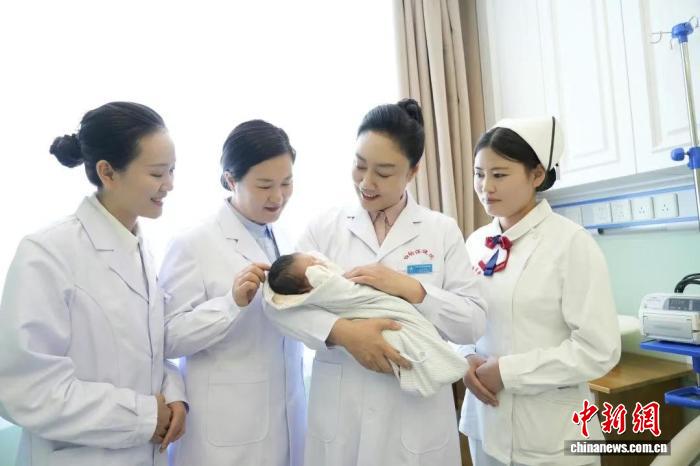
(砥砺奋进七十载 天山南北谱华章)新疆:天山南北已筑起守护母婴安全坚实屏障
Zhong Guo Xin Wen Wang· 2025-09-24 06:51
Core Viewpoint - The article highlights the significant advancements in maternal and child healthcare in Xinjiang, emphasizing the efforts of medical professionals to provide high-quality services locally, thereby reducing maternal and infant mortality rates and improving healthcare access for the local population [1][3]. Group 1: Healthcare Improvements - Xinjiang's maternal mortality rate has decreased to below the national average, with prenatal screening rates reaching 90% and newborn disease screening rates at 99% [1][3]. - The establishment of the first prenatal diagnosis center in Xinjiang in 2007 marked a pivotal development, allowing for advanced prenatal diagnostic techniques to be performed locally [3][4]. - The introduction of cutting-edge technologies such as gene chips and non-invasive DNA testing has aligned Xinjiang's prenatal diagnostic capabilities with international standards [3][4]. Group 2: Collaborative Efforts - A maternal and child health specialist alliance has been formed, encompassing 186 medical institutions to enhance the network for birth defect prevention across Xinjiang [4]. - Educational initiatives and on-site guidance have been conducted across 14 prefectures in Xinjiang to disseminate national treatment guidelines and emergency procedures [4]. Group 3: Future Directions - The healthcare sector in Xinjiang aims to address the uneven distribution of medical resources and improve maternal nutrition and health management, focusing on high-quality development in maternal and child health services [4].

北京市:将适宜的分娩镇痛及辅助生殖技术项目纳入医保支付范围,并适时调整相关医保支付政策
Ge Long Hui· 2025-07-31 03:57
Core Points - The Beijing Municipal Government has issued measures to improve the reproductive support policy system and promote the construction of a family-friendly society [1] Group 1: Reproductive Health Services - The measures emphasize strengthening reproductive health services and optimizing maternal and child healthcare resource allocation [1] - Implementation of maternal and infant safety action plans and enhancement of birth defect prevention capabilities are highlighted [1] - There is a focus on improving prenatal care, hospitalization for childbirth, and postpartum healthcare services [1] Group 2: Psychological and Educational Support - The measures include strengthening psychological health services for pregnant women and establishing family-friendly hospitals [1] - There is an initiative to enhance youth education on puberty and sexual health to prevent unintended pregnancies [1] - Early pregnancy care services will be expanded, along with efforts to protect reproductive health [1] Group 3: Medical Insurance and Pricing - The measures propose reasonable pricing for obstetric services and inclusion of suitable pain relief and assisted reproductive technology projects in medical insurance coverage [1] - Adjustments to relevant medical insurance payment policies will be made as necessary [1]
刘国成:多举措提升妇幼专科医院运营管理精细化水平
Ren Min Wang· 2025-07-29 05:20
Core Viewpoint - The article emphasizes the importance of refined operational management in maternal and child specialty hospitals, highlighting three key aspects: building a management closed loop through information technology, resource allocation driven by clinical needs, and performance reform to stimulate innovation [1]. Group 1: Operational Management - Guangdong Maternal and Child Health Hospital has established an operational management committee and office, creating a specialized team to enhance management efficiency and integrate core business with operational management [1]. - The hospital has developed an HRP (Hospital Resource Planning) system to break down information silos and create an interconnected data system, significantly improving operational management efficiency [1]. Group 2: Resource Optimization - To address low utilization of medical equipment, the hospital has implemented a scientific management model that includes real-time monitoring of equipment usage through IoT systems, optimizing the sharing mechanism of existing equipment [2]. - The hospital employs a "Five-Dimensional Argumentation Method" to evaluate the necessity and efficiency of new equipment requests, ensuring strict oversight during the project initiation phase [2]. Group 3: Service Quality Improvement - The hospital has innovatively established the "Healing Her Room" for breast cancer patients, providing a supportive environment and professional psychological assistance [2]. - The introduction of the "40+ Women's Health Clinic" integrates multidisciplinary resources to offer comprehensive management services for women, utilizing smart referrals and personalized electronic health records [2]. Group 4: Treatment Innovations - The hospital has significantly improved treatment efficiency for breast cancer, reducing the administration time of intravenous HER2-targeted therapy from 3-4 hours to just 5-8 minutes, which also lowers medical costs and frees up inpatient bed resources [3]. - The hospital aims to continue innovating in operational management and service models to contribute to the health of women and children [3].
广州妇儿中心与深圳龙岗妇幼签约,共建龙岗儿童医学中心
Nan Fang Du Shi Bao· 2025-06-16 09:19
Core Insights - The "Ask for Strategies on Maternal and Child Health" seminar focused on high-quality development in maternal and child healthcare, with over a hundred hospital managers participating to explore new paths for the industry [1][2] Group 1: Collaboration and Development - Guangzhou Medical University Affiliated Women and Children's Medical Center and Longgang Maternal and Child Health Hospital signed a partnership to establish the "Longgang Children's Medical Center," leveraging each other's strengths in technology and management [1][2] - The collaboration aims to enhance services in various pediatric fields, including neonatology, pediatrics, pediatric surgery, children's rehabilitation, and children's health care, through resource sharing and technical exchanges [2][3] Group 2: Seminar Highlights - The seminar addressed three core topics: building a maternal and child health service system, improving medical quality, and innovating disciplines, featuring insights from top experts and scholars [2][3] - Discussions included the role of precision medicine in fetal medicine and prenatal diagnosis, as well as the impact of biobanks and molecular medicine centers on rare disease development [3]
