智能教育设备

Search documents
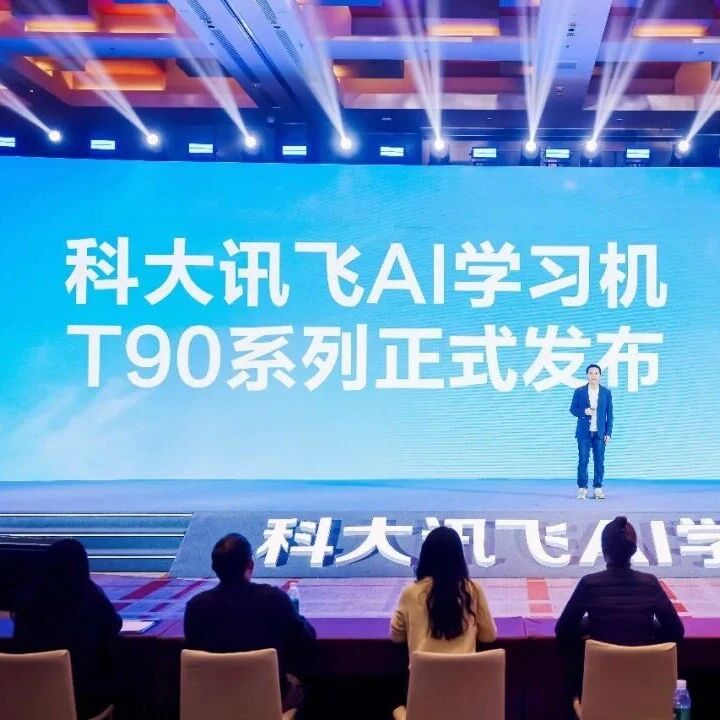
科大讯飞AI学习机T90系列重磅发布,开启个性化学习新时代
凤凰网财经· 2026-02-28 13:08
Core Viewpoint - The article emphasizes the launch of iFLYTEK's T90 series AI learning machines, which aim to enhance personalized learning for children by leveraging advanced AI technology to address individual learning needs and improve efficiency [1][3]. Group 1: AI and Personalized Learning - Continuous iteration of AI technology has made personalized learning a reality, allowing for precise diagnosis of each child's knowledge structure and tailored learning paths [4][5]. - The T90 series has been validated in over 50,000 schools across 32 provincial regions in China, showing a 55% reduction in inefficient learning and a 29% increase in student engagement [7]. Group 2: Efficient Learning Methods - The T90 series promotes a "measure-learn-practice" closed-loop system that helps children focus on what they need to learn, reducing study time by 64% and increasing mastery rates by 3.1 times compared to traditional methods [8][9]. - The system is designed to adapt to local examination requirements and can trace learning gaps across different educational stages, ensuring comprehensive coverage of all subjects [9]. Group 3: Innovative AI Features - The introduction of the AI teacher "Xiao Yue" offers personalized explanations by identifying and addressing specific mistakes, enhancing the learning experience beyond mere answer provision [11][14]. - The T90 series includes a focus on core subject skills, promoting critical thinking and real-world application rather than rote learning [15]. Group 4: Comprehensive Learning Solutions - The T90 series provides a complete growth plan for English learning, integrating various resources to enhance listening, speaking, reading, and writing skills across different educational stages [16]. - The series also features a science education module that utilizes AI to engage children's curiosity through interactive learning experiences [18]. Group 5: Holistic Development and Health - The T90 series incorporates a learning motivation system based on psychological principles to foster good habits and intrinsic motivation in children [19]. - The hardware includes a protective screen and hearing safety features, ensuring the well-being of children during their learning process [21]. Group 6: Overall Mission - iFLYTEK aims to utilize perceptible AI technology to provide each child with a personalized AI companion, facilitating confident and joyful growth through efficient learning support [23].


响应国家战略,梨花AI声学学习机构筑文化养老数字底座
Huan Qiu Wang Zi Xun· 2026-01-26 10:41
Core Insights - The article emphasizes the importance of the "Artificial Intelligence +" initiative in integrating AI with various sectors of the economy, highlighting the role of a digital industrial foundation as a core engine for new productive forces [1][2]. Group 1: Policy and Strategic Framework - Recent high-level policies have been introduced to energize the "Artificial Intelligence +" initiative, with the State Council positioning AI as a key driver for industrial upgrades and reshaping production and lifestyle paradigms [2]. - The Ministry of Industry and Information Technology, along with eight other departments, has issued implementation opinions that focus on "innovative foundations: solidifying the AI empowerment base," which includes enhancing intelligent computing power and developing high-level industry models [2]. - The goal is to achieve deep application of general large models in manufacturing by 2027, creating specialized industry models and thousands of high-level industrial intelligent entities and quality datasets [2]. Group 2: Product Innovation and Market Application - The Li Hua AI Acoustic Learning Machine represents more than just a hardware product; it embodies the concept of a digital industrial foundation in the cultural service sector, particularly for elderly education and emotional companionship [3]. - The product is designed specifically for the elderly, addressing their unique needs in cultural learning and emotional support, with features such as a 12.7-inch paper-like screen, voice activation, and simplified learning paths [3][4]. - The device incorporates a "acoustic large model" that utilizes 75 AI evaluation algorithms and 50 voice feature dimensions, trained on 480 million voice samples and 28,000 expert annotations, to provide comprehensive feedback on users' speech [4]. Group 3: Ecosystem Development and Future Directions - The event where the Li Hua AI Acoustic Learning Machine was showcased served as a platform for building an industrial ecosystem, bringing together AI technology, smart hardware, capital, and services to empower emerging brands [4][5]. - The company plans to continue focusing on the "AI + cultural elderly care" scenario, promoting the integration of smart hardware with cultural services to enhance the learning and enjoyment of elderly individuals [5].
让学习更有兴趣!科大讯飞AI学习机发布“AI大咖 1对1 答疑辅导”新功能
Jing Ji Guan Cha Wang· 2025-11-06 07:39
Core Insights - The 8th World Voice Conference and the 2025 iFlytek Global 1024 Developer Festival highlighted advancements in large model technology across various sectors, including education, healthcare, and automotive [1][2] Group 1: Company Developments - iFlytek's Chairman Liu Qingfeng announced that the Xinghuo large model has accelerated its implementation across industries, maintaining a leading position in key areas such as education and healthcare [2] - The National Engineering Research Center for Internet Education released a report indicating that the Xinghuo education model outperforms other mainstream models in core capabilities for assisting teaching and learning [2] Group 2: Product Innovations - iFlytek introduced the AI Learning Machine, which features advanced technologies aimed at protecting children's eyesight, including a micro-nano paper-like screen and DC dimming technology to reduce eye strain [3] - The new "AI Master 1-on-1 Tutoring" function allows children to interact with AI for personalized guidance, enhancing engagement by incorporating beloved characters from Chinese culture [5][8] - The AI Master does not simply provide answers but guides children through problem-solving processes, encouraging active thinking and understanding of concepts [6][7] Group 3: Educational Impact - The AI Master integrates multiple technologies to create an immersive learning experience, closely mimicking real-life teaching methods [8] - iFlytek's continuous innovation in AI learning machines aims to reduce educational burdens while enhancing efficiency, aligning with national initiatives to promote effective learning methods [8]

智能设备重塑“教”与“学”
Ren Min Ri Bao Hai Wai Ban· 2025-10-12 22:59
Core Insights - The integration of artificial intelligence in education is transforming traditional teaching methods, enhancing student engagement and learning outcomes through interactive tools and personalized learning experiences [3][4][5][6][8]. Group 1: AI in Education - The collaboration between iFLYTEK and Kexin China has led to the development of an AI model that allows virtual figures of historical figures to interact with students, answering questions in an engaging manner [3]. - The Chinese government has initiated a digital education strategy aimed at leveraging AI to reform education by 2025, prompting tech companies to innovate educational tools [3]. Group 2: Interactive Learning Tools - The use of interactive whiteboards and AI-powered software in classrooms has significantly increased student participation and engagement compared to traditional methods [4][5]. - AI tools like the "AI Listening and Speaking Classroom" can generate real-time exercises based on student performance, enhancing the learning experience [4][5]. Group 3: Teacher Support and Efficiency - AI grading machines can reduce teachers' grading time by 80%, allowing them to focus more on personalized instruction and educational research [6]. - The integration of AI in grading and feedback processes has streamlined administrative tasks, enabling teachers to dedicate more time to student interaction and tailored teaching [6][7]. Group 4: Personalized Learning Experience - AI learning devices are evolving to provide personalized feedback and support, acting as virtual tutors that adapt to individual student needs [8][9]. - The design of AI learning machines incorporates emotional intelligence, allowing them to engage with students in a more relatable manner, enhancing the overall learning experience [9][10]. Group 5: Home-School Collaboration - Smart educational devices are facilitating a seamless connection between home and school, allowing parents to monitor their children's progress and engage in their learning journey [11][12]. - The effectiveness of these devices varies among students, with those who are more self-motivated benefiting the most from the technology [11][12].