消费级影像

Search documents
大疆全景相机被指市占近半,两份报告陷数据疑云
36氪· 2025-11-06 13:45
Core Insights - The article discusses the competitive landscape of the panoramic camera market, highlighting a significant discrepancy in market share data reported by different research firms, with DJI claiming a 43% share while another report suggests only 17.1% [1][2][3] - DJI's rapid success in the panoramic camera segment is attributed to its extensive experience and technological advancements in the action camera market, showcasing a strategic transition from challenger to market leader [5][10][23] Market Share Discrepancies - A report by Jiuqian Consulting indicates DJI holds a 66% share in the action camera market and 43% in the panoramic camera market [1] - In contrast, a report from Sullivan claims DJI's share in the panoramic camera market is only 17.1%, leading to confusion and controversy [1][2] - DJI's internal data confirms a shipment of over 300,000 panoramic cameras in Q3, aligning more closely with Jiuqian's findings [1] Product Development and Innovation - DJI's journey in the action camera sector involved a six-year process of technological iteration and market expansion, culminating in a robust product ecosystem [5][14] - The introduction of the Osmo 360 and Osmo Nano reflects a culmination of years of research and development, emphasizing a systematic approach to innovation rather than sporadic breakthroughs [8][9][19] - The Osmo 360 utilizes a custom square CMOS sensor, enhancing sensor efficiency by 25% and enabling native 8K video output, addressing traditional panoramic camera limitations [19][21] Ecosystem and User Experience - DJI's product strategy extends beyond individual devices, focusing on creating a cohesive ecosystem that enhances user experience across different product lines [16][17] - The integration of features from various products, such as shared batteries and accessories, fosters a seamless user experience and reduces barriers to entry for new users [16][17] - The company's approach to innovation emphasizes long-term growth and user-centric design, moving away from mere hardware competition to a more holistic ecosystem development [23][24] Competitive Landscape - The article highlights the ongoing battle for market dominance between DJI and established players like GoPro, with DJI's innovative strategies positioning it favorably in the market [5][21] - DJI's ability to leverage its technological advancements and supply chain efficiencies has created a competitive edge, allowing it to offer high-quality products at lower prices [17][21] - The emergence of new product categories, such as the anticipated Avata 360 drone, illustrates DJI's commitment to redefining market boundaries and addressing evolving consumer needs [21][23]


影石创新与大疆,为什么都盯上了对方的生意?
Zheng Quan Zhi Xing· 2025-09-06 07:29
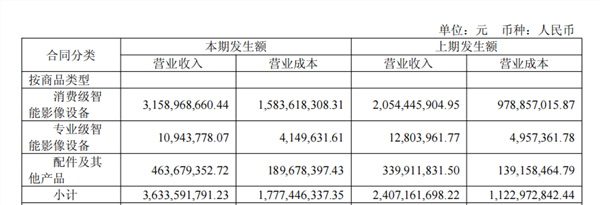
Group 1 - The core competition between the companies is marked by their entry into each other's primary markets, with影石创新 launching its new panoramic drone brand影翎Antigravity and大疆 releasing its first panoramic action camera Osmo 360 [3] -影石创新's decision to expand into the drone market is driven by the limited growth potential in the panoramic camera sector, where it holds a 67.2% market share and faces a projected compound annual growth rate (CAGR) of less than 12% from 2023 to 2027 [4][6] - The revenue structure of影石创新 shows that in the first half of 2025, its income from consumer-grade smart imaging devices was 31.59 billion yuan, accounting for 86.06% of total revenue, indicating a need for diversification [5] Group 2 - The drone market presents a larger growth opportunity, with a projected CAGR of over 10.32% and an expected market size exceeding 13 billion USD by 2033, making it an attractive sector for影石创新 to enter [6][7] - The introduction of全景无人机 (panoramic drones) allows影石创新 to create a more comprehensive product matrix, catering to various user needs and enhancing customer loyalty through a "one-stop shopping" experience [7][9] - The competition with大疆, which has a well-established presence and extensive vertical integration in the drone industry, poses challenges for影石创新, but also provides a benchmark for innovation and market education [8][12] Group 3 -影石创新 aims to leverage its existing technology and brand recognition in the panoramic camera space to differentiate itself in the drone market, focusing on a unique product positioning [9][10] - The launch of the "Insta360+" cloud service enhances user experience and strengthens影石创新's software capabilities, which is crucial for the success of its new drone products [10] - The presence of大疆 in the market serves as both a challenge and an opportunity for影石创新, as it sets a high standard for technology and product development while also expanding the overall market for drones [12]

影石创新与大疆为什么都盯上了对方的生意
Zheng Quan Zhi Xing· 2025-09-05 06:04
Core Viewpoint - The consumer imaging and drone market is witnessing a significant competitive shift as leading companies, Insta360 and DJI, expand into each other's core markets, indicating a high-level competition that is emerging [1][12]. Group 1: Market Dynamics - The global panoramic camera market is limited, with a size of 5.03 billion yuan in 2023, expected to grow to 7.85 billion yuan by 2027, reflecting a compound annual growth rate (CAGR) of less than 12% [2]. - Insta360 holds a dominant market share of 67.2% in the panoramic camera sector, indicating limited room for further market share expansion [2]. - The revenue structure of Insta360 shows that in the first half of 2025, revenue from consumer-grade smart imaging devices was 3.159 billion yuan, accounting for 86.06% of total revenue [3]. Group 2: Strategic Expansion - Insta360's entry into the drone market is a strategic move to seek a "second growth curve" due to the limitations of the panoramic camera market [4]. - The consumer drone market is projected to grow at a CAGR of over 10.32%, with an estimated market size exceeding 13 billion USD by 2033, making it a more attractive sector compared to panoramic cameras [4]. - Insta360 aims to create a comprehensive product matrix by introducing drones, catering to users' diverse shooting needs and enhancing customer loyalty [6]. Group 3: Competitive Landscape - DJI is facing growth challenges, with recent product releases criticized for lacking innovation, necessitating a response to maintain market leadership [7]. - Insta360's strategy involves creating a differentiated product category with "panoramic drones," avoiding direct competition with traditional drones while leveraging its established brand in panoramic cameras [8]. - The technological overlap between panoramic cameras and drones allows Insta360 to utilize its existing expertise in optics and smart devices to develop competitive products [9]. Group 4: Future Considerations - Insta360's cloud service, launched in January 2025, enhances user experience by providing cloud storage and editing capabilities, which can significantly improve the usability of their products [10]. - To establish itself as a leading brand in the new drone category, Insta360 must validate its product strength through market share data [11]. - The presence of a strong competitor like DJI presents both challenges and opportunities for Insta360, as it can lower market education costs while also increasing competitive pressure [12].