
润滑剂

Search documents
行业聚焦:全球滑轨润滑剂行业头部企业市场份额及排名调查(附厂商名单)
QYResearch· 2025-12-03 04:16
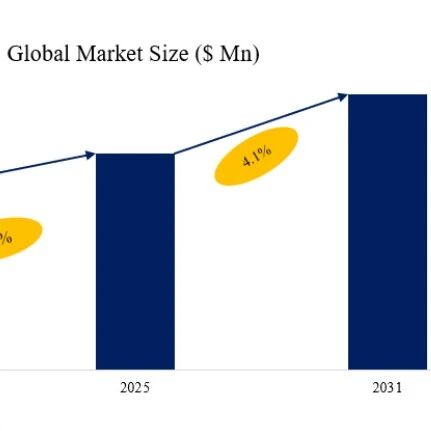
Core Viewpoint - The article discusses the growth and trends in the slide rail lubricant market, driven by manufacturing upgrades and the localization of equipment in China, with a projected global market size of $230 million by 2031 and a CAGR of 4.1% from 2025 to 2031 [2]. Market Analysis - The demand for slide rail lubricants in China is significantly influenced by the "Made in China 2025" initiative and the acceleration of high-end equipment localization, leading to increased usage in CNC machine tools and smart manufacturing lines [2]. - The automotive, rail transportation, wind power, aerospace, and 3C electronics industries are increasingly reliant on high-precision processing, which enhances the performance requirements for lubricants [2]. - The substantial number of existing machine tools creates a stable demand for replacement and maintenance, supporting market growth [2]. Supply Chain Situation - The upstream supply chain includes base oils (mineral oils, PAO synthetic oils, ester synthetic oils), functional additives (anti-wear agents, extreme pressure agents, adhesion agents, corrosion inhibitors), and blending equipment, with base oils accounting for approximately 45%-50% of the total cost [5]. - Midstream companies focus on formulation design, blending production, and testing, while downstream customers include machine manufacturers, industrial maintenance companies, automotive parts manufacturers, and aerospace and electronics manufacturers [5]. Technical Trends - Development is focused on low friction and anti-"stick-slip" performance to meet the precision requirements of domestic high-speed CNC machine tools [6]. - There is a push for high adhesion and long-life products to reduce oil change frequency and maintenance costs [6]. - New formulations compatible with water-based cutting fluids and hydraulic systems are gaining popularity [6]. - Stricter environmental regulations are driving the development of low-volatility and biodegradable lubricants [6]. - Leading companies are beginning to implement online lubrication monitoring and oil condition sensors for predictive maintenance and remote operations [6]. Industry Policies - The "Made in China 2025" policy identifies high-end CNC machine tools and basic manufacturing equipment as key development areas, rapidly increasing the demand for slide rail lubricants [7]. - The Ministry of Industry and Information Technology and the Ministry of Ecology and Environment are strengthening VOC emissions and waste oil recovery management for lubricants, promoting the iteration of green and environmentally friendly lubricants [7]. - National standards (e.g., GB/T 7631.9) have been established to regulate lubricant performance and application classifications, raising market entry barriers [7]. - Data from the China Machine Tool Industry Association indicates a significant increase in the localization rate of high-end machine tools, enhancing the trend of domestic slide rail lubricants replacing imports [7]. - Large-scale infrastructure and manufacturing investments (e.g., in new energy vehicles, wind power, and rail transit) provide a broad application space for slide rail lubricants [7]. Market Drivers - The growth in the machine tool industry is driven by the increasing demand for CNC machine tools, grinding machines, and boring machines, which rely heavily on slide rail lubricants for low friction, low wear, and high precision operation [8]. - The rising precision processing and surface quality requirements in industries such as electronics, aerospace, and medical devices are pushing the use of lubricants with high adhesion and anti-stick-slip properties [8]. - Policies supporting industrial modernization and smart manufacturing in major manufacturing countries like China, India, and Southeast Asia are driving the replacement and new market for lubricants [8]. Market Development Opportunities - The expansion of manufacturing in the Asia-Pacific region, particularly in China, India, and Vietnam, is expected to drive demand for slide rail lubricants, with the region projected to maintain the fastest compound growth rate [12]. - The demand for high-performance and environmentally friendly lubricants is expected to grow, with the development and application of low-volatility, long-life, and zinc-free eco-friendly formulations becoming new profit growth points [13]. - The trend towards full lifecycle service for equipment is leading more machine tool companies to collaborate with lubricant suppliers to provide integrated maintenance solutions, including oil monitoring, predictive maintenance, and lubrication management services [13]. - The integration of IoT sensors and oil monitoring systems allows for real-time detection of lubricant conditions, enhancing the efficiency and added value of lubricant usage [14].

克鲁勃润滑剂收购TriboServ公司
Zhong Guo Hua Gong Bao· 2025-09-19 02:34
Core Insights - Klüber Lubrication has announced the acquisition of TriboServ to strategically expand its automatic lubrication systems product portfolio [1] - The collaboration aims to provide more targeted and efficient lubrication solutions for customers [1] - The existing service team at TriboServ will remain unchanged following the acquisition [1] Company Perspectives - Dr. Michael Weigand, founder of TriboServ, emphasized that Klüber Lubrication is not only an important partner but also a like-minded collaborator focused on leveraging technical strengths to explore new markets and drive innovation [1] - Dr. Wolfgang Sammer, CEO of Klüber Lubrication, highlighted that TriboServ's expertise in customized lubrication solutions, particularly in integrating specialty lubricants with lubrication systems, aligns closely with the company's strategic direction [1]
自身“足迹”最小化 客户“手印”最大化——科德宝集团高管分享可持续发展进展及实践案例
Zhong Guo Hua Gong Bao· 2025-07-09 02:24
Core Insights - The report emphasizes the dual approach of "footprint + handprint" to minimize the company's environmental impact while enhancing the value of its products and solutions for customers [1][3] Group 1: Sustainability Initiatives - The company reported a total energy usage of 2,486 GWh in 2024, remaining stable compared to the previous year, with renewable energy accounting for 38% of total energy consumption, an increase of 2% from the previous year [1] - Carbon dioxide emissions were recorded at 568,000 tons, a reduction of 37,000 tons compared to the previous year [1] - Since 2020, the company has reduced its carbon emissions per million euros in sales by 45%, down to 47.5 tons, and has decreased absolute carbon emissions by approximately 200,000 tons, equivalent to 26% of 2020 levels [1] Group 2: Renewable Energy Projects - As of the end of 2024, the company has established and is operating 44 solar photovoltaic arrays globally, including 9 in China, with 65 additional projects in various planning stages [2] - A new solar project at the company's site in Hangzhou is expected to generate 200,000 kWh annually, reducing carbon emissions by 118.8 tons each year [2] - The company plans to increase the renewable energy usage ratio to 41% at its Suzhou factory by procuring 1.6 million kWh of green electricity in 2024, achieving a 23% reduction in carbon emissions per unit of sales compared to the 2020 baseline [2] Group 3: Energy Efficiency and Product Solutions - The company has identified a potential 30% energy-saving opportunity by analyzing approximately 40% of its total carbon emissions as part of its "Bee-Efficient" initiative launched in 2019 [2] - The Wibak factory in Wuxi achieved a 13% reduction in carbon emissions and a 14% decrease in overall energy consumption compared to the 2023 baseline through system optimizations [3] - In the lubricant sector, the company saved 44 GWh of electricity for Chinese customers in 2024, equivalent to a reduction of 230,000 tons of carbon emissions [3] Group 4: Future Commitments - The company is committed to continuous upgrades in green manufacturing, strengthening local R&D, and expanding talent and cultural investments, with a focus on "taking responsibility" as a core value [4] - The company aims to achieve climate neutrality by 2045, reinforcing its commitment to global climate initiatives [4]