环境研究

Search documents
我国科研团队发现低浓度抗生素污染可加剧温室气体排放
Ke Ji Ri Bao· 2026-01-13 02:23
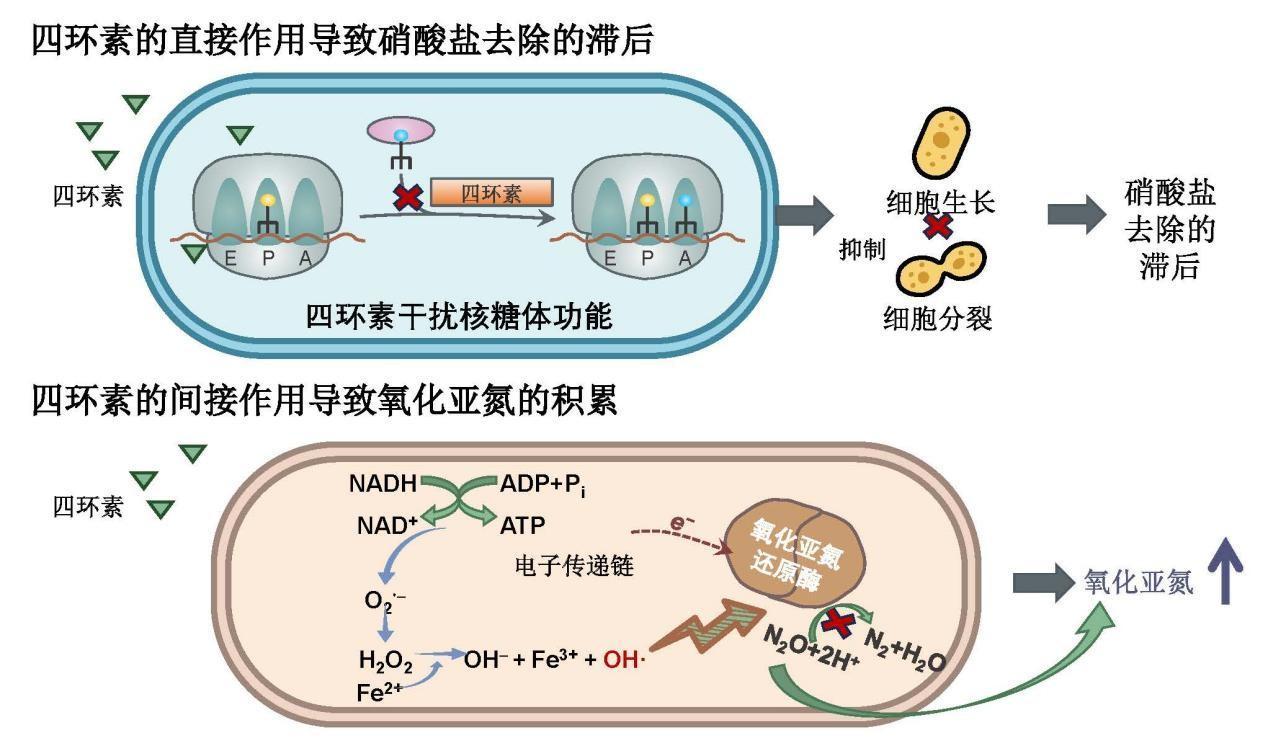
Core Insights - The research conducted by Anhui Normal University reveals the interference mechanism of low-concentration antibiotics on microbial nitrogen cycling, significantly promoting nitrous oxide emissions, providing new scientific evidence for understanding the climate effects of antibiotic pollution [1][3] Group 1: Research Findings - The study focuses on the physiological response mechanisms of denitrifying bacteria to tetracycline antibiotics at environmental concentrations, demonstrating that even at sub-lethal concentrations, antibiotics can significantly delay nitrate removal and increase nitrous oxide emissions [3] - The research team utilized enzyme activity measurements, cellular physiology, and transcriptomics analysis to show that antibiotics inhibit protein synthesis and disrupt glucose metabolism and electron transport, leading to redox imbalance and accumulation of reactive oxygen species, which in turn suppresses the activity of enzymes that reduce nitrous oxide [3] - This study is the first to elucidate the non-lethal interference pathway of sub-lethal concentrations of antibiotics on nitrogen cycling from the perspective of the "antibiotic-microbe-greenhouse gas" chain mechanism, providing new evidence for assessing the environmental and climate effects of antibiotic pollution [3] Group 2: Implications - The findings suggest that the long-term ecological effects of low-concentration antibiotics should be considered in environmental risk assessments and global nitrous oxide emission models [3]

中国团队实现大气“微塑料”精准量化 新方法助力环境健康评估研究
Zhong Guo Xin Wen Wang· 2026-01-10 08:09
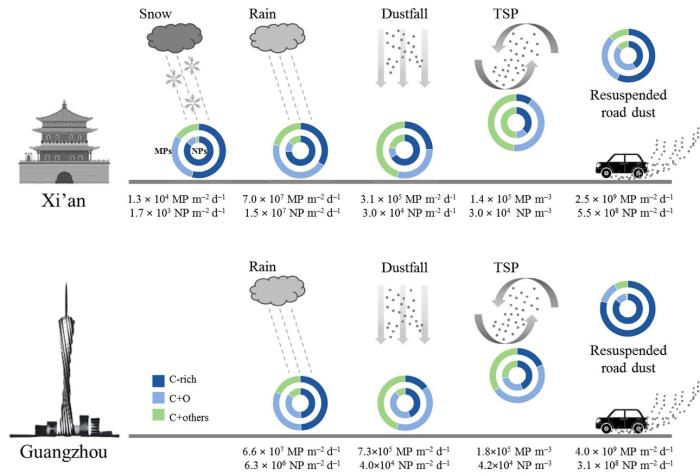
Core Insights - The research conducted by the Chinese Academy of Sciences has developed a semi-automated microscopic analysis method that effectively quantifies plastic particles as small as 200 nanometers in environmental samples, marking an international first [2] - The study reveals that road dust and rainfall processes dominate the atmospheric transport of plastics, and it observes the heterogeneous mixing of micro/nanoplastics with other particulate matter in the atmosphere, providing new insights into health risks and climate effects [4][6] Group 1 - The new method utilizes computer-controlled scanning electron microscopy to measure the size, morphology, and elemental composition of plastic particles, enabling a systematic study of the abundance of micro/nanoplastics in urban atmospheric aerosols, precipitation, and dust [2][8] - The research highlights that microplastics and nanoplastics have been found in various environmental media, posing potential long-term threats to biological entities and ecosystems [5] - Traditional analysis methods have struggled to quantify microplastics in environmental samples, creating a bottleneck in research, which this new method aims to overcome [6][8] Group 2 - The study enhances the understanding of the environmental behavior of atmospheric plastics and provides direct evidence for assessing their impact on radiative forcing and ecosystems [8] - The findings indicate that atmospheric transmission is a key pathway for the global circulation of microplastics, with evidence from remote areas further supporting this [5] - The research contributes to the growing academic focus on the presence and effects of micro/nanoplastics in the atmosphere, addressing the lack of quantitative methods in this field [6]