生态保护与旅游

Search documents
青海探索生态转化路径激发保护可持续性
Zhong Guo Jing Ji Wang· 2026-01-30 06:28
Group 1 - In 2025, Qinghai Province's Forestry and Grassland Bureau completed a total afforestation area of 6.934 million acres and sand control area of 2.2828 million acres, planting 17 million trees [1] - The construction of the Sanjiangyuan National Park is progressing well, with the Qilian Mountain National Park candidate area ready for establishment and the Qinghai Lake National Park candidate area passing evaluation [1] - The "Xining Eye" landmark, opened to the public in May 2025, attracted 200,000 visitors by October 2025 and achieved 9.12 million clicks on social media, reflecting the successful transformation of ecological products into tangible benefits for the public [1] Group 2 - The Qilian Mountain National Park candidate area is exploring a development model that combines immersive experiences and high-end services, with the ecological science museum attracting 170,000 visitors since its opening in 2023 [2] - The ecological education network has been established through various activities, transforming local villagers from bystanders to guardians of ecological protection, leading to increased income through tourism-related businesses [2] - The implementation of ecological guardian roles has resulted in over 80,000 ecological guardians in Qinghai, with an average annual income increase of nearly 20,000 yuan per household [3] Group 3 - The Qinghai government has approved the expansion of the Sanjiangyuan National Park, increasing ecological guardian positions from 17,211 to 20,843, providing stable employment and income opportunities [3] - The ecological protection and livelihood improvement are mutually reinforcing, with the new system encouraging herders to participate in park management and enjoy the benefits of ecological conservation [3]
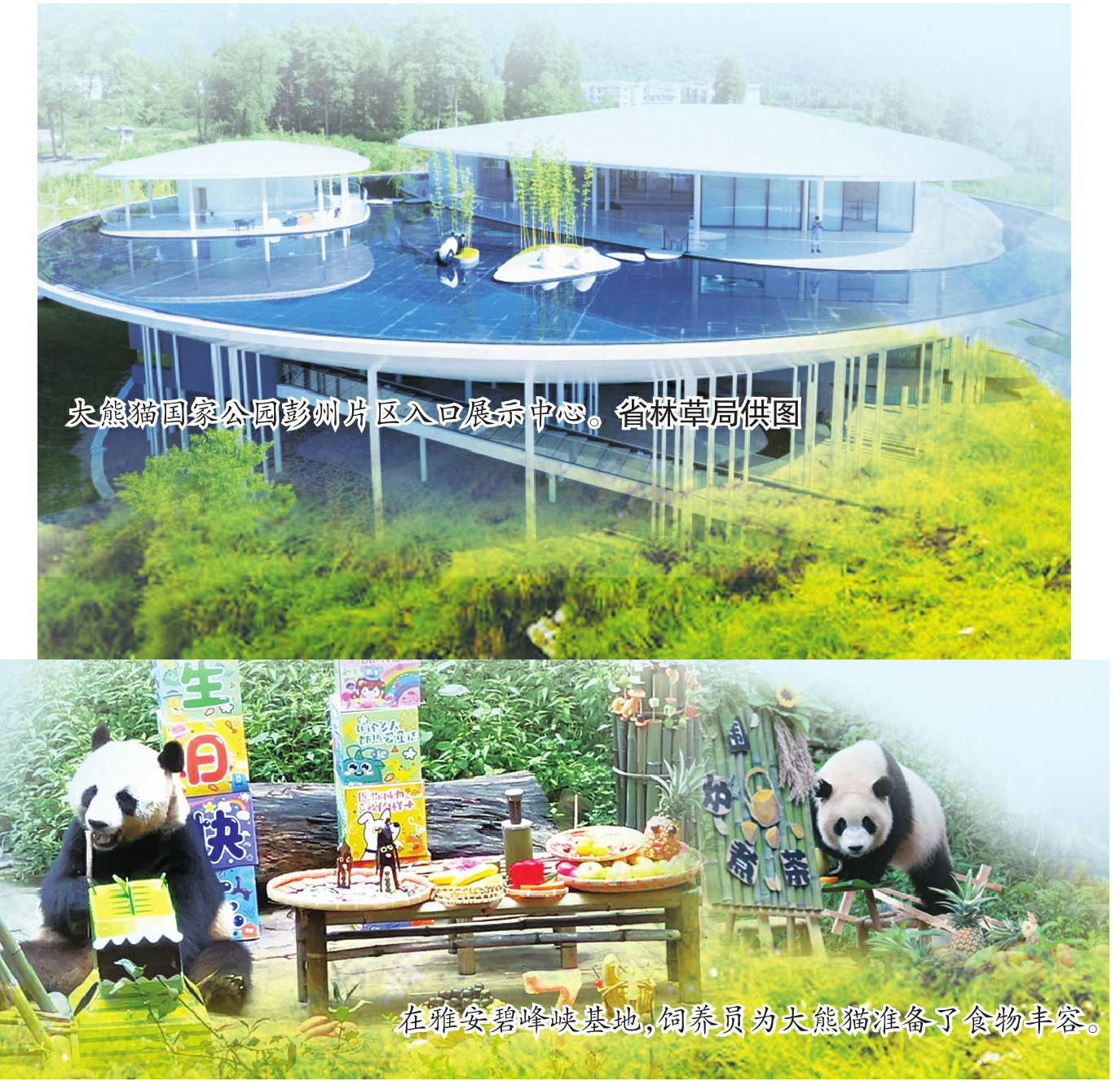
四川高质量推进大熊猫国家公园建设,大熊猫野外监测年遇见数上升至185只 1227只野生大熊猫的安逸家园
Si Chuan Ri Bao· 2025-08-19 00:22
Core Insights - The establishment of the Giant Panda National Park has led to significant ecological restoration and biodiversity conservation efforts in Sichuan, with over 330,000 acres of habitat restored and 20,000 acres of ecological corridors built [2][4] - The park is home to 1,227 wild giant pandas and over 11,000 rare species, indicating a stable and improving ecosystem [5][4] - The park's management has implemented advanced monitoring systems, including over 4,600 infrared cameras and annual patrols covering 100,000 kilometers, enhancing ecological protection [5][4] Group 1: Ecological Restoration and Monitoring - The Giant Panda National Park in Sichuan has completed habitat restoration of over 330,000 acres and constructed ecological corridors of over 20,000 acres [2][4] - The annual number of wild giant pandas monitored has increased from 178 to 185, demonstrating successful population management [4] - A comprehensive monitoring system has been established, utilizing satellite remote sensing and drones to track ecological changes [5] Group 2: Biodiversity and Species Protection - The park supports a diverse ecosystem, with 1,227 wild giant pandas cohabiting with over 11,000 rare species, contributing to a stable and improving ecological system [5][4] - The successful monitoring and management strategies have led to increased sightings of mother pandas with cubs, indicating a healthy breeding environment [4] Group 3: Community Development and Economic Impact - The park has fostered community development through eco-tourism, with local initiatives generating significant income, such as the "熊猫文旅" industry, which has attracted 400,000 visitors and generated 210 million yuan in tourism revenue [9][10] - Local communities are engaged in sustainable practices, such as beekeeping, which enhances both ecological health and local incomes [10] - The park has created over 3,000 public welfare jobs, linking ecological protection with community benefits [10]