
生态产品价值转化

Search documents
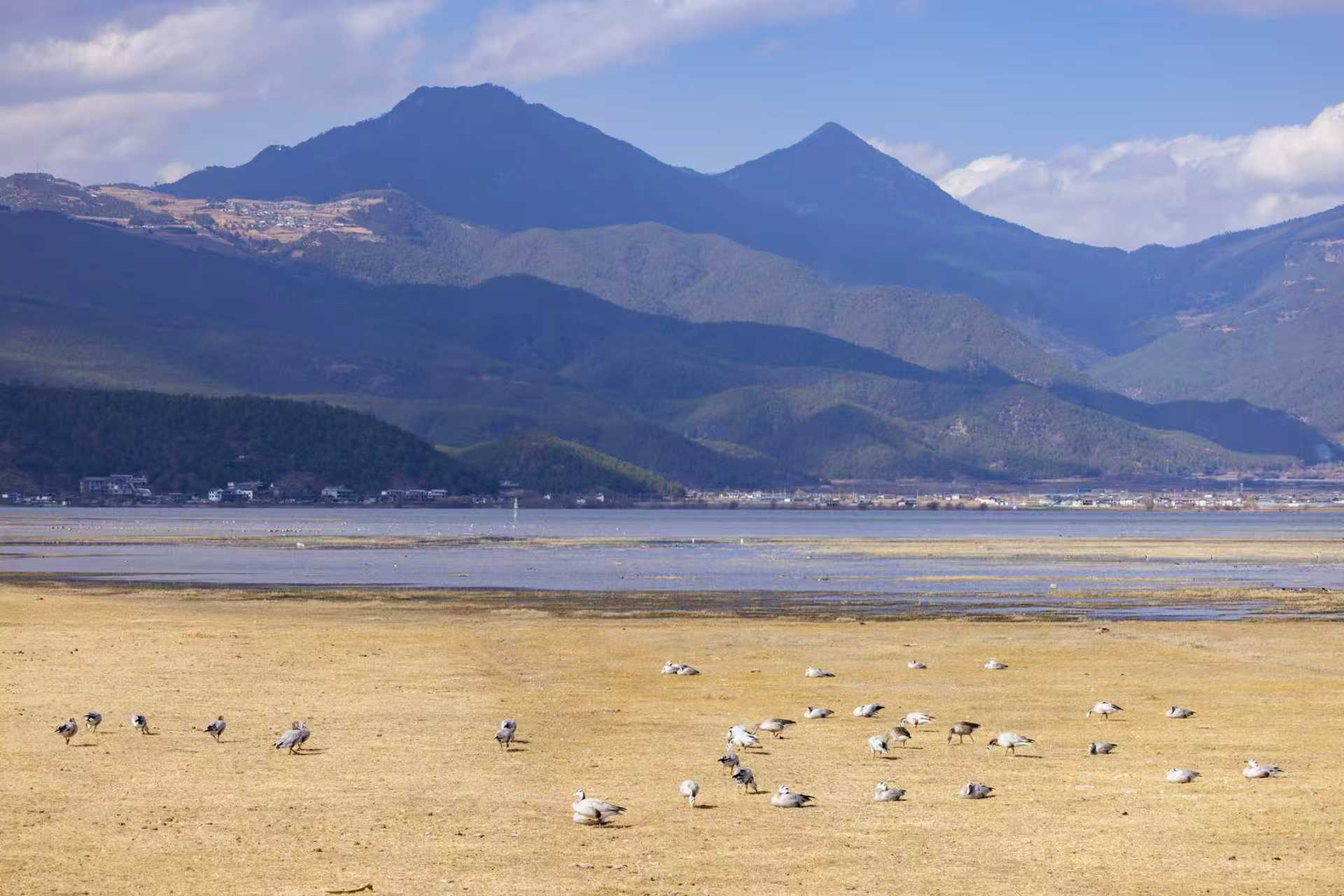
以鸟为媒筑共生——首届丽江市玉龙纳西族自治县观鸟季走笔
Zhong Guo Zi Ran Zi Yuan Bao· 2026-02-13 04:04
Core Viewpoint - The first Bird Watching Season in Lijiang's Yulong Naxi Autonomous County aims to promote ecological transformation and economic development through birdwatching activities, showcasing the region's ecological resources and fostering a harmonious relationship between humans and nature [1][2]. Group 1: Bird Watching Economy - The birdwatching economy is identified as a green, intelligent, and wealth-generating industry, emphasizing its core value in promoting local development [4]. - Over the past decade, the number of bird species recorded at Lashi Lake has increased from 233 to 341, with over 100,000 migratory birds stopping here each year, providing a solid ecological foundation for the birdwatching economy [4]. - The Bird Watching Season features a theme of "Harmony between Humans and Birds," incorporating various activities such as bird photography competitions and roundtable discussions on ecological transformation [4][5]. Group 2: Ecological Transformation and Community Involvement - Yulong County is actively developing new business models like birdwatching and wetland education, gradually establishing a distinctive brand for its cultural tourism, injecting sustainable green vitality into the local economy [6]. - Experts at the ecological transformation roundtable discussed effective paths for converting ecological resources into products, emphasizing the integration of scientific resources with educational experiences [8]. - The county promotes a collaborative governance mechanism involving government, research institutions, enterprises, and communities, ensuring local residents benefit from ecological protection efforts [11]. Group 3: Cultural Integration and Product Development - The integration of traditional Naxi culture with wetland ecological resources is highlighted through the introduction of cultural products during the Bird Watching Season [9]. - Suggestions for developing diversified ecological products include creating immersive experiences and cultural value additions to enhance the appeal of ecological tourism [8][9]. - The initiative aims to ensure that local communities are active participants in ecological protection, aligning their interests with sustainable tourism development [11].

一个品牌撬动8.64亿元?看“美兰好品”如何将绿水青山变成金山银山
Zhong Guo Huan Jing Bao· 2026-02-12 01:50
Core Viewpoint - The article emphasizes the importance of transforming the potential value of ecological products into real economic value, using the "Meilan Good Products" brand in Haikou, Hainan Province as a model for integrating ecological advantages into marketable value [1][4]. Group 1: Brand Development and Economic Impact - The "Meilan Good Products" initiative aims for a total sales revenue of 864 million yuan by 2025, benefiting thousands of farmers [1]. - The brand has successfully addressed issues such as fragmented agricultural operations and weak bargaining power by uniting 29 authorized enterprises across ten key industries [2]. - The initiative has led to significant participation from local farmers, with over 300 farmers involved in the chicken farming model, producing 13.4 million chickens annually [2]. Group 2: Quality and Ecological Sustainability - The brand prioritizes quality as its core competitive advantage, focusing on ecological sustainability and guiding enterprises to shift from scale expansion to quality enhancement [3]. - The establishment of a standard system and traceability mechanisms has strengthened market trust and improved product quality, leading to increased market prices and consumer interest [3]. Group 3: Collaborative Framework and Long-term Planning - The success of ecological product value transformation relies on a collaborative framework involving government guidance, enterprise leadership, and farmer participation, creating a community of shared interests [4]. - The brand's development is not a short-term effort but requires long-term planning and a systematic approach to overcome industry challenges and foster new business models [4].
青海探索生态转化路径激发保护可持续性
Zhong Guo Jing Ji Wang· 2026-01-30 06:28
Group 1 - In 2025, Qinghai Province's Forestry and Grassland Bureau completed a total afforestation area of 6.934 million acres and sand control area of 2.2828 million acres, planting 17 million trees [1] - The construction of the Sanjiangyuan National Park is progressing well, with the Qilian Mountain National Park candidate area ready for establishment and the Qinghai Lake National Park candidate area passing evaluation [1] - The "Xining Eye" landmark, opened to the public in May 2025, attracted 200,000 visitors by October 2025 and achieved 9.12 million clicks on social media, reflecting the successful transformation of ecological products into tangible benefits for the public [1] Group 2 - The Qilian Mountain National Park candidate area is exploring a development model that combines immersive experiences and high-end services, with the ecological science museum attracting 170,000 visitors since its opening in 2023 [2] - The ecological education network has been established through various activities, transforming local villagers from bystanders to guardians of ecological protection, leading to increased income through tourism-related businesses [2] - The implementation of ecological guardian roles has resulted in over 80,000 ecological guardians in Qinghai, with an average annual income increase of nearly 20,000 yuan per household [3] Group 3 - The Qinghai government has approved the expansion of the Sanjiangyuan National Park, increasing ecological guardian positions from 17,211 to 20,843, providing stable employment and income opportunities [3] - The ecological protection and livelihood improvement are mutually reinforcing, with the new system encouraging herders to participate in park management and enjoy the benefits of ecological conservation [3]
两会会客厅|省水利厅厅长易耘:用改革破解发展难题 推动贵州水利事业高质量发展
Xin Lang Cai Jing· 2026-01-28 09:27
Core Insights - The article discusses the significant achievements in water conservancy construction in Guizhou during the "14th Five-Year Plan" period, highlighting reforms and improvements in water resource management, ecological protection, and infrastructure development [1][3]. Group 1: Achievements in Water Conservancy - Guizhou has shifted from a focus on individual water reservoir projects to a more integrated water network approach, resulting in the completion of 432 key water source projects and over 2800 kilometers of water supply pipelines, increasing water supply capacity by 2.9 billion cubic meters [3][5]. - The rural water supply coverage has increased from 20% at the end of the "13th Five-Year Plan" to over 50%, providing rural residents with access to quality tap water comparable to urban areas [3][5]. Group 2: Water Resource Management Improvements - Water resource management has transitioned from extensive use to precise control, with 131 water rights transactions completed, totaling 8.82 million cubic meters and generating direct transaction revenue of 3.247 million yuan [5][6]. - The province has seen a 26% reduction in water consumption per unit of GDP and a 54% reduction in water consumption per unit of industrial added value over the past five years, indicating improved efficiency in water resource utilization [5]. Group 3: Ecological Protection and Value Enhancement - Guizhou has implemented a dual ecological compensation mechanism for water quality and quantity, exploring new models for ecological product transactions, with an initial transaction value exceeding 12 million yuan [6][8]. - The province has restored biodiversity and improved water quality in key river basins, becoming a national model for environmental protection [5][6]. Group 4: Future Plans for Water Conservancy - The water conservancy system aims to focus on eight key areas for the "15th Five-Year Plan," including enhancing flood disaster prevention, advancing modern water network projects, and ensuring high-quality planning and implementation [9][10]. - The emphasis will be on strengthening rural water infrastructure, increasing the coverage of large-scale water supply to at least 53%, and maintaining a tap water coverage rate of 95% [9][12].

海河流域水土保持生态产品价值转化超5000万元
Xin Lang Cai Jing· 2026-01-27 11:36
Core Insights - The article reports that by the end of 2025, the Haihe River Basin is expected to complete 21 transactions related to the ecological value transformation of soil and water conservation, with a total amount exceeding 50 million yuan [1] Group 1: Transactions and Financials - A total of 21 transactions will be completed in the Haihe River Basin by the end of 2025 [1] - The total financial value of these transactions is projected to exceed 50 million yuan [1] Group 2: Types of Services - The transactions will cover three main types of ecological product services: material supply, regulatory services, and cultural services [1]
“共抓大保护”凝聚生态保护各方合力
Zhong Guo Huan Jing Bao· 2026-01-27 01:07
Core Viewpoint - The article emphasizes the importance of ecological restoration and protection of the Yangtze River, highlighting the need for sustainable development and community involvement in conservation efforts [1] Group 1: Legal and Institutional Framework - Various provinces are enhancing legal frameworks to support the sustainable development of national nature reserves, with Sichuan revising its management regulations and Jiangxi issuing implementation opinions for a national park system [2] - Zhejiang has tailored laws for specific nature reserves, while Anhui has introduced multiple regulations to strengthen management [2] - Guizhou has established a leadership group for addressing issues in natural protection areas, focusing on high-quality development [2] Group 2: Technological Empowerment and Research Monitoring - The Yangtze River economic belt is improving the intelligent management of nature reserves through scientific collaboration and information technology [3] - Shanghai has developed monitoring vessels and automated stations for environmental data collection, while Zhejiang employs a comprehensive monitoring system integrating satellite and ground data [3] - Various provinces are establishing biodiversity monitoring networks to support the protection of rare species and ecosystems [3] Group 3: Community Collaboration and Sustainable Development - Nature reserves are promoting the conversion of ecological product values, fostering win-win scenarios for conservation and community development [4] - Yunnan is leveraging agricultural projects to support local communities, while Guizhou has formed associations to enhance ecological protection [4] - Jiangsu has implemented agreements with local towns to transition from traditional to ecological fishing practices, creating a collaborative management model [4] Group 4: Public Awareness and Education - Nature reserves are innovating in public education to enhance awareness of ecological protection and environmental sustainability [6] - Jiangsu's wetland reserve has attracted significant public interest through live broadcasts of ecological events, while Sichuan is utilizing educational resources to disseminate geological knowledge [6] - Various initiatives are in place to promote community engagement in conservation efforts, including educational training programs for schools [6][8]
古人千年环保智慧,正成为乡村振兴的“流量密码”
Jing Ji Ri Bao· 2026-01-24 02:09
Core Insights - Agricultural cultural heritage plays a significant role in sustainable agricultural development and the expansion of agricultural functions in China, with six heritage sites recently recognized by the FAO [1] - The integration of agricultural cultural heritage into watershed economic development is essential for promoting regional branding and transforming ecological services into economic value [1] Group 1: Current Status and Challenges - Agricultural cultural heritage tourism faces challenges such as environmental degradation and pollution due to concentrated tourist flows in sensitive areas [2] - There is a lack of comprehensive assessments and mechanisms for ecological compensation, leading to insufficient sustainability in heritage site management [2] - Many heritage sites remain at a superficial level of tourism offerings, failing to fully explore core values like irrigation systems and traditional techniques, which hinders brand development [2] Group 2: Strategic Recommendations - Transitioning from a "point-based scenic area" mindset to a "watershed system management" approach is necessary to enhance the attractiveness and brand value of heritage sites [2] - Establishing a sustainable operational mechanism that incorporates the ecological product value of agricultural cultural heritage is crucial for long-term viability [3] - Developing a year-round product matrix that includes indoor experiences and cultural activities can help mitigate seasonal fluctuations and enhance economic resilience [3] Group 3: Community Engagement and Governance - Creating a community co-construction and sharing governance structure is vital for aligning heritage protection with watershed development [3] - Encouraging local farmer participation through various cooperative models can empower communities to become key players in heritage site management [3] - Exploring cross-regional coordination in brand authorization and revenue distribution can prevent fragmented efforts and promote collaborative development [3]
充分发掘农业文化遗产经济价值
Jing Ji Ri Bao· 2026-01-22 21:59
Core Insights - Agricultural cultural heritage plays a significant role in sustainable agricultural development and the expansion of agricultural functions in China, with six heritage sites recently recognized by the FAO [1] - The integration of agricultural cultural heritage into watershed economic development is essential for promoting regional branding and transforming ecological services into economic value [1] Group 1: Current Status and Challenges - Agricultural cultural heritage tourism faces challenges such as environmental sensitivity leading to landscape damage and pollution, and a lack of comprehensive assessment and compensation mechanisms [2] - Many heritage sites remain at a superficial level of tourism offerings, failing to fully explore core values like irrigation mechanisms and traditional techniques, which hinders brand development [2] Group 2: Strategic Recommendations - Transitioning from a "point-based scenic area" approach to a "watershed system management" model is necessary to enhance the attractiveness and brand value of heritage sites [2] - Establishing a governance structure that promotes community involvement and shared benefits is crucial for aligning heritage protection with watershed development [3] Group 3: Economic Integration and Sustainability - The operational mechanisms of heritage sites should embed the realization of ecological product value, transforming ecological advantages into marketable assets through standards and branding [3] - Developing a year-round product matrix that includes indoor experiences and cultural activities can enhance the resilience of watershed industries against seasonal fluctuations [3]
“五链”协同聚合力 改革破题促发展——陕西商洛经开区推进高质量发展的改革实践
Xin Lang Cai Jing· 2026-01-16 06:42
Core Viewpoint - The Shandong Economic Development Zone aims to enhance its economic quality and efficiency by focusing on a "3+1" industrial system, which includes new materials, health food and medicine, intelligent manufacturing, and new energy, while implementing a collaborative reform across five chains: industrial, innovation, service, funding, and talent [1] Group 1: Strengthening Resilient Industrial Chains - The development plan addresses issues of scattered industrial layout and weak chain connections by implementing a "three closed-loop, two agglomeration, one leading" strategy to eliminate industrial bottlenecks [2] - A closed-loop system for the silicon materials industry is being established, involving major enterprises and creating a comprehensive supply chain from silicon ore to glass products, targeting a hundred billion-level industry [2] - The molybdenum materials industry is also being upgraded through a closed-loop system, enhancing the production of high-end molybdenum products [2] - The traditional Chinese medicine industry is being developed into a full production process chain, promoting local medicinal materials and establishing a strong brand [2] Group 2: Activating Forward-looking Innovation Chains - The focus is on collaborative innovation through platforms, talent acquisition, and effective transformation to address resource dispersion and talent shortages [4] - Innovation resources are being centralized through the establishment of technology platforms and research centers, leading to significant advancements in key technologies [4] - A talent matching model is being implemented to align skilled personnel with industry needs, resulting in the creation of specialized teams to tackle technical challenges [4] - A closed-loop mechanism for innovation is being established to ensure that research outcomes meet industry demands, fostering a healthy cycle of technology commercialization [4] Group 3: Enhancing Quality Service Chains - Continuous optimization of the business environment is being pursued through innovative service models that enhance efficiency and reduce costs [6] - A dual-party signing model for joint investment is being implemented to facilitate major projects, alongside a comprehensive support system for new enterprises [6] - Customized services are being offered to reduce operational costs for businesses, including tailored facilities and energy supply solutions [6][7] Group 4: Streamlining Diverse Funding Chains - A multi-channel funding supply system is being constructed to meet the financial needs of enterprises at different development stages [8] - A robust investment strategy is being adopted, with a focus on attracting significant projects and ensuring substantial investments [8] - Financial support mechanisms are being established to facilitate easier access to funding for local enterprises [9] Group 5: Solidifying High-end Talent Chains - A comprehensive talent supply system is being developed to attract, utilize, and retain skilled professionals essential for high-quality industrial development [10] - Innovative personnel management practices are being introduced to enhance talent mobility and collaboration across regions [10] - Platforms for practical training and mentorship are being established to develop young professionals into key contributors [10][11]
我国森林食物年产量2.4亿多吨
Qi Huo Ri Bao Wang· 2026-01-15 16:12
Group 1 - The core viewpoint of the article highlights the significant role of the forestry and grassland industry in China, with a projected total output value of nearly 11 trillion yuan by 2025 [1] - The annual production of forest food in China exceeds 240 million tons, making it the third most important agricultural product after grains and vegetables [1] - The area of oil tea cultivation has reached 7.5 million acres, with an annual production of tea oil at 1 million tons [1] Group 2 - The forestry and grassland industry directly supports over 60 million jobs and attracts nearly 3 billion tourists annually for ecological tourism [1] - The four pillar industries of wood and bamboo processing, economic forests, under-forest economy, and ecological tourism are continuously strengthening [1] - Future initiatives will focus on exploring new paths for ecological product value transformation and developing specialty industries such as woody oil and under-forest economy [1]