电网基建

Search documents
对冲AI泡沫完美组合:清洁能源、关键金属、基建和国防?
Hua Er Jie Jian Wen· 2026-01-21 08:57
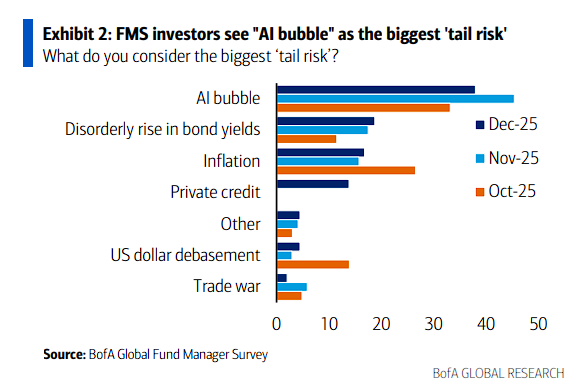
Core Viewpoint - The current AI market is characterized by high valuations and uncertainty, leading to vulnerabilities. Bank of America suggests that true investment opportunities lie in the "hard assets" that support AI's physical operations as the AI hype fades [1][3]. Group 1: Transition Investing Strategy - Bank of America proposes a "perfect hedge" strategy that focuses on "transition investing" rather than shorting AI stocks. This involves investing in physical infrastructure essential for the AI revolution, such as clean energy, grid infrastructure, critical metals, and national defense [3]. - The bank predicts that global capital expenditure related to AI will exceed $1.2 trillion by 2030, with significant investments flowing into energy, metals, and defense sectors that support data centers [3][10]. Group 2: Clean Energy's Role - Clean energy is transitioning from a supporting role to a central role in the AI ecosystem. The correlation between clean energy and AI has surged from -10% to 65% within a year, indicating a growing recognition of this relationship [4]. - Major cloud service providers dominate the clean energy market, accounting for about 70% of transactions. The energy intensity of AI is becoming a structural theme, with each new generation of Nvidia chips consuming 1.5 to 2 times more energy than the previous one [6]. Group 3: Infrastructure and Grid Investments - The bottlenecks in electricity transmission and distribution infrastructure are critical constraints on AI and overall electrification. The International Energy Agency estimates that 80 million kilometers of transmission lines will need to be deployed or upgraded by 2040, effectively doubling the global grid [14]. - U.S. electric utilities are projected to see capital expenditures grow at a compound annual growth rate of 9% from 2019 to 2025, with European grid investment plans increasing significantly [14]. Group 4: Demand for Critical Metals - The demand for metals such as copper, aluminum, nickel, and tin is expected to rise due to the construction of data centers and upgrades to power infrastructure. This demand is driven more by structural trends in energy infrastructure than by cyclical factors [15]. - Specifically, copper demand is projected to increase significantly, with data centers alone expected to contribute an additional 600,000 tons of copper demand by 2028 [15]. Group 5: National Defense and Security Investments - In the context of increasing global instability, national security has become a long-term theme, with governments prioritizing advanced defense technologies. The U.S. defense budget proposal for FY2027 is projected to reach $1.5 trillion, a 50% increase [17]. - The European Union plans to allocate €800 billion for defense over the next decade, while Japan's defense budget for FY2026 is expected to be approximately ¥9 trillion, reflecting a 4% increase [18][19]. Group 6: Risks of Overinvestment - Despite the emphasis on transition investing, there are concerns about potential overinvestment in AI-related infrastructure. If AI demand stagnates, companies may face a crisis similar to the dot-com bubble, leading to excess capacity [20].