盲盒及抽卡

Search documents
上海去年这类消费投诉增长最多!不是网购,也不是医美
Xin Lang Cai Jing· 2026-01-11 05:54
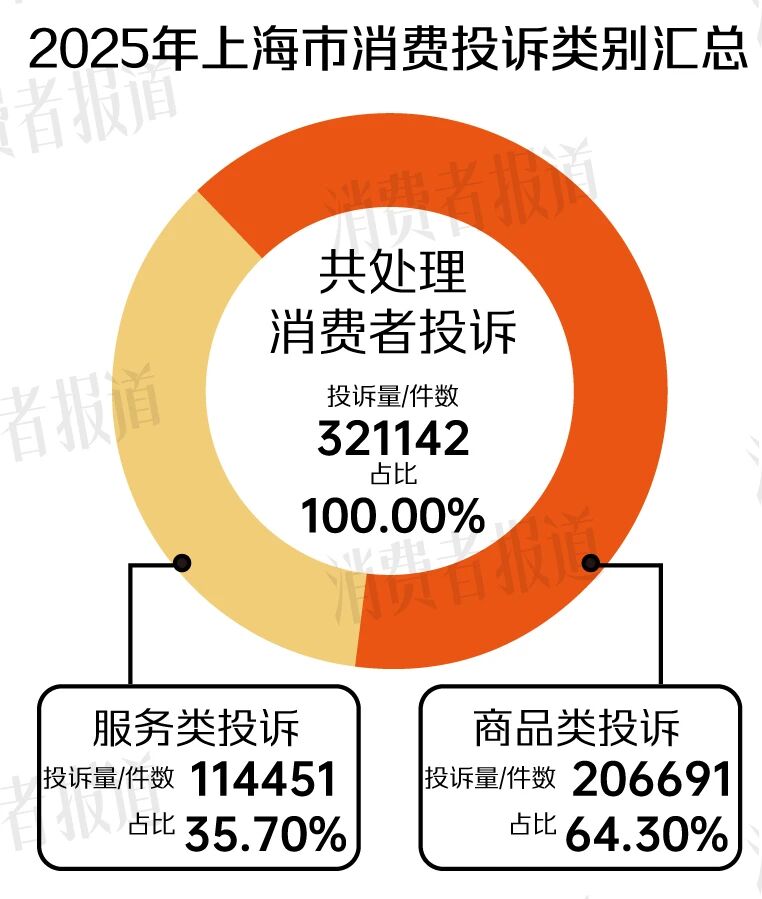
Core Insights - The Shanghai Consumer Protection Commission reported a total of 321,142 consumer complaints in 2025, with a significant increase in complaints related to online shopping, shared bicycles, beauty services, and blind boxes [1][11][15][19]. Group 1: Complaint Statistics - In 2025, 64.3% of complaints were related to goods, totaling 206,691 complaints, while 35.7% were service-related, amounting to 114,451 complaints [1]. - The top three categories for goods complaints were clothing and footwear (43,571), household goods (35,655), and home appliances (17,401) [3]. - For service complaints, the leading categories were internet services (19,125), transportation services (10,699), and cultural and entertainment services (8,669) [6]. Group 2: Online Shopping Complaints - Online shopping complaints accounted for 172,221, marking a 34.8% increase year-on-year, with clothing and footwear (38,566) and household goods (27,497) being the most complained about categories [8]. - Issues primarily revolved around product quality defects, late delivery, unclear promotional rules, and slow return/exchange processes [9]. Group 3: Shared Bicycle Complaints - Complaints related to shared bicycles surged by 74.5% to 7,197, becoming a major contributor to transportation-related complaints, which increased by 28.1% overall [11]. - Common issues included inaccurate billing, vehicle malfunctions, delayed customer service, and problems with the locking mechanism [12]. Group 4: Beauty Service Complaints - The beauty and skincare service sector received 3,626 complaints, with issues such as price transparency, unfulfilled promises, and adverse effects on consumers' skin being prevalent [15]. - Complaints on platforms like Black Cat exceeded 50,000, highlighting concerns over misleading advertising and product discrepancies [15]. Group 5: Blind Box and Card Complaints - Complaints regarding blind boxes and card sales surpassed 2,000, focusing on product quality and after-sales issues [18]. - Consumers expressed concerns over the authenticity of products and the fairness of lottery-like sales strategies, particularly in the context of rising market values [19][21].