石材建材

Search documents
全力打造具有屯昌特色和优势的现代化产业体系
Xin Lang Cai Jing· 2026-01-29 16:41
Group 1 - The core viewpoint is that Tun Chang is actively planning industrial development based on its regional advantages and resource endowments, adhering to the provincial "45432" development framework [1] - Tun Chang is developing an industrial spatial layout of "one park, three districts, and two centers," which includes the Datong Industrial Park and its three satellite areas: green low-carbon circular economy industry area, new stone and building materials industry area, and deep processing of forest products industry area [1] - The land reserve for "one park, three districts" is 3,900 acres, with 9.54 kilometers of main road network construction completed, and industrial supporting facilities are continuously improving [1] Group 2 - Seven key industrial chains are being actively cultivated around "one park, three districts, and two centers," focusing on specialty agricultural products, deep processing of forest products, new stone and building materials, and health pharmaceuticals [1] - The implementation of a "chain leader system" is underway, with county leaders spearheading efforts to enhance, extend, and strengthen industrial chains, achieving initial results [2] - The total output value of the black pig breeding, feeding, slaughtering, and processing industry chain in Tun Chang exceeds 1 billion yuan [2]
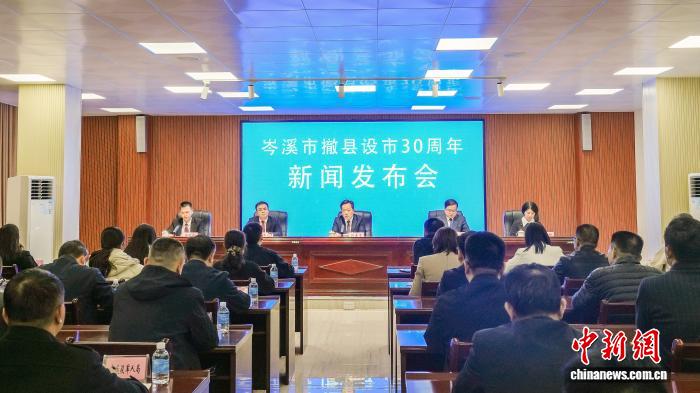
广西岑溪撤县设市30年实现跨越发展 地区生产总值增长16.1倍
Zhong Guo Xin Wen Wang· 2025-12-19 07:09
Core Viewpoint - Since its establishment as a city in 1995, Cengxi has transformed from an agricultural county to an industrial powerhouse, with its GDP increasing from 1.774 billion RMB to 28.560 billion RMB by 2024, marking a growth of 16.1 times [1]. Economic Development - The local government has focused on enhancing industrial dominance, with industrial added value increasing over 23 times, now accounting for 28% of GDP. Key industries include rare earth materials, textiles, and new energy sectors like wind and solar power [2]. - The number of large-scale industrial enterprises has risen to 186, with 71 companies generating over 100 million RMB in output [2]. Urbanization and Infrastructure - The urban area has expanded from 12 square kilometers in 1995 to 30 square kilometers in 2024, with an urbanization rate of 56.14%. The resident population has grown from 100,000 to 300,000 [2]. - The road network has significantly improved, increasing from 492 kilometers to 2,530 kilometers, including five highways totaling 161 kilometers [2]. Social Welfare and Living Standards - A total of 6,112 affordable housing units have been built, and significant improvements have been made in urban living conditions, benefiting 15,628 households [2]. - The city has maintained a good air quality rate of over 95% and a green coverage rate of 38%, with an average of 12 square meters of park space per person [2]. Education and Healthcare - The education sector has seen the closure of 114 small schools, with new standardized schools built and an increase of 1,080 preschool and 6,630 compulsory education places [3]. - Healthcare services have improved, with three hospitals achieving tertiary status and a new patient service model that simplifies the process for patients [3]. Agricultural Development - The total agricultural output value has grown from 1.81 billion RMB in 1995 to 10.634 billion RMB in 2024, with 331 modern agricultural demonstration zones established [4]. - The local government has focused on transforming unique resources into industrial advantages, particularly in tea, pig farming, and poultry [3][4]. Transportation Advancements - Transportation infrastructure has been prioritized, with ongoing construction of the Nanzhu High-speed Railway segment, aiming for completion by 2026, which will enhance connectivity to the Beibu Gulf Economic Zone and the Guangdong-Hong Kong-Macau Greater Bay Area [4].