破产审判

Search documents
去年全国法院通过破产审判化解债务约4万亿元
Yang Shi Xin Wen· 2026-02-24 02:44
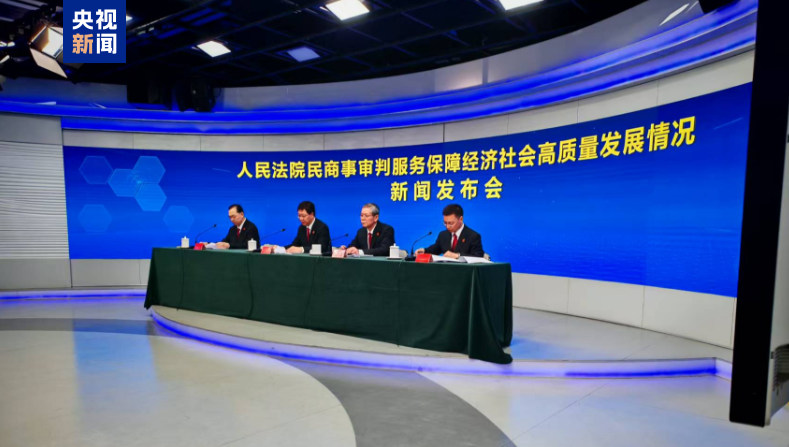
Core Viewpoint - The Supreme People's Court held a press conference on February 24 to discuss the role of civil and commercial trials in supporting high-quality economic and social development, highlighting improvements in judicial efficiency and the handling of various economic disputes [1]. Group 1: Civil and Commercial Trials - In 2025, the national courts accepted 6.791 million first-instance civil and commercial cases, representing a year-on-year increase of 22.0% [3]. - The mediation and withdrawal rate for cases was 42.33%, while the appeal rate for first-instance cases was 2.88%, showing a year-on-year decrease of 19.5% [3]. - Company-related disputes and contract disputes remain significant in commercial trials, with 175,300 first-instance company-related cases accepted, up 51.07% year-on-year [3]. Group 2: Financial Cases - In 2025, national courts accepted 3.511 million financial cases, concluding 3.42 million, with a total amount in dispute of 59.5 trillion yuan [3]. - The characteristics of these cases include the emergence of new types of disputes due to financial innovation, increased complexity in legal applications, and a more pronounced interconnectedness among cases [3]. Group 3: Bankruptcy Trials - The Supreme People's Court approved the establishment of six new bankruptcy courts in major cities, bringing the total to 24, enhancing the specialization of bankruptcy trials [4]. - In 2025, courts accepted 44,936 bankruptcy application review cases, a year-on-year increase of 7.31%, and handled 36,900 bankruptcy liquidation, reorganization, and reconciliation cases, up 18.00% [4]. - Bankruptcy trials have resolved approximately 4 trillion yuan in debt and revitalized 1.16 trillion yuan in assets, stabilizing over 120,000 jobs [4]. Group 4: Securities Disputes - In 2025, courts concluded 25,000 cases related to securities, futures, and funds, marking a 53.6% increase year-on-year [4]. - A significant 96.3% of securities disputes involved false statements, indicating persistent issues with financial fraud among listed companies that require strict legal enforcement [4].