社会学研究

Search documents
理论自觉的先声:郑杭生与中国社会学的自主之路
Xin Lang Cai Jing· 2026-02-28 00:40
Core Viewpoint - Zheng Hangseng's contributions to sociology in China have been pivotal, particularly through his theories and the textbook "Introduction to Sociology," which has influenced generations of students and laid a foundation for an independent knowledge system in Chinese sociology [1][2]. Group 1: Theoretical Contributions - Zheng Hangseng's theoretical consciousness has facilitated a deep transformation in Chinese sociology from "academic awareness" to "disciplinary confidence," emphasizing the need for local theories that can explain the complexities of Chinese society [2][3]. - The "Five Theories" proposed by Zheng, including Social Operation Theory and Social Transformation Theory, provide a unique analytical framework for understanding the changes in Chinese society, moving away from over-reliance on Western theories [3][4]. Group 2: Practical Implications - Social Operation Theory offers essential insights for government policy-making, emphasizing the interconnectedness of economic, political, and cultural subsystems, which is crucial for sustainable social development [4]. - Social Transformation Theory serves as a guide for market entities and social organizations to navigate challenges and seize opportunities during periods of societal change, helping them to adapt their strategies accordingly [4]. Group 3: International Academic Dialogue - Zheng Hangseng's work in constructing an independent knowledge system in Chinese sociology has reshaped the international academic dialogue, enhancing China's voice in the global sociology community [5][6]. - The engagement with international sociology allows for the sharing of Chinese theoretical and practical experiences, while also incorporating advanced international theories to further develop the Chinese sociological framework [6].
著名社会学家、上海社会科学院社会学研究所原所长丁水木逝世
Xin Lang Cai Jing· 2026-01-31 15:23
Group 1 - Ding Shuiwu, a prominent sociologist and former director of the Shanghai Academy of Social Sciences, passed away on January 26, 2026, at the age of 92 [1] - His farewell ceremony took place on January 28, 2026, attended by leaders from various organizations, colleagues, students, and friends who expressed their condolences [1] - Ding was born in 1933 in Shanghai and had a significant career, including roles in the Shanghai Municipal Party Committee and the Shanghai Academy of Social Sciences [1] Group 2 - Ding Shuiwu focused on sociological theory and social issues, leading national social science projects during the "Seventh Five-Year" and "Eighth Five-Year" periods [2] - His notable works include titles such as "The Cultivation of a Written Secretary," "The Theory and Practice of Social Stability," and "Social Security Theory and Practice" [2] - He received several awards for his contributions, including the Shanghai Outstanding Achievement Award for his work on Deng Xiaoping's social theory [2] Group 3 - Ding's contributions to the Shanghai Academy of Social Sciences are recognized as significant, marking his passing as a major loss for the philosophical and social science community in Shanghai and nationwide [3] - His research experiences and theoretical insights continue to inspire fellow sociologists [3]
吴文藻:社会学中国化的践行者
Xin Lang Cai Jing· 2025-12-25 23:32
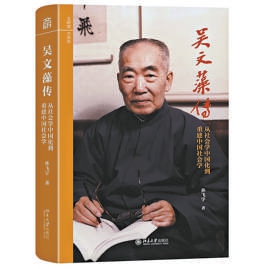
Core Viewpoint - The biography "Wu Wenzao: From the Sinicization of Sociology to the Reconstruction of Chinese Sociology" by Sun Feiyu fills a gap in the understanding of Wu Wenzao's contributions to Chinese sociology and highlights the early development of the discipline in China [3][4]. Group 1: Early Academic Journey - Wu Wenzao began his academic journey at Tsinghua University at the age of 15 and later pursued further studies in sociology and anthropology at Dartmouth College and Columbia University, where he was influenced by Franz Boas' cultural relativism and fieldwork methods [3][4]. - He earned his Ph.D. in 1928 and became prominent in the international academic community, driven by a belief in adapting sociology to fit Chinese contexts [3][4]. Group 2: Advocacy for Sinicization of Sociology - Upon returning to China, Wu Wenzao advocated for the "Sinicization of Sociology," emphasizing the need for sociology to address local issues rather than relying solely on Western theories [4]. - He initiated teaching reforms at Yenching University, opting to teach in Chinese instead of English, which was a significant shift in the academic landscape at the time [4]. Group 3: Contributions During Turbulent Times - The outbreak of the Second Sino-Japanese War disrupted Wu Wenzao's academic plans, but he continued to contribute by establishing a sociology department at Yunnan University and promoting research that addressed local societal needs [5]. - He faced challenges in Yunnan due to ideological differences but remained committed to education and research, even while transitioning into political roles in Chongqing [5]. Group 4: Post-War Contributions and Challenges - After World War II, Wu Wenzao served as a political advisor in Japan and later returned to China to focus on ethnic studies, contributing significantly to the training of professionals in this field [6]. - The suppression of sociology in China for over two decades did not deter him; he continued to engage with international theories and contributed to academic publications [6]. Group 5: Revival of Sociology in China - With the onset of the reform and opening-up period, Wu Wenzao played a crucial role in revitalizing sociology, integrating contemporary issues such as environmental protection and post-industrial society into the discipline [6][7]. - His efforts in promoting international academic exchanges helped bridge Chinese sociology with global perspectives, enhancing its relevance and impact [7].