稀土开采提炼

Search documents
英媒刊文:想摆脱对中国稀土依赖?美国当不了带头大哥
Guan Cha Zhe Wang· 2026-02-13 09:38
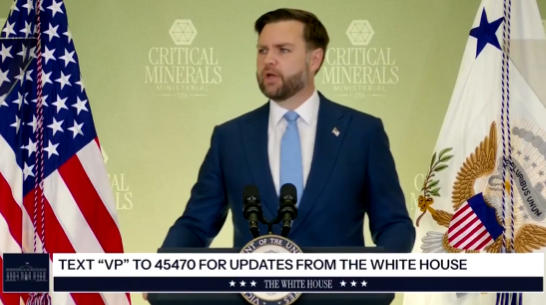
Core Viewpoint - The article discusses the United States' attempt to counter China's dominance in critical minerals through international cooperation and trade measures, highlighting skepticism about the effectiveness of this strategy [1][3]. Group 1: U.S. Strategy and International Cooperation - The U.S. has recognized its inability to independently challenge China's position in the critical minerals sector and is now seeking to form alliances with other countries to establish pricing power [1][3]. - A recent meeting led by U.S. Vice President Vance included representatives from 54 countries and the EU, aiming to set price floors and impose "adjustment tariffs" to maintain Western control over critical mineral pricing [1][3]. Group 2: Criticism of U.S. Approach - Critics argue that the U.S.-led alliance lacks credibility and is primarily designed to benefit American companies, with many non-critical minerals included in the funding list [3][4]. - The article points out that the U.S. lacks significant rare earth deposits, which undermines its ability to lead a successful international coalition against China [3][4]. Group 3: Long-term Challenges - Competing with China in the critical minerals market requires building extraction and refining capabilities, as well as providing long-term price guarantees to non-Chinese producers, which are long-term projects that could take at least a decade [3][4]. - The article emphasizes that trust in the U.S. government and its political system is essential for other countries to commit to this alliance, which is currently in doubt [3][4].