红酒酿造

Search documents
2026年三亚土地首拍 将在海棠湾建高端红酒综合体
Sou Hu Cai Jing· 2026-02-12 05:11
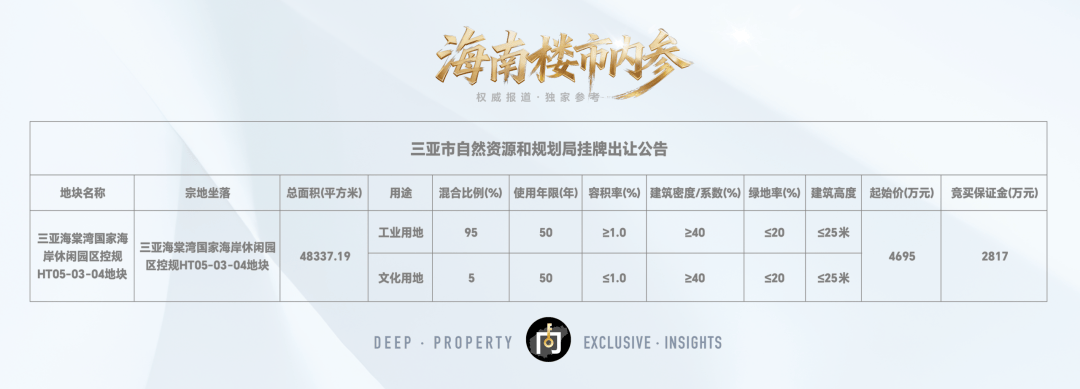
Core Viewpoint - The Sanya Natural Resources and Planning Bureau has announced the sale of the HT05-03-04 plot in Haitang Bay, marking the first land sale in Sanya for 2026, with a starting price of 46.95 million yuan [1][2]. Group 1: Land Sale Details - The HT05-03-04 plot has a total area of approximately 72.5 acres, consisting of 95% industrial land and 5% cultural land [2]. - The starting price for the land is set at 46.95 million yuan, with a bidding deposit of 28.17 million yuan required from bidders [2]. - The land use is primarily for industrial purposes, with a mixed-use ratio of 72% for industrial and 5% for cultural [2][3]. Group 2: Bidding Requirements - Bidders must have experience in wine production and cultural tourism project development, along with a record of winning international wine competitions [3]. - Bidders are required to commit to a total investment of no less than 220 million yuan in Sanya [3]. Group 3: Land Use and Development Plans - The plot was reclassified from logistics and storage to industrial land in November 2025, with a reduced floor area ratio from 1.2 to 1.0, aimed at promoting industrial integration and upgrading [5]. - The location of the HT05-03-04 plot is strategically situated in the most commercially dense area of Haitang Bay, surrounded by major commercial entities such as Sanya International Duty-Free Shop and other large-scale projects [5]. Group 4: Architectural and Aesthetic Guidelines - The post-approval control plan for the HT05-03-04 plot emphasizes that future buildings should harmonize with the surrounding architectural style, primarily adopting a modern aesthetic with light and elegant color tones [6]. Group 5: Related Projects and Economic Impact - The "Haitang Red Wine Intelligent Brewing Center Project" has been signed, which aims to create a high-end wine complex that integrates production, customization, culture, and experience [9]. - This project is expected to fill a gap in the high-end wine industry in Haitang Bay, enhancing the region's international tourism consumption landscape and boosting land value and industrial capacity [9][11]. - The project will promote a fusion model of "intelligent brewing + tropical agriculture," aiming to develop wine products with local characteristics and elevate the consumer experience from shopping to cultural engagement [11].

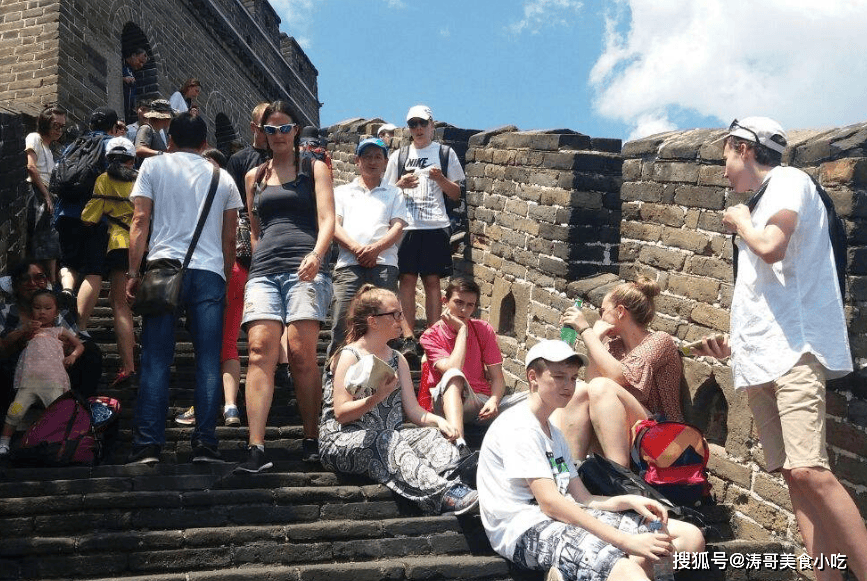
五一前夕,大量美国游客涌入我国,不去旅游不吃美食,为何而来?
Sou Hu Cai Jing· 2025-04-26 19:52
Core Viewpoint - The upcoming holiday period is expected to see a surge in tourism, particularly from American visitors who are taking advantage of lower prices and tax refunds on essential goods in China due to increased tariffs on imports in the U.S. [1][3] Group 1: American Tourists' Purchasing Behavior - American tourists are primarily visiting China to purchase essential goods that have become significantly more expensive in the U.S. due to tariffs [3]. - The increase in prices for American imports has led tourists to seek out cheaper alternatives in China, where they can also benefit from tax refunds [3]. Group 2: Key Products Purchased by American Tourists - **Clothing and Footwear**: American tourists are buying clothing and footwear, as the U.S. has shifted manufacturing to China and Southeast Asia, leading to higher prices in the U.S. [5]. - **Electronics**: Tourists are purchasing electronics such as smartphones and laptops, as prices in China are considerably lower than in the U.S. [7]. - **Wine**: American tourists are buying wine, particularly from regions in China known for high-quality production at lower prices compared to the U.S. [9]. - **Furniture**: Tourists are procuring furniture, as importing from China is more cost-effective than paying high tariffs on U.S. imports [11]. - **Toys**: Many tourists involved in import-export trade are purchasing toys, which are primarily produced in China, to avoid increased tariffs [13]. - **Hardware**: Tourists are also buying hardware products, as the prices have surged in the U.S. due to tariffs, making personal procurement in China more appealing [15].