计算机教育

Search documents
以数智技术为翼 深化计算机专业实践教学改革
Xin Lang Cai Jing· 2026-01-06 19:29
Core Viewpoint - The integration of digital intelligence technologies such as artificial intelligence, IoT, blockchain, big data, and cloud computing is driving significant changes in the industry, necessitating reforms in the computer science education system to meet new talent demands [1] Group 1: Digital Intelligence Technology in Education - Digital intelligence technologies are essential for transforming the computer science education system, enhancing practical teaching effectiveness, and aligning with industry needs [1] - A new practical teaching system based on digital intelligence technologies is crucial for cultivating high-skilled computer professionals [1] Group 2: Resource Platform Development - Establishing a professional resource platform using digital intelligence technologies requires a dual focus on content development and functional optimization [2] - The platform should categorize and digitize various teaching resources, allowing learners to select appropriate materials based on their needs [2] Group 3: Functionality Enhancement of the Resource Platform - The platform should improve resource retrieval capabilities through advanced search technologies and user feedback mechanisms [3] - A dynamic optimization mechanism should be established to continuously enhance platform content and user experience [3] Group 4: Teaching Evaluation and Feedback - A scientific teaching evaluation system based on digital intelligence can provide real-time data analysis of learners' progress, enabling targeted improvements in practical teaching [4] - Teachers can generate comprehensive learner profiles to tailor educational paths and enhance skill acquisition [4] Group 5: Innovative Teaching Methods - Digital intelligence technologies can enhance teaching methods, including the creation of online learning spaces and blended learning approaches [5][6] - Immersive multi-modal learning environments can enrich practical teaching experiences, utilizing technologies like virtual and augmented reality [6]
第七届中国计算机教育大会(CECC)在厦门召开
Huan Qiu Wang· 2025-12-02 09:15
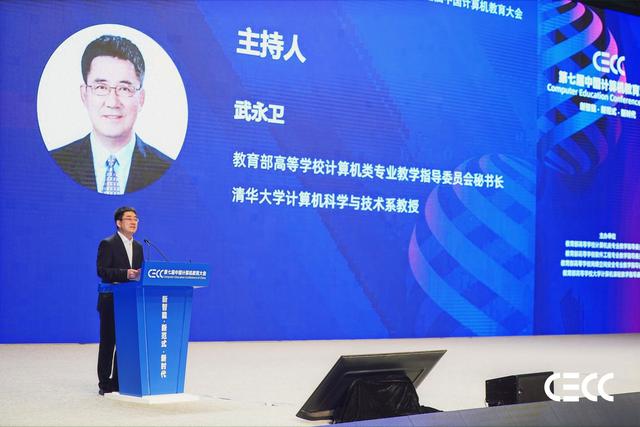
Core Viewpoint - The 7th China Computer Education Conference (CECC) emphasizes the transformation of computer education in the context of rapid AI development, aiming to enhance talent cultivation and drive innovation in education [1]. Group 1: Conference Overview - The conference, themed "New Intelligence, New Paradigm, New Era," took place at the Xiamen International Conference Center, gathering over a hundred experts from academia, education, and industry [1]. - The event is co-hosted by various educational committees and universities, with support from major companies like Huawei and Alibaba Cloud [1]. Group 2: Keynotes and Presentations - Wu Yongwei, the conference chair, highlighted the importance of aligning talent cultivation with national development and fostering innovative talents through policy innovation [4][9]. - Zhao Qinpeng, a member of the conference guiding committee, stressed the need to break traditional paradigms and create a new educational ecosystem to nurture innovative talents [6]. - John Hopcroft, a Turing Award winner, presented on the "101 Plan," advocating for reforms in curriculum and teaching to improve the quality of foundational discipline talent cultivation [11]. - He You, a vice president of the Chinese Academy of Artificial Intelligence, discussed the applications of AI in education and the challenges it faces, such as model bias and misuse [12]. Group 3: Thematic Forums and Discussions - The conference will feature 12 thematic sub-forums covering topics like high-quality talent cultivation, AI education, and the integration of industry and education [14]. - The event aims to foster collaboration between universities and leading companies to enhance the cultivation of top-tier talents in computer science [14]. Group 4: Awards and Recognition - The 2025 Education Ministry-Huawei "Intelligent Base" awards recognized 20 outstanding teachers and 6 exemplary textbooks, highlighting the commitment to excellence in computer education [15]. - Since its inception in 2019, the CECC has attracted over 20,000 participants, establishing itself as a vital platform for the integration of computer education and industry [15].