话剧

Search documents
“文华奖”背后,是闪亮的“新生代”
Hang Zhou Ri Bao· 2026-01-21 02:59
Core Viewpoint - The play "Beishang," produced in Hangzhou, has won the 18th "Wenhua Drama Award," marking a significant achievement for the local theater community and highlighting the potential of young talent in the industry [3][4]. Group 1: Achievements and Recognition - "Beishang" has successfully returned to its premiere location in Hangzhou after winning a prestigious national award, showcasing the growth and recognition of local theater [3][4]. - The average age of the cast is just over 30, representing a new generation of Hangzhou theater artists who have achieved a breakthrough in the Wenhua Award competition [4][5]. - The lead actor, Li Ting, has been awarded the qualification of a first-level actor due to the success of "Beishang," emphasizing the importance of nurturing young talent in the industry [5]. Group 2: Challenges and Efforts - The production team faced numerous challenges, including the need for extensive rehearsals and the management of heavy props, demonstrating their commitment to delivering a high-quality performance [6]. - The promotional efforts for "Beishang" included strategic collaborations with local media, which helped to enhance the play's visibility and audience engagement [6][7]. - The cast and crew exhibited remarkable dedication, with many members continuing to perform despite health challenges, showcasing their passion for theater [6]. Group 3: Talent Development and Future Prospects - The Hangzhou theater community has implemented various initiatives to cultivate young talent, including the "Youth Talent Plan" and the "Artistic Innovation Competition," which provide opportunities for emerging artists [8][9]. - The local government has introduced policies aimed at nurturing leading figures in stage arts, highlighting the importance of developing the next generation of artists [9]. - The Hangzhou Theater Arts Center is celebrating its 70th anniversary and is set to embark on new tours and productions, indicating a vibrant future for the local theater scene [9].

回到文学故乡 重拾舞台诗意
Xin Lang Cai Jing· 2025-12-29 22:22
Core Viewpoint - The 2025 theater scene is characterized by a return to literary roots, emphasizing original works, literary adaptations, and classic revivals, reflecting a cautious exploration of artistic innovation [1] Original Works - The original works in 2025 are not optimistic, lacking high-quality and impactful pieces that represent the heights of human spiritual life. However, some productions strive for artistic innovation, leaving their mark [9] - Notable original productions include "The Road of Three Lives on the Peony Pavilion," which presents a youthful perspective on the awakening of inner consciousness, and "The Capital of Jin," which explores the conflicts between righteousness and ambition [9][10] - "Lying Flat 2.0," directed by Wang Chong, offers a unique theater experience where audiences lie down to watch, integrating AI and audience participation into the performance [10] - Other original works include "Northbound, Southbound," a solo performance reflecting on life and family, and "The Big Man," a comedy that highlights the value of ordinary life [11] Adaptations - Adaptations continue to play a significant role in the theater landscape, with successful adaptations demonstrating originality rather than mere replication of the source material [14] - "One Day Top Stream," adapted from Shi Yifeng's novel, showcases contemporary themes and human-machine interaction, while "Classical Love," adapted from Yu Hua's works, employs a unique narrative style [15] - "The Invisible Guest," adapted from a Spanish film, and "The Metamorphosis," adapted from Kafka's novel, highlight the diverse approaches to adaptation in 2025 [16] Classic Revivals - The revival of classic works is a key focus, with Beijing People's Art Theatre launching a "Classic Restoration Plan" that includes revivals of "The Snowy Night Return" and "Camel Xiangzi" [17] - New interpretations of classics, such as the bold reimagining of "Thunderstorm" by Li Liu Yi, emphasize the importance of preserving and innovating upon traditional works [17][18] Theater Festivals and Exhibitions - Theater festivals and exhibitions serve as vital platforms for artistic exchange and vitality, with the "2025 Beijing People's Art International Theater Invitation Exhibition" featuring 14 outstanding productions from nine countries, setting new records for premieres [19][20] - The 12th Wuzhen Theater Festival showcased 25 works from ten countries, highlighting contemporary theatrical diversity [20][21] Emerging Trends - The 2025 theater scene reflects a dual phenomenon: the rise of female narratives and the growth of local theater troupes, with increased focus on women's stories and successful productions from regional theaters [23][24] - Despite notable achievements, challenges remain, including repetitive themes and a lack of depth in many original works, indicating a need for greater artistic responsibility and innovation [25][26]
“中国戏”缘何吸引“Z世代”
Zhong Guo Qing Nian Bao· 2025-10-03 00:48
Core Insights - The "2025 National Drama Shanghai Performance Season" successfully showcased five plays, highlighting the revival of Chinese drama in its birthplace, Shanghai [1][4] - The relationship between the audience and the performance is emphasized as a core element of contemporary theater, with a focus on accessibility and engagement [1][2] - The appeal of "Chinese drama" to the younger generation is attributed to its cultural roots and modern relevance, making it fashionable even after years of performance [2][3] Summary by Sections Performance Highlights - The performance season featured five plays: "Four Generations Under One Roof," "Stories from the Drum Tower," "The Grand Mansion," "Live Broadcast of the Founding Ceremony," and "Beijing Fayuan Temple," with a total of 16 performances [1][2] - Each play reflects significant themes, such as national identity, cultural heritage, and historical narratives, appealing to diverse audience interests [2][3] Audience Engagement - The importance of the audience's experience is highlighted, with different viewers seeking education, entertainment, or a combination of both from the performances [2][3] - The concept of "cultural mobility" is introduced, suggesting that the audience's experience transcends geographical boundaries, connecting them to broader cultural narratives [4][5] Historical Context and Future Directions - The historical development of Chinese drama is acknowledged, with a call for contemporary creators to establish new classics for the 21st century [3] - The need for ongoing generational transmission of theatrical works is emphasized, with examples of long-running plays like "Beijing Fayuan Temple" serving as models for future productions [3] Economic Impact - The performance season is seen as a catalyst for local economic activity, transforming audience attendance into commercial benefits for surrounding businesses [5] - The initiative aims to create a sustainable cycle of cultural and economic engagement, enhancing the overall vitality of the arts in Shanghai [5]
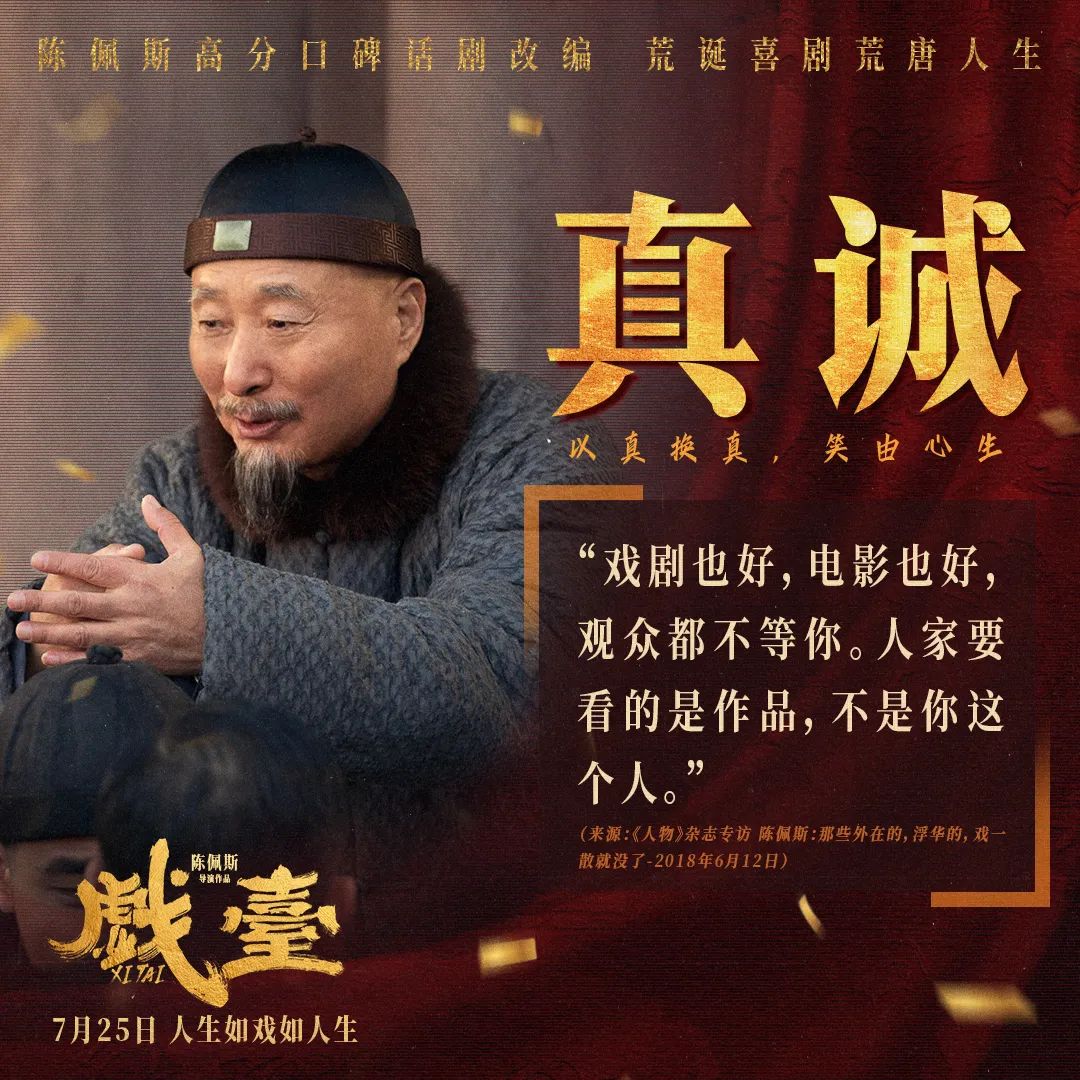
71岁陈佩斯,回来了!
Mei Ri Jing Ji Xin Wen· 2025-08-01 16:34
Core Insights - The film "The Stage," directed and starred by Chen Peisi, has achieved significant box office success, surpassing 270 million yuan, with projections nearing 600 million yuan, marking it as a standout in the summer film season [3][5] - The film is based on a stage play that has been refined over ten years, performing over 360 shows since its debut in 2015, and has received a high rating of 9.0 on Douban, indicating strong audience appreciation [1][3] - Chen Peisi emphasizes a learning mindset in adapting to new filmmaking technologies and techniques, showcasing a commitment to detail and precision in directing [5][6][12] Film and Industry Context - The film industry has undergone a fundamental transformation from film to digital, with advancements in camera technology and lighting systems, which Chen Peisi acknowledges as a significant change since his last film over 30 years ago [6][17] - "The Stage" stands out in a competitive market without the backing of major stars or IPs, relying instead on a solid script and tight structure, demonstrating the importance of content quality in film success [3][5] - The film's production reflects a blend of traditional theatrical elements and modern cinematic techniques, with Chen Peisi's extensive experience in theater informing his approach to filmmaking [5][8] Creative Process and Directing Style - Chen Peisi prepared an extensive eight-page director's note for the actors, detailing the film's background, character development, and comedic structure, highlighting his meticulous approach to directing [12][14] - The director's hands-on involvement includes personally guiding actors and even demonstrating scenes, which he attributes to his background as an actor, showcasing a unique blend of roles in the creative process [15][20] - The film's narrative structure relies heavily on character actions and interactions, with a focus on maintaining the integrity of the comedic essence throughout the production [9][21]