财务管理

Search documents
税务曝光8起涉税中介违法案例
第一财经· 2025-11-28 13:48
Core Viewpoint - The article highlights the crackdown on tax-related intermediary services that engage in illegal activities for profit, with the tax authorities exposing multiple cases of violations in the industry [3][6]. Group 1: Overview of Violations - The tax authorities have disclosed over 18 typical cases of violations by tax-related intermediary institutions this year, signaling a strong enforcement stance [3][6]. - Common methods of violation include the issuance of false invoices to assist companies in tax evasion, leading to significant tax underpayment [4][5]. Group 2: Specific Cases - A case involving Shenzhen Caizhi Hengtong Enterprise Management Consulting Co., Ltd. revealed that from 2019 to 2021, the company helped Shenzhen Dingxin Private Equity Fund Management Co., Ltd. evade taxes by providing 52 false invoices, resulting in a tax underpayment of 11.87 million yuan and a profit of 840,800 yuan for the intermediary [4]. - Wuhan Ruiqi Biological Engineering Co., Ltd. was found to have purchased false invoices to evade corporate income tax, involving 504 false invoices totaling 260 million yuan [5]. Group 3: Consequences and Regulatory Actions - Tax-related intermediary institutions face confiscation of illegal gains and potential fines up to three times the amount of tax evaded, with some being classified as untrustworthy entities [6]. - The tax authorities emphasize the importance of compliance and integrity among tax service providers, urging businesses to carefully select their tax service partners to avoid illegal practices [6].


税务曝光8起涉税中介违法案例,释放严打信号
Di Yi Cai Jing· 2025-11-28 12:54
Core Viewpoint - The tax authorities are intensifying efforts to crack down on tax-related intermediaries involved in illegal activities such as issuing false invoices to help businesses evade taxes and profit from fraudulent schemes [1][4]. Group 1: Cases of Tax Intermediaries - The tax authorities disclosed 8 cases of tax intermediary violations, with over 18 typical cases exposed this year, signaling a strong crackdown on the industry [1][4]. - Shenzhen Caizhi Hengtong Enterprise Management Consulting Co., Ltd. helped Shenzhen Dingxin Private Equity Fund Management Co., Ltd. evade taxes by providing 52 false VAT invoices, resulting in a tax shortfall of 11.87 million yuan and illegal profits of 840,800 yuan [2]. - Wuhan Ruiqi Biological Engineering Co., Ltd. engaged in tax evasion by purchasing ordinary VAT invoices through intermediaries, leading to the establishment of 29 shell companies that issued 504 false invoices totaling 260 million yuan [2]. Group 2: Legal Consequences and Penalties - Tianjin Changze Financial Management Co., Ltd. was found to have issued 2,643 false ordinary VAT invoices and 2,331 special VAT invoices, with total amounts of 160 million yuan and 130 million yuan respectively [3]. - The tax authorities imposed penalties including the confiscation of illegal gains and fines up to three times the amount of tax evaded, with Shenzhen Caizhi Hengtong facing a fine of 5.93 million yuan, seven times its illegal profits [3]. - Tax intermediaries and responsible individuals involved in criminal activities may face severe legal actions, including being classified as untrustworthy entities, which will affect their ability to conduct tax-related business [3][4]. Group 3: Industry Regulations and Future Actions - The tax authorities emphasize the importance of compliance and integrity among tax service providers, urging them to offer legitimate services to ensure sustainable industry development [4]. - Businesses are advised to carefully select tax service providers and remain vigilant against illegal practices that could harm their interests [4]. - The tax authorities will continue to support and regulate the tax service industry while strictly investigating collusion between tax personnel and illegal intermediaries [4].
“AI+全球化”时代下CFO角色有何变化?这场会议这么说
Guo Ji Jin Rong Bao· 2025-11-17 04:15
Group 1: Forum Overview - The 2025 CFO Forum, co-hosted by Shanghai National Accounting Institute, Kingdee Software (China) Co., Ltd., Lixin Accounting Firm, and ACCA, focuses on "Internationalization Strategies and Financial Empowerment under Global Changes" [1] - The forum discusses how companies can effectively advance their internationalization processes and the critical role of financial management in this context [1] Group 2: CFO Role Evolution - The role of CFOs is evolving from traditional financial managers to strategic participants, resource integrators, and global risk navigators due to profound changes in the global economy [1] - CFOs need to develop three core capabilities: resource allocation with a global perspective, data-driven strategic judgment, and compliance and governance under international rules [1] Group 3: Insights from ACCA - ACCA's CEO, Helen Brand, emphasizes the increasing importance of globally applicable accounting skills amidst complex global trade conditions [2] - Financial teams must embrace technologies like AI and data analytics to lead long-term value creation, or risk marginalization [2] - The CFO's role is transitioning to that of a "Chief Value Officer" (CVO), focusing on the company's social and environmental impact alongside traditional financial metrics [2] Group 4: Challenges in International Financial Management - China Energy Conservation and Environmental Protection Group identifies four major challenges in international financial management: regulatory overlaps, hidden national risks, information silos, and the integration of global talent with local needs [3] - The company has established a robust international financial management system encompassing strategic finance, global treasury, risk and compliance, and digital finance [3] Group 5: AI in Financial Management - Kingdee's executive highlights seven transformations in financial management due to AI, including the shift to "无人会计" (unmanned accounting) and the expansion of external reporting to include ESG [3] - The integration of AI and globalization is seen as a growth driver for Chinese companies, helping them build new core competencies for high-quality growth [3] Group 6: Challenges for Chinese Companies Going Global - Lixin Accounting Firm's president outlines four challenges for companies going global: supply chain restructuring, geopolitical tensions, rapid technological changes, and increasing compliance complexities [4] - Companies face five key difficulties in international operations, including high information acquisition difficulty and policy compliance risks [4] Group 7: Financial Value Assessment - The CFO of Zhejiang Huayou Cobalt Co., Ltd. presents a four-dimensional view of corporate value: historical book value, time value, social value, and future green value [4] - The company's globalization strategy is evolving to prioritize resource layout and industry chain core amidst anti-globalization pressures [4]
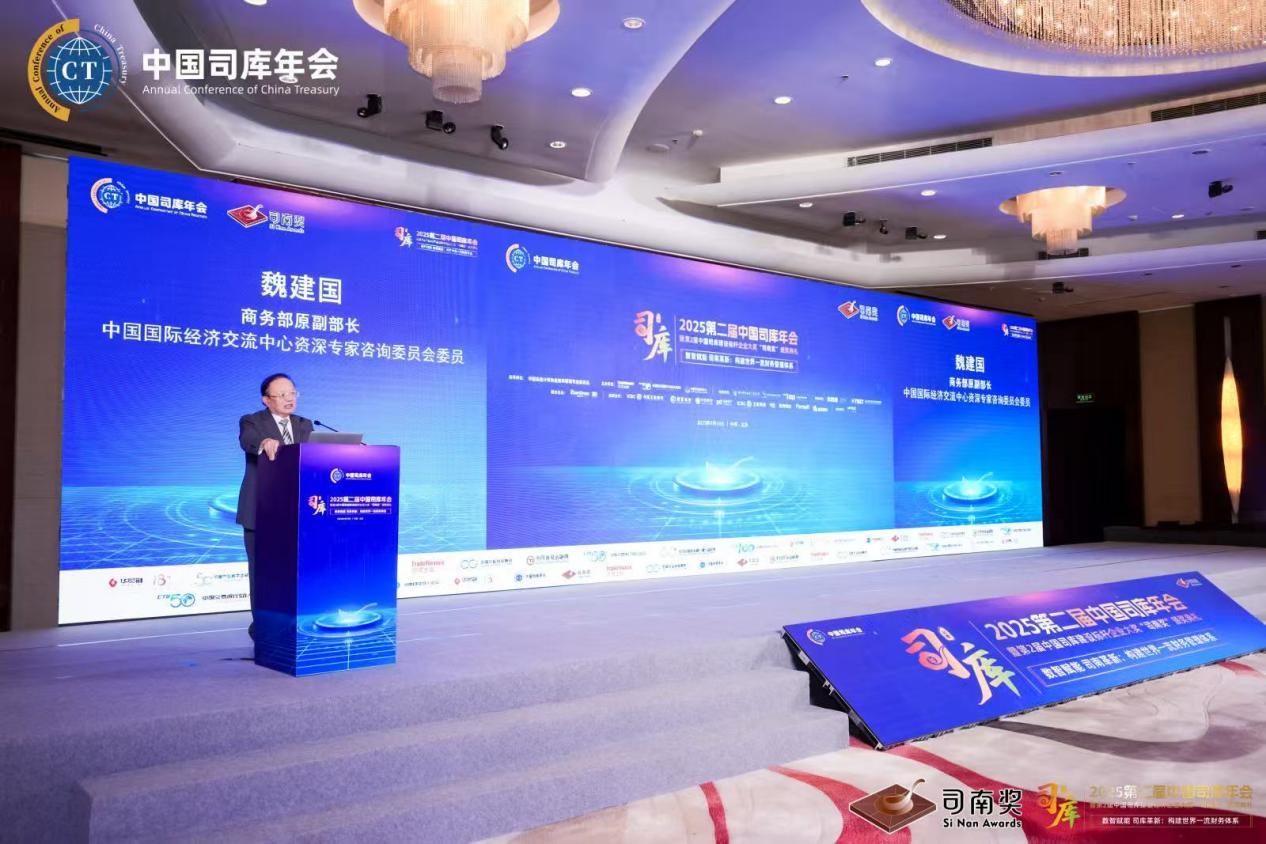
魏建国:建立中国特色的世界一流财务管理体系是当务之急
Feng Huang Wang Cai Jing· 2025-09-10 08:53
Core Viewpoint - The establishment of a world-class financial management system with Chinese characteristics is an urgent priority for China's economic development and international competitiveness [2] Group 1: Importance of Establishing a Financial Management System - Financial competition is a core competitive advantage in all economic activities, and a high-quality financial system is essential for becoming a global financial center [2] - Chinese enterprises, especially state-owned enterprises (SOEs), face challenges such as increasing non-performing assets and liquidity risks, necessitating a robust financial management system [2] - The State-owned Assets Supervision and Administration Commission (SASAC) has outlined a roadmap for SOEs to build a world-class financial management system within 10 to 15 years [2] Group 2: Role of Digital Empowerment and Treasury Innovation - Traditional financial models are inadequate for the rapid development needs, leading to inefficiencies in management and decision-making [3] - Digital empowerment through technologies like cloud computing, big data, and blockchain is essential for transforming financial management into a more integrated and intelligent system [3] - Treasury innovation focuses on centralized fund management to enhance fund application efficiency and reduce costs while mitigating risks [3] Group 3: Integration with Business Operations - SOEs must integrate business and financial operations to enhance international competitiveness and manage the entire supply chain effectively [4] - The goal is to leverage innovative partnerships and expand service offerings to improve international business capabilities [4] - The conference aims to foster discussions and efforts towards achieving a world-class financial management system with Chinese characteristics [4]