
面食餐饮

Search documents
“续面事件”背后的郏县饸烙面产业,希望成为第二个“兰州拉面”
第一财经· 2025-08-19 10:13
Core Viewpoint - The article discusses the sudden rise in popularity of the "Jia County Halu Noodles" industry following a public incident involving a restaurant, highlighting its potential for growth and the local government's efforts to promote it [3][4]. Industry Overview - Jia County, with a population of less than 500,000, has around 300 businesses related to the Halu Noodles industry, generating an annual revenue exceeding 500 million yuan [4][5]. - There are over 200 restaurants in Zhengzhou that feature Jia County Halu Noodles, with an additional 200 establishments offering similar dishes without the Jia County branding [4]. Product Characteristics - Jia County Halu Noodles is a traditional dish with a history of over a thousand years, made from high-quality wheat flour and a rich broth of beef, lamb, and various spices, known for its unique flavor and texture [5]. Market Expansion - The local government is exploring industrial processing and e-commerce channels for Halu Noodles, with annual sales of processed products exceeding 50 million yuan [6]. - Efforts are being made to learn from the beef noodle industry in Gansu and Qinghai to enhance the development of Jia County Halu Noodles [6]. Cultural Integration - The local government aims to integrate traditional dining culture with tourism and historical preservation, promoting the "Six Culinary Wonders" of Jia County as a new cultural brand [6].

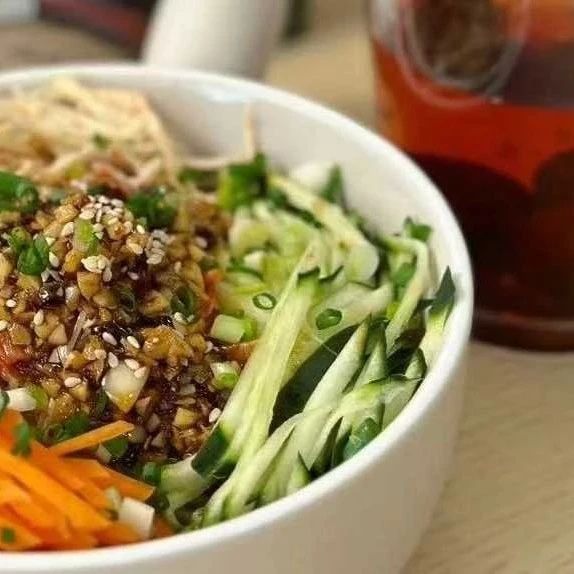
“续面事件”背后的郏县饸烙面产业,希望成为第二个“兰州拉面”
Di Yi Cai Jing· 2025-08-19 08:03
Core Insights - The "Jia County Helaomian" industry has gained significant public attention due to a recent incident involving a dispute over free noodle refills at a local restaurant, leading to increased visibility beyond its traditional regional market [1] Industry Overview - Jia County, with a population of less than 500,000, has around tens of thousands of people engaged in the Helaomian industry, which is a traditional dish with a history of over a thousand years [3] - There are approximately 300 businesses related to the Helaomian industry in Jia County, generating an annual revenue exceeding 500 million yuan [2] - In Zhengzhou, the provincial capital, there are over 200 restaurants featuring Jia County Helaomian, with nearly 200 additional establishments offering the dish without the Jia County branding [2] Product Characteristics - Jia County Helaomian is made from high-quality high-gluten wheat flour, combined with fresh beef, lamb, and a variety of spices, resulting in a flavorful and aromatic dish that is well-regarded nationally [3] Market Expansion - The local industry is exploring industrial processing and e-commerce sales channels, with ready-to-eat Helaomian products already being sold in major cities like Beijing, Shanghai, and Shenzhen, generating an annual output value of over 50 million yuan [4] - Local officials have been studying the development of beef noodle industries in Gansu and Qinghai to enhance the growth of the Helaomian industry [4] Cultural Integration - The local government aims to leverage traditional restaurant branding to promote culinary culture and expand the service industry, integrating traditional culinary history with tourism and cultural heritage [4]
重庆小面品类发展报告2025
Hong Can Chan Ye Yan Jiu Yuan· 2025-04-27 03:45
Investment Rating - The report indicates that the investment rating for the Chongqing noodle industry is stable, reflecting a steady development phase and ongoing industrial upgrades [4][5]. Core Insights - The Chongqing noodle brand is adopting a diversified strategy while simultaneously enhancing its digitalization level [4]. - There is a need for brands to balance authentic flavors with standardized tastes, and to further expand sales channels [4]. Summary by Sections Overall Overview - The Chongqing noodle industry is in a steady development phase, with continuous upgrades in industrialization [5]. Development Trends - Brands in the Chongqing noodle sector are implementing diversified strategies and improving their digital capabilities [4]. Thoughts and Outlook - Brands should find a balance between maintaining authentic flavors and achieving taste standardization, while also working to broaden their sales channels [4].