Artificial Intelligence Agency

Search documents
洞察 2025:中国人工智能代理行业竞争格局及市场份额(附市场集中度、企业竞争力评价等)
Sou Hu Cai Jing· 2025-08-12 13:31
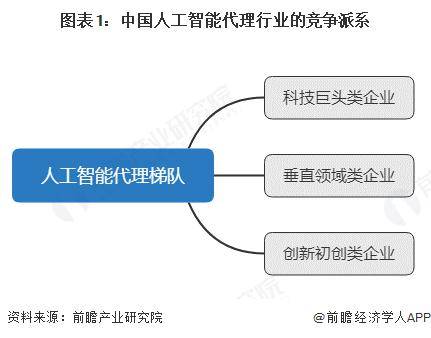
Group 1 - The Chinese artificial intelligence agency industry has formed a clear competitive hierarchy, with significant head effects and rapid emergence of vertical fields and new enterprises. The competition is mainly divided into three tiers: technology giants, vertical field enterprises, and innovative startups [1][3] - Representative companies in different tiers have diverse business layout directions, with technology giants and vertical field enterprises focusing on B-end markets, while startups emphasize C-end markets [3][4] - The market concentration in the AI agency sector is high, with CR4 at approximately 78% and CR5 at about 88%, indicating a typical "Matthew effect" where the head is concentrated while the tail is dispersed [5] Group 2 - The market share concentration varies by application area, with the highest concentration in government applications (CR3 at 60%) and the lowest in intelligent customer service (CR3 at 40%) due to lower market entry barriers [7] - The market is categorized by technology types, including reflexive agents, goal-driven agents, and self-learning agents, with self-learning agents experiencing the highest growth rate, particularly in medical diagnosis and scientific research [9] - Major companies are adopting a "multi-point flowering, collaborative development" strategy, with Baidu focusing on digital humans and intelligent collaboration platforms, while Huawei emphasizes government and industrial applications [11][12] Group 3 - The competitive landscape of the Chinese AI agency industry is characterized by an oligopolistic structure, with major players like Baidu, Alibaba, Tencent, Huawei, and ByteDance holding over 80% market share [13] - Second-tier companies such as iFlytek, SenseTime, and CloudWalk are focusing on vertical scenarios like education and finance, leveraging industry know-how for survival [14] - The industry is transitioning from a "technology race" to an "ecosystem positioning + scenario profitability" phase, with increased competition leading to a potential consolidation of startups due to tightening financing and high computing costs [14]