飞书智能伙伴

Search documents
“AI不应该是用来淘汰老师傅的”
Sou Hu Cai Jing· 2026-01-08 05:16
Core Insights - The article highlights the transformative impact of AI on various industries, emphasizing that AI should enhance human capabilities rather than replace them. It showcases the story of a young accountant, Wang Zai, who implemented an AI system in a factory, significantly improving efficiency and reducing costs [4][9][22]. Group 1: AI Implementation in Factories - Wang Zai, an accountant with no technical background, developed an AI system called "Xiao Liu Classmate" to manage material alerts and information, which previously took weeks to process manually. This system saved the factory 1,000 hours annually [7][9]. - The factory experienced a 0.15% reduction in waste and a 6% decrease in costs, leading to an estimated annual savings of over 1 million yuan [9]. - The article emphasizes that the changes seen in Wang Zai's factory are indicative of a broader AI efficiency revolution across various industries in China [9][11]. Group 2: Broader Impact of AI Across Industries - Other industries are also witnessing similar transformations. For instance, a maintenance worker at a chemical plant developed an AI system that improved safety and reduced inspection time, saving the company 580,000 yuan in setup costs and generating an additional 2.4 million yuan [13][14]. - In the automotive sector, an AI auditing system was created to streamline compliance processes, reducing the time required for audits from weeks to minutes, saving an average of 300 hours per audit [14]. - A biotechnology company restructured its reporting system using AI, allowing for faster and more accurate information flow from frontline employees to management, significantly improving operational efficiency [15][18]. Group 3: The Role of "Efficiency Pioneers" - The article introduces the concept of "Efficiency Pioneers," ordinary employees who leverage AI tools to enhance organizational efficiency. These individuals are seen as key players in the AI transformation [24][27]. - The "Feishu AI Efficiency Pioneer Competition" highlighted the contributions of over 900 frontline workers from 130 companies, showcasing their innovative solutions to business challenges [27][28]. - The emergence of these pioneers is supported by a conducive environment for innovation, with companies like Feishu providing tools and incentives for employees to adopt AI [29][30]. Group 4: Future of AI in Business - The article concludes that AI is an irreversible trend that will redefine human capabilities in the workplace. It emphasizes the importance of integrating AI into frontline operations to improve the quality of work for ordinary people [34][36]. - Companies are increasingly recognizing the need to identify and cultivate "Efficiency Pioneers" as a critical aspect of their AI strategies [30][31]. - A report indicates that 52% of organizations using generative AI have deployed AI agents, with 88% of early adopters achieving positive ROI, underscoring the potential value of AI in enhancing business operations [33].

“AI不应该是用来淘汰老师傅的”
吴晓波频道· 2026-01-08 00:29
Core Viewpoint - The article emphasizes that in today's China, there are no sunset industries, only sunset individuals. Those who adopt AI tools early will become the new protagonists in the era of artificial intelligence [3][12]. Group 1: AI Implementation in Factories - A young accountant named Wang Zai implemented an AI system called "Xiao Liu Classmate" in a factory, which significantly improved material management and communication, allowing for real-time monitoring and alerts [10][11]. - The deployment of AI systems in the factory led to a reduction in waste rate by 0.15% and a cost decrease of 6%, with an estimated annual savings exceeding one million yuan [12]. - Wang Zai's factory is one of 6 million in China, illustrating that the AI efficiency revolution is not limited to exceptional cases but is a widespread trend [12]. Group 2: Broader Applications of AI - Various industries are witnessing similar transformations, such as a maintenance worker at a chemical plant who developed an AI operation system that improved safety and saved significant costs [19]. - In the automotive sector, an AI auditing system was created to streamline compliance processes, reducing the time required for audits from weeks to minutes [20]. - A biotechnology company restructured its reporting system using AI, allowing for faster and more accurate information flow from frontline employees to management [21]. Group 3: The Role of "Efficiency Pioneers" - The article introduces the concept of "Efficiency Pioneers," ordinary individuals who leverage AI tools to enhance organizational efficiency [36][38]. - These pioneers are emerging across various sectors, demonstrating that the most significant changes often come from those directly engaged in the work [39]. - The article highlights the importance of providing tools and fostering an environment that encourages innovation among frontline employees [40][41]. Group 4: Future of AI in China - The article predicts that China will build the world's most advanced AI factory clusters in the next decade, following its role as a testing ground for industrial intelligence [47]. - It emphasizes that AI is an irreversible trend, and the integration of technology into frontline work will continue to improve the quality of work for ordinary people [49]. - The contributions of Efficiency Pioneers are crucial in embedding human experience and professionalism into AI systems, redefining human value in the digital age [50][51].

洞察 2025:中国人工智能代理行业竞争格局及市场份额(附市场集中度、企业竞争力评价等)
Sou Hu Cai Jing· 2025-08-12 13:31
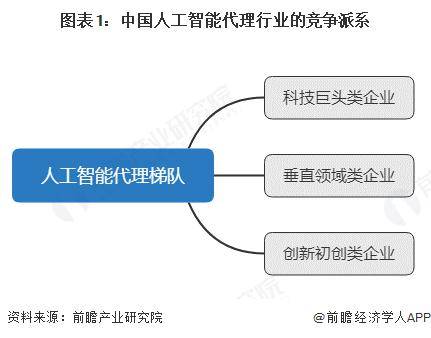
Group 1 - The Chinese artificial intelligence agency industry has formed a clear competitive hierarchy, with significant head effects and rapid emergence of vertical fields and new enterprises. The competition is mainly divided into three tiers: technology giants, vertical field enterprises, and innovative startups [1][3] - Representative companies in different tiers have diverse business layout directions, with technology giants and vertical field enterprises focusing on B-end markets, while startups emphasize C-end markets [3][4] - The market concentration in the AI agency sector is high, with CR4 at approximately 78% and CR5 at about 88%, indicating a typical "Matthew effect" where the head is concentrated while the tail is dispersed [5] Group 2 - The market share concentration varies by application area, with the highest concentration in government applications (CR3 at 60%) and the lowest in intelligent customer service (CR3 at 40%) due to lower market entry barriers [7] - The market is categorized by technology types, including reflexive agents, goal-driven agents, and self-learning agents, with self-learning agents experiencing the highest growth rate, particularly in medical diagnosis and scientific research [9] - Major companies are adopting a "multi-point flowering, collaborative development" strategy, with Baidu focusing on digital humans and intelligent collaboration platforms, while Huawei emphasizes government and industrial applications [11][12] Group 3 - The competitive landscape of the Chinese AI agency industry is characterized by an oligopolistic structure, with major players like Baidu, Alibaba, Tencent, Huawei, and ByteDance holding over 80% market share [13] - Second-tier companies such as iFlytek, SenseTime, and CloudWalk are focusing on vertical scenarios like education and finance, leveraging industry know-how for survival [14] - The industry is transitioning from a "technology race" to an "ecosystem positioning + scenario profitability" phase, with increased competition leading to a potential consolidation of startups due to tightening financing and high computing costs [14]