Brewers

Search documents
Boston Beer vs Molson Coors: One Bets on Innovation, the Other Is Just Surviving
247Wallst· 2026-03-28 18:55
Core Viewpoint - Boston Beer is focusing on innovation and growth in premium segments, while Molson Coors is primarily engaged in cost-cutting and maintaining dividend support, making Boston Beer a more attractive option for capital growth in retirement portfolios despite its lack of dividend income [2][3]. Company Performance - Boston Beer reported a 90.7% increase in operating income and a gross margin of 50.8% in Q3 2025, driven by premium products like Sun Cruiser [2][6]. - Molson Coors faced a $3.65 billion goodwill impairment and is guiding for an 11% to 15% decline in underlying EPS for 2026, while also reducing costs to defend its declining brands [2][7]. Growth Trajectory - Boston Beer’s FY2025 operating income surged to $144.9 million, with net income rising to $108.5 million, despite a slight revenue decline of 2.38% [6]. - Molson Coors experienced a 4.18% drop in revenue and a 5.71% decrease in gross profit, indicating a defensive strategy focused on cost savings [7]. Yield and Income - Molson Coors offers a quarterly dividend of $0.48 per share, yielding approximately 4.4%, which has grown from $0.38 in 2022 [8]. - Boston Beer does not pay dividends but has repurchased $199.2 million in shares in FY2025, with $214.7 million remaining on its buyback authorization [8]. Long-Term Track Record - Over the past decade, Molson Coors has seen a 54.5% decline in stock price, while Boston Beer has achieved a 24.6% increase, highlighting the contrasting long-term performance of the two companies [10]. - Boston Beer trades at a trailing P/E of 22.67, compared to Molson Coors' forward P/E of 8.63, reflecting deteriorating fundamentals for Molson Coors [10]. Investment Verdict - For retirement investors seeking capital growth, Boston Beer is recommended due to its innovation and margin expansion, while Molson Coors may appeal to those prioritizing current income despite potential risks to its dividend sustainability [11].




Molson Coors Could Drop Another 3% as Barclays Slashes Target to $40 With Underweight Rating
247Wallst· 2026-03-25 14:22
Core Viewpoint - Molson Coors is facing significant challenges, with Barclays reducing its price target to $40 from $47, indicating a potential 3% downside from current levels due to ongoing cost pressures and declining volumes [2][5][6]. Financial Performance - The company anticipates a decline in underlying EPS by 11% to 15% in 2026 compared to 2025, driven by an 8.5% drop in Americas volume in Q4 and $35 million in unfavorable aluminum surcharges [2][6]. - Year-to-date, Molson Coors shares have decreased by over 13%, and the stock has fallen 30.05% over the past year, closing at $41.16 [4]. Cost Management Initiatives - Molson Coors has initiated a three-year cost savings program aimed at achieving up to $450 million in savings, with benefits expected to start in 2026 [2][12]. - The company has also authorized a $4 billion share repurchase program through December 31, 2031, which is intended to support long-term capital returns [12]. Market Conditions - The decline in volumes is attributed to industry softness and share losses in premium segments, with U.S. brand volumes down 5.1% [12]. - Elevated aluminum costs are expected to remain a significant headwind throughout 2026, compounding the challenges faced by the company [6][8]. Dividend and Cash Flow - Molson Coors declared a quarterly dividend of $0.48 per share, supported by a full-year free cash flow of $1.14 billion, providing a 4.48% dividend yield for investors [12].


Molson Coors (TAP) Down 12.6% Since Last Earnings Report: Can It Rebound?
ZACKS· 2026-03-20 16:36
Core Viewpoint - Molson Coors Brewing has experienced a decline in share price by approximately 12.6% since its last earnings report, underperforming the S&P 500, raising questions about the continuation of this negative trend leading up to the next earnings release [1][2]. Financial Performance - The fourth-quarter 2025 results showed that Molson Coors' net sales dropped 2.7% year over year to $2.66 billion, missing the Zacks Consensus Estimate of $2.71 billion, while adjusted earnings per share were $1.21, a decline of 6.9% year over year but above the estimate of $1.17 [3][4]. - Gross profit decreased by 6.7% year over year to $968.3 million, with a gross margin decline of 150 basis points to 36.4% [6]. - Underlying earnings before taxes (EBT) fell 13% year over year to $296.8 million, influenced by lower financial volumes and cost inflation [6]. Segment Analysis - In the Americas segment, net sales fell 5% year over year to $2.1 billion, attributed to lower financial volumes, although offset by a favorable price and sales mix [7]. - The EMEA & APAC segment saw net sales increase by 6.1% year over year to $603.5 million, benefiting from an improved price and sales mix, despite lower financial volumes [9]. - Overall financial and brand volumes decreased by 5.4% and 5%, respectively, due to soft market demand and increased competition [10]. Future Outlook - For 2026, Molson Coors anticipates net sales to remain broadly flat on a constant-currency basis, with underlying EBT expected to decline by 15-18% and underlying EPS projected to decrease by 11-15% [13]. - The company expects underlying depreciation and amortization to be around $720 million, with an effective tax rate of 22-24% and underlying net interest expenses of approximately $260 million [14]. Market Sentiment - There has been a downward trend in estimates, with the consensus estimate shifting down by 31.69% recently, leading to a Zacks Rank of 4 (Sell) for Molson Coors, indicating expectations of below-average returns in the coming months [15][17]. - The stock currently holds a Growth Score of B, a Momentum Score of D, and a Value Score of A, resulting in an aggregate VGM Score of A, appealing to value investors [16].

Heineken: Shares Still Cheap Amid Ongoing Demand Concerns (OTCMKTS:HEINY)
Seeking Alpha· 2026-03-13 18:57
Core Viewpoint - The current market environment is characterized by uncertainty, leading to a focus on large-cap consumer staples, with Heineken N.V. identified as a favorable long-term investment option due to its potential for sustainable high-quality earnings [1]. Company Summary - Heineken N.V. is highlighted as a strong candidate for long-term investment, particularly appealing to those seeking stocks that can consistently deliver high-quality earnings [1]. Investment Strategy - The investment approach emphasized is a long-term, buy-and-hold strategy, particularly favoring stocks in the dividend and income sector [1].
Here's Why Anheuser-Busch Inbev (BUD) is a Strong Growth Stock
ZACKS· 2026-03-11 14:46
Company Overview - Anheuser-Busch InBev (AB InBev) is a global brewing company with over 500 iconic brands, leveraging its leading market position and strong global footprint for economies of scale and brand growth [11] - The company's strategy focuses on developing a diverse portfolio of brands that meet various consumer needs in terms of price, flavor, and brand significance [11] Investment Ratings - AB InBev currently holds a 3 (Hold) rating on the Zacks Rank, with a VGM Score of A, indicating a solid investment potential [12] - The company is considered a top pick for growth investors, with a Growth Style Score of B, forecasting a year-over-year earnings growth of 13.1% for the current fiscal year [12] Earnings Estimates - In the last 60 days, five analysts have revised their earnings estimates upwards for fiscal 2026, with the Zacks Consensus Estimate increasing by $0.10 to $4.22 per share [12] - AB InBev has demonstrated an average earnings surprise of +4%, indicating a positive trend in earnings performance [12] Conclusion - With a strong Zacks Rank and favorable Growth and VGM Style Scores, AB InBev is recommended for investors looking for growth opportunities [13]


Molson Coors: Undervalued Beer Powerhouse With Double-Digit Yield Working On Their Turnaround
Seeking Alpha· 2026-03-09 13:05
Core Insights - The analyst has over a decade of experience researching various industries, including commodities like oil, natural gas, gold, and copper, as well as technology companies such as Google and Nokia, and emerging market stocks [1] Group 1: Company Focus - The analyst has a particular interest in covering metals and mining stocks, while also being comfortable with other sectors such as consumer discretionary, consumer staples, REITs, and utilities [1] Group 2: Research and Content Creation - After three years of writing a personal blog, the analyst transitioned to a value investing-focused YouTube channel, where extensive research on hundreds of companies has been conducted [1]

Molson Coors Beverage Company (TAP) Expects a Significant Dip in 2026 Profit
Yahoo Finance· 2026-03-08 15:22
Core Insights - Molson Coors Beverage Company (NYSE:TAP) is projected to experience a significant decline in profit for 2026, primarily due to rising aluminum tariffs and decreased consumption among price-sensitive consumers [2] - The company anticipates adjusted earnings per share to decrease by 11% to 15%, contrasting with analyst expectations of a 1.9% increase to $5.48 [2] - Following the announcement of fourth-quarter results, shares dropped approximately 6% in after-hours trading due to unmet revenue targets [2] Financial Performance - For the fourth quarter, Molson Coors reported net sales of $2.66 billion, which fell short of the forecasted $2.71 billion [3] - The underlying earnings per share were $1.21, exceeding expectations of $1.16 [3] - The cost of goods sold per hectoliter increased by 8.1% due to a rise in the Midwest aluminum premium [3] Management Commentary - CEO Rahul Goyal indicated that the company is facing challenging decisions to reset operations following weak demand in 2025 and declining volumes [3] - CFO Tracey Joubert warned that commodity inflation will continue to significantly impact profitability in 2026 [3] Market Position - Molson Coors operates in three geographical regions: Americas, EMEA, and APAC [4] - While the company has potential as an investment, there are suggestions that certain AI stocks may offer greater upside potential with less downside risk [4]
Anheuser-Busch InBev SA/NV (BUD) Exceeds Fourth-quarter Profit and Revenue Projections
Yahoo Finance· 2026-03-08 15:22
Core Insights - Anheuser-Busch InBev SA/NV (NYSE:BUD) is recognized as one of the top alcohol stocks to invest in currently [1] - The company exceeded fourth-quarter profit and revenue expectations while experiencing smaller-than-expected volume reductions, confirming a profit growth target of 4% to 8% for 2026 [2] - Annual profit growth for the company was reported at 4.9%, which is below its projection range and a decline from over 8% in 2024, attributed to weak global demand and challenges in specific markets [3] Financial Performance - In the fourth quarter, Anheuser-Busch InBev reported profits and revenues that surpassed projections, with a significant marketing investment of $7.4 billion [2] - The company anticipates that major events like the Super Bowl and the Winter Olympics will enhance its performance in 2026 [2] - Annual profit growth of 4.9% was noted, which is a decrease from previous years, influenced by factors such as weak demand and adverse weather conditions [3] Market Dynamics - The company maintained or gained market share in two-thirds of its markets, indicating resilience despite challenges [2] - The performance in China was particularly poor, with quarterly earnings dropping by 38.7% due to declining sales and increased spending to revitalize the business [3] - Foreign exchange fluctuations and U.S. aluminum tariffs have also contributed to increased expenses for the company [3] Company Overview - Anheuser-Busch InBev operates in the production and distribution of both alcoholic and non-alcoholic beverages across various regions including North America, South America, EMEA, and Asia Pacific [4]
Anheuser-Busch InBev SA/NV (BUD) Stock Performance and Growth Prospects
Financial Modeling Prep· 2026-03-04 02:00
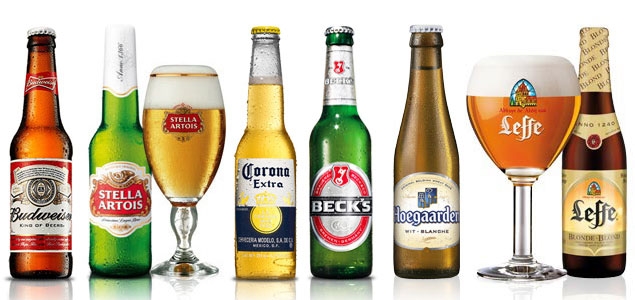
Group 1 - Anheuser-Busch InBev SA/NV (BUD) is a leading global brewer with a portfolio of over 500 beer brands, including Budweiser, Stella Artois, and Corona [1] - BUD's stock has gained approximately 5.77% over the past month, indicating strong investor confidence and positive market sentiment [2][5] - Despite a recent dip of about 2.86% in the past 10 days, BUD's overall performance remains strong, suggesting a potential buying opportunity [3][5] Group 2 - The stock's estimated price appreciation is 12.66%, indicating that it may be undervalued [3][5] - BUD's financial health is robust, as evidenced by a Piotroski Score of 8, highlighting its financial stability and operational efficiency [4][5] - Analysts have set a target price of $86.33 for BUD, aligning with its growth prospects and financial strength [4]
Boston Beer: Undervalued Future-Ready Brewer With Zero Debt And Aggressive Buybacks
Seeking Alpha· 2026-03-03 13:06
Core Viewpoint - The Boston Beer Company (SAM) is highlighted for its strong financial position, including a robust balance sheet, significant buyback yield, and solid cash flow generation, which supports a positive investment outlook [1]. Financial Performance - The company has a nearly double-digit buyback yield, indicating a strong commitment to returning value to shareholders [1]. - The cash flow generation remains solid, contributing to the overall financial health of the company [1]. Investment Strategy - The analysis emphasizes a value investing approach, suggesting that the company is well-positioned for potential growth and investment opportunities [1].