Private Equity Funds

Search documents
私募圈正在崛起的“90后”,谁在定义下一个十年?
私募排排网· 2026-03-31 07:13
Core Viewpoint - The rise of 90s-born fund managers in the private equity industry is injecting new vitality into a mature market, characterized by innovative investment logic and a departure from traditional thinking [2]. Group 1: Demographics and Statistics - As of February 2026, there are 554 fund managers born in the 1990s, accounting for 11.61% of the total 4770 fund managers with disclosed age data [3]. - Among the 90s fund managers, 12 are employed at billion-dollar private equity firms, and 14 are at firms managing between 50 to 100 billion [6]. Group 2: Professional Background and Skills - The average experience of 90s fund managers is 11.47 years, with the highest being Guo Xiaoxu from Runze Yunneng, who has a diverse background in quantitative analysis and investment banking [6]. - The majority of 90s fund managers focus on stock strategies (264), followed by multi-asset strategies (72) [6]. - Their core competencies include technical proficiency in data processing, sensitivity to market trends, and a rapid iteration of cognitive understanding, which are seen as advantages over traditional managers [10][11][12]. Group 3: Performance and Achievements - The average return of 253 private equity products managed by 90s fund managers over the past year is 37.19% [17]. - Notable performances include products managed by fund managers from companies like Zhongmin Huijin and Jiahong Fund, with some achieving impressive returns since their inception [16][19].

私募“落户”大揭秘:北上广深杭仍是“重地”,三亚、南京、杭州、珠海“后浪”来袭!
私募排排网· 2026-03-25 09:49
Core Viewpoint - The article discusses the significant reshaping of the geographical landscape of China's private equity fund industry, highlighting the concentration of private equity registrations in major cities and the implications of these trends for operational costs and policy benefits [2]. Group 1: Distribution of Private Equity Registrations - Nearly 70% of private equity funds are registered in Beijing, Shanghai, Shenzhen, Hangzhou, and Guangzhou, with Shanghai leading in both quantity and scale, hosting 1,892 funds [3]. - The top five cities account for over 5,189 registered private equity funds, with Shanghai, Shenzhen, and Beijing each having over 1,000 funds [3]. - Shanghai has 112 leading private equity firms (with assets over 5 billion), significantly more than other cities, indicating its status as a financial hub [3]. Group 2: Separation of Registration and Office Locations - There are 1,740 private equity firms with separated registration and office locations, representing 23.27% of all firms [13]. - Cities with a high incidence of this separation include Sanya (92.24%), Zhuhai (74.65%), and Qingdao (70.92%) [13]. - The majority of these separated firms (84.83%) have assets under management between 0-5 billion, indicating a trend towards smaller firms seeking operational efficiencies [14]. Group 3: Recent Trends in Private Equity Registrations - In the past three years, 167 new private equity firms have been established, with Shanghai, Beijing, Nanjing, Hangzhou, Zhuhai, and Shenzhen being the most popular locations [18]. - Nanjing, Hangzhou, and Zhuhai have collectively established 44 new firms, benefiting from their unique advantages such as educational resources and favorable policies [18]. - Among the newly established firms, 118 have assets under management of 0-5 billion, while 18 firms with over 5 billion have shown performance in the past year [19].
《私募投资基金信息披露监督管理办法》颁布,规定七大禁止行为
梧桐树下V· 2026-02-28 02:29
Core Viewpoint - The China Securities Regulatory Commission (CSRC) has issued the "Measures for the Supervision and Administration of Information Disclosure of Private Investment Funds," which will take effect on September 1, 2026, aiming to enhance transparency and protect investors' rights in the private fund industry [1][8]. Group 1: Background and Purpose - The regulation aims to standardize information disclosure practices for private funds, ensuring that investors can understand the operational status of their investments and safeguarding their legal rights [2]. - The measures are based on the "Securities Investment Fund Law" and the "Private Fund Supervision and Administration Regulations," emphasizing the importance of transparency in private fund operations [2]. Group 2: Main Content - The regulation consists of seven chapters and forty-four articles, outlining the responsibilities of private fund managers and custodians to disclose information truthfully, accurately, completely, and timely [3]. - It specifies the basic requirements for information disclosure, including the need for private fund managers to disclose information according to the fund contract and to enhance industry transparency through "penetration disclosure" [3][4]. - Prohibited disclosure behaviors include making false statements, predicting investment performance, and promising capital protection or minimum returns [3][4]. Group 3: Reporting Requirements - Private fund managers must provide regular reports, including quarterly and annual reports, detailing fund performance, net asset values, and significant events affecting the fund [4][19][20]. - In the event of major incidents, private fund managers are required to prepare and disclose temporary reports within five working days [4][25]. Group 4: Management of Disclosure Affairs - Private fund managers and custodians must establish robust information disclosure management systems and ensure compliance with disclosure obligations [4][27]. - There are specific requirements for the management of undisclosed information and the responsibilities of stakeholders in the disclosure process [4][28]. Group 5: Supervision and Legal Responsibilities - The CSRC will supervise the information disclosure activities of private fund managers, custodians, and sales institutions, with the authority to impose administrative penalties for violations [4][31][32]. - The regulation outlines the legal responsibilities and potential penalties for non-compliance with disclosure requirements [4][33].
归乡记 | 雷州年味浓:私募新人的除夕团圆录
Xin Lang Cai Jing· 2026-02-20 09:19
Group 1 - The article reflects on the emotional journey of returning home for the Lunar New Year, highlighting the contrast between urban life and the warmth of family traditions [1][30] - The narrative emphasizes the significance of family gatherings and traditional customs during the New Year celebrations, showcasing the preparation of various traditional foods and rituals [19][22][20] - The author expresses a deep connection to their roots, illustrating how the experiences of home and family provide comfort and strength amidst the challenges of urban life [31][32] Group 2 - The article describes the vibrant atmosphere of the hometown, with vivid imagery of the landscape transitioning from urban to rural, symbolizing a return to one's origins [6][14] - It details the preparations for the New Year, including cleaning, decorating, and cooking, which are integral to the cultural practices of the community [15][18][19] - The narrative captures the essence of familial bonds and the importance of maintaining cultural heritage, as seen through the interactions with family members and the sharing of traditional stories [9][10][24]
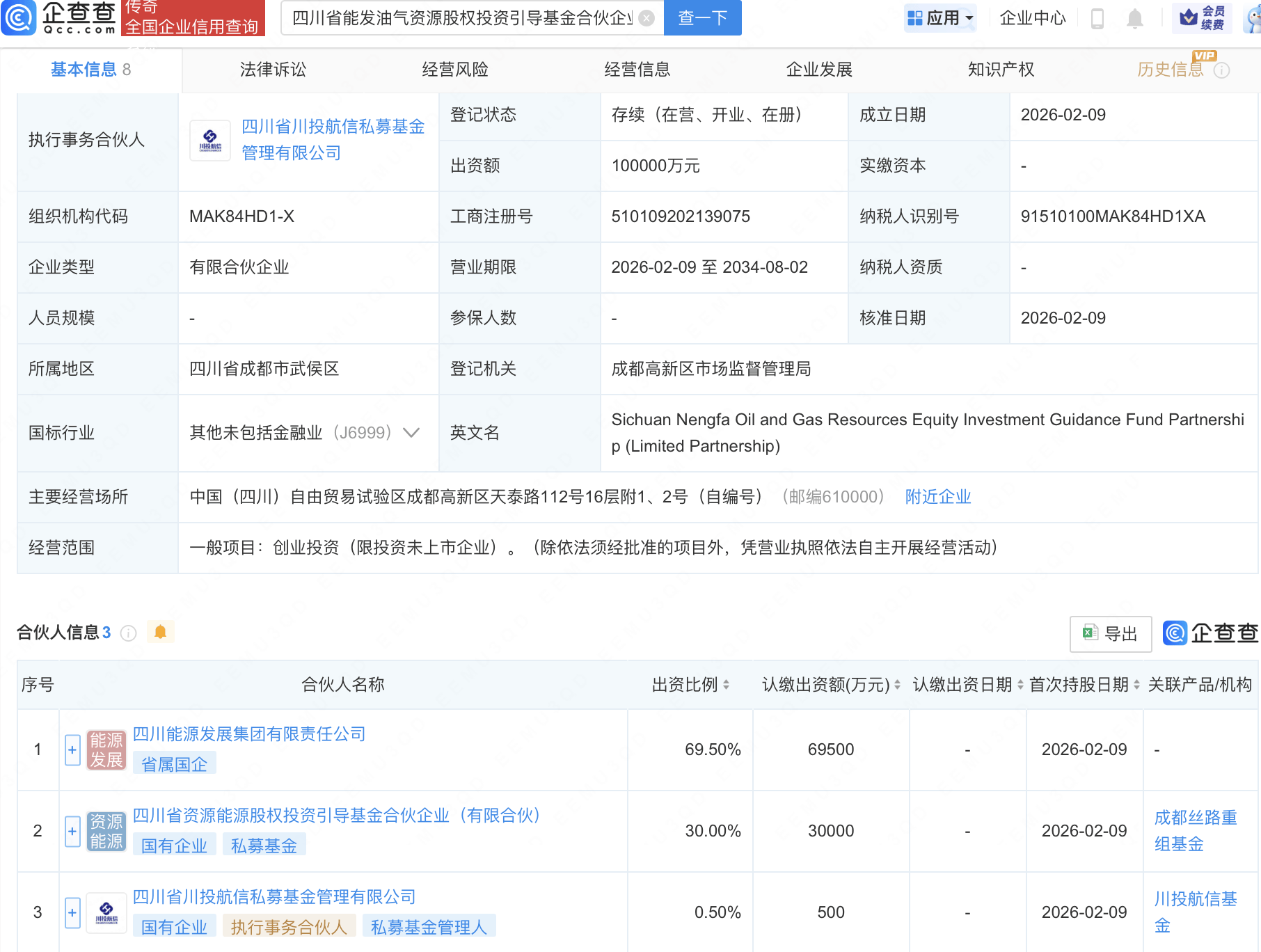
四川能源发展集团等成立油气资源股权投资引导基金,出资额10亿
Sou Hu Cai Jing· 2026-02-10 05:37
Group 1 - The Sichuan Nengfa Oil and Gas Resource Equity Investment Guidance Fund Partnership has been established with a total investment of 1 billion yuan, focusing on venture capital limited to investments in unlisted companies [1][2] - The fund is a limited partnership and is registered in Chengdu, Sichuan Province, with a business duration from February 9, 2026, to 2034 [2] - The main partners include Sichuan Energy Development Group Co., Ltd. with a 69.5% stake, Sichuan Resource Energy Equity Investment Guidance Fund Partnership with a 30% stake, and Sichuan Chuan Investment Aviation Credit Private Fund Management Co., Ltd. with a 0.5% stake [3]
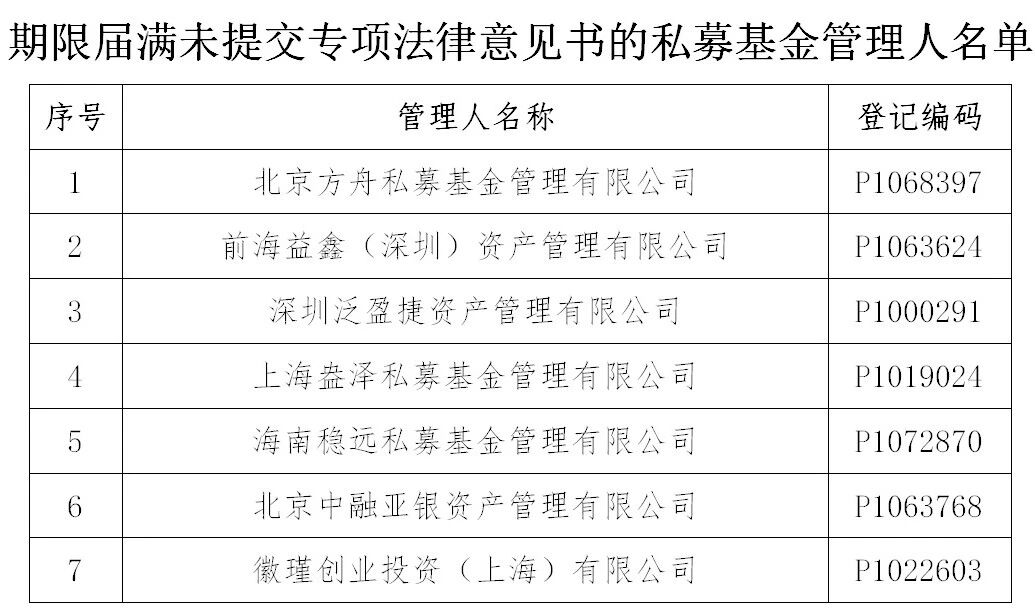
中基协注销7家私募基金管理人登记
Sou Hu Cai Jing· 2026-02-06 10:36
Core Viewpoint - The China Securities Investment Fund Industry Association announced the cancellation of the private fund manager registrations for seven firms due to abnormal operational circumstances and failure to submit required legal opinions within the specified timeframe [1]. Group 1: Announcement Details - The announcement was made on February 6, indicating that the affected firms did not comply with regulations after receiving written notifications [1]. - The association emphasized that the canceled private fund managers must properly handle the assets under management and protect investors' legal rights according to laws, regulations, and self-regulatory rules [1]. Group 2: Affected Firms - The following seven private fund managers had their registrations canceled: 1. Beijing Ark Private Fund Management Co., Ltd. (Registration Code: P1068397) 2. Qianhai Yixin (Shenzhen) Asset Management Co., Ltd. (Registration Code: P1063624) 3. Shenzhen Fanyingjie Asset Management Co., Ltd. (Registration Code: P1000291) 4. Shanghai Angze Private Fund Management Co., Ltd. (Registration Code: P1019024) 5. Hainan Wenyuan Private Fund Management Co., Ltd. (Registration Code: P1072870) 6. Beijing Zhongrong Yayin Asset Management Co., Ltd. (Registration Code: P1063768) 7. Huijin Venture Capital (Shanghai) Co., Ltd. (Registration Code: P1022603) [2].
罚没超4100万元,多家私募牵涉其中,瑞丰达案获“史上最重罚单”
Xin Lang Cai Jing· 2026-01-24 01:15
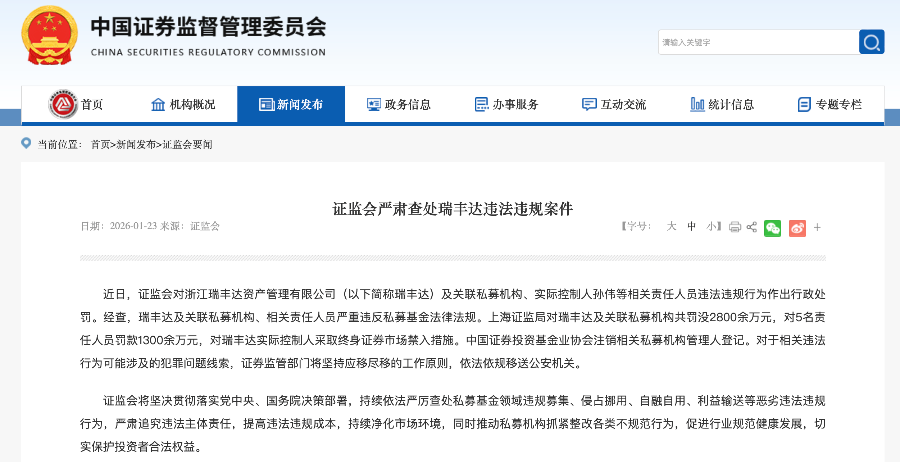
Core Viewpoint - The China Securities Regulatory Commission (CSRC) has concluded its investigation into the Rui Feng Da incident, imposing significant penalties on the company and its affiliates for serious violations of private fund regulations, marking it as one of the heaviest fines in the private equity sector's history [1][2]. Group 1: Penalties and Violations - Rui Feng Da and its associated private equity firms were fined over 28 million yuan, while five responsible individuals faced fines totaling 13 million yuan, with the actual controller, Sun Wei, receiving a lifetime ban from the securities market [1][2]. - The Shanghai Securities Regulatory Bureau identified five affiliated private equity firms involved in the violations, including Shanghai Ri Ying and Hunan Bei Chen Yu Ren Technology [2]. - The investigation revealed that from January 2021 to January 2024, several funds managed by these firms failed to operate in accordance with contractual agreements, and discrepancies were found in the reported information regarding actual controllers and related parties [2]. Group 2: Fund Management and Misconduct - Rui Feng Da allegedly misused investor funds by engaging in high-risk trading of illiquid stocks on the New Third Board, leading to significant financial losses for investors [7][8]. - The firm reportedly promised investors that their principal would not be lost or guaranteed minimum returns, which contributed to the fraudulent activities [2]. - The incident raised concerns about the role of custodians in private equity, as many funds were managed under the supervision of custodians who may not have adequately monitored the fund managers' activities [9][10]. Group 3: Industry Impact and Regulatory Response - Following the Rui Feng Da incident, the China Securities Investment Fund Industry Association (CIFA) has begun to revoke the registrations of several private equity firms involved in the scandal due to abnormal operations [5]. - The incident has prompted increased scrutiny of custodians' responsibilities in the private equity sector, with legal experts emphasizing the need for custodians to fulfill their supervisory obligations [11].
私募监管利剑出鞘!瑞丰达领史上最重罚单,立体追责网持续收紧
2 1 Shi Ji Jing Ji Bao Dao· 2026-01-23 13:45
Core Viewpoint - The regulatory environment for private equity funds in China has entered a new phase characterized by strict enforcement and zero tolerance for violations, as evidenced by the record penalties imposed on Zhejiang Ruifengda Asset Management Co., Ltd. and its related entities [1][2][4] Regulatory Actions - On January 23, the China Securities Regulatory Commission (CSRC) imposed administrative penalties totaling over 410 million yuan on Ruifengda and its actual controller, Sun Wei, along with five associated private equity institutions [1][2] - This penalty marks the heaviest fine in the history of private equity regulation, reflecting a shift towards a more rigorous and systematic approach to enforcement [2][6] - The CSRC's actions are part of a broader strategy to combat illegal activities in the private equity sector, including fraudulent fundraising, misappropriation of funds, and conflicts of interest [2][4] Violations Identified - Investigations revealed serious violations, including significant discrepancies in information reporting by Ruifengda and its affiliates, which aimed to obscure actual control relationships and evade regulatory scrutiny [4][5] - Funds managed by certain institutions were found to be operating outside the agreed investment strategies, constituting fraud against investors [5][8] - Sun Wei directly engaged in misleading practices by promising investors capital protection and minimum returns, which are prohibited under private equity regulations [5][6] Enforcement Mechanisms - The penalties included not only financial fines but also the revocation of management registrations for the implicated private equity firms and a lifetime ban for Sun Wei from participating in the securities market [5][6] - The regulatory framework now incorporates a three-tiered accountability system involving self-regulation, administrative oversight, and criminal prosecution, ensuring comprehensive enforcement against violations [6][10] Industry Implications - The recent actions signal a commitment to creating a fair competitive environment for compliant institutions and safeguarding investors' rights [2][10] - The regulatory landscape is evolving towards a more law-based, normalized, and integrated approach to supervision, with a focus on long-term deterrence against misconduct [10][11] - The CSRC's ongoing efforts include educational initiatives aimed at promoting compliance and rectifying persistent issues within the industry [11]
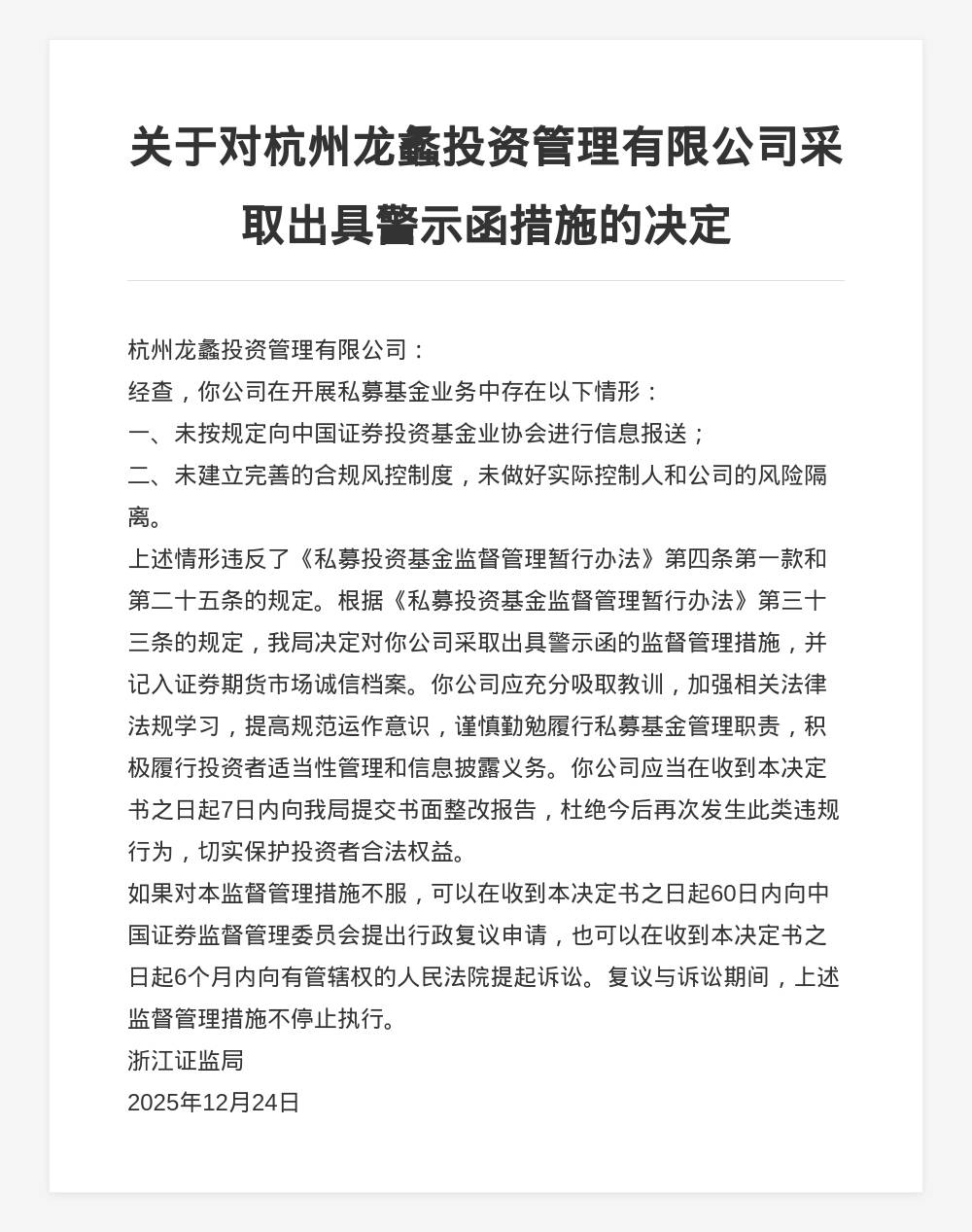
杭州龙蠡投资被出具警示函,涉合规风控制度不完善等
Sou Hu Cai Jing· 2026-01-20 07:48
Core Viewpoint - Zhejiang Securities Regulatory Bureau has issued administrative regulatory measures against Hangzhou Longli Investment Management Co., Ltd. for violations in private equity fund operations [1][2]. Group 1: Violations Identified - The company failed to report information to the China Securities Investment Fund Industry Association as required [1][2]. - The company did not establish a comprehensive compliance and risk control system, failing to ensure risk isolation between the actual controller and the company [1][2]. Group 2: Regulatory Actions - The Zhejiang Securities Regulatory Bureau decided to issue a warning letter as a supervisory measure and record it in the securities and futures market integrity archive [1][2]. - The company is required to submit a written rectification report within 7 days of receiving the decision, aiming to prevent future violations and protect investors' legal rights [2].
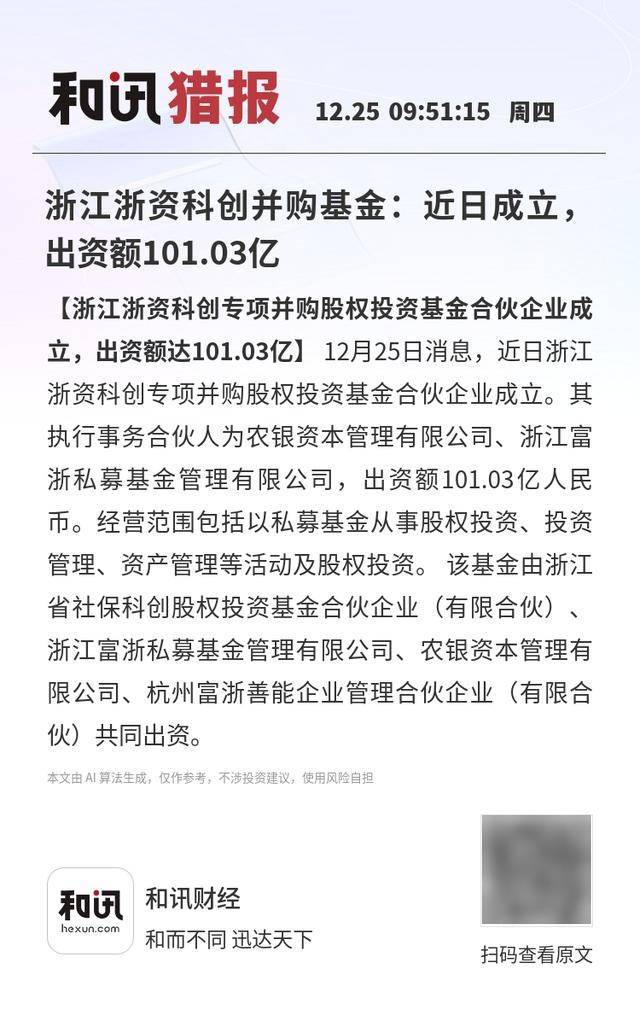
浙江浙资科创并购基金:近日成立,出资额101.03亿
Sou Hu Cai Jing· 2025-12-25 02:28
Group 1 - The Zhejiang Zhezi Science and Technology Innovation Special M&A Equity Investment Fund Partnership has been established with a total contribution of 10.103 billion RMB [1][2] - The executing partner companies are Agricultural Bank of China Capital Management Co., Ltd. and Zhejiang Fuzhe Private Equity Fund Management Co., Ltd. [1][2] - The fund's business scope includes private equity investment, investment management, asset management, and other related activities [1][2] Group 2 - The fund is jointly contributed by Zhejiang Provincial Social Security Science and Technology Innovation Equity Investment Fund Partnership (Limited Partnership), Zhejiang Fuzhe Private Equity Fund Management Co., Ltd., Agricultural Bank of China Capital Management Co., Ltd., and Hangzhou Fuzhe Shanneng Enterprise Management Partnership (Limited Partnership) [1][2]