Telecom Operators

Search documents
5 Undervalued Price-to-Sales Stocks With Solid Upside Potential
ZACKS· 2026-03-13 17:46
Core Insights - Investing in stocks based on valuation metrics, particularly the price-to-sales (P/S) ratio, can identify opportunities with strong upside potential, especially for unprofitable or early-stage companies [1][2][3] Valuation Metrics - The P/S ratio compares a company's market capitalization to its revenues, providing a clearer picture of value when earnings are minimal or volatile [2][5] - A P/S ratio below 1 indicates that investors pay less than $1 for every $1 of revenue, signaling potential value [6][10] - The P/S ratio is often preferred over the price-to-earnings (P/E) ratio due to the difficulty of manipulating sales compared to earnings [7][10] Investment Opportunities - Low P/S stocks can offer compelling opportunities as they often trade below their intrinsic value, making them attractive for investors seeking upside potential [3] - Companies with low P/S ratios and strong fundamentals include SK Telecom, PCB Bancorp, Apple Hospitality REIT, Genesco, and First American Financial [4][12] Company Profiles - **SK Telecom Co., Ltd. (SKM)**: A leading telecom operator in South Korea with strong cash flows and growth in AI and digital platforms, currently has a Zacks Rank of 1 and a Value Score of B [12][13] - **PCB Bancorp (PCB)**: A holding company for PCB Bank, offering tailored banking services in Southern California, currently has a Value Score of B and a Zacks Rank of 2 [14][15] - **Apple Hospitality REIT, Inc. (APLE)**: A REIT with a diverse portfolio of upscale hotels, demonstrating prudent capital allocation and a Value Score of A with a Zacks Rank of 2 [16][17] - **Genesco Inc. (GCO)**: A specialty footwear retailer focusing on digital channels and core business growth, currently has a Value Score of B and a Zacks Rank of 2 [18][20] - **First American Financial Corporation (FAF)**: A leader in the U.S. title insurance market with strong pricing power and a focus on technology investments, currently has a Value Score of A and a Zacks Rank of 2 [21][22]



VEON Ltd. (NASDAQ:VEON) Gears Up for Quarterly Earnings Amid Major Spectrum Acquisition in Pakistan
Financial Modeling Prep· 2026-03-13 01:00
Core Viewpoint - VEON Ltd. is enhancing its market position through strategic moves in Pakistan, particularly with its subsidiary Jazz, which has secured significant mobile spectrum to improve digital services and infrastructure [2][3][6] Financial Performance - VEON is expected to report quarterly earnings on March 13, 2026, with an estimated earnings per share (EPS) of $1.33 and projected revenue of approximately $1.12 billion [2][6] - The company has a price-to-earnings (P/E) ratio of 4.80, indicating a low valuation relative to its earnings [4][6] - VEON's price-to-sales ratio is 0.73, suggesting a modest market valuation of its sales [4][6] - The enterprise value to sales ratio is 1.56, reflecting the company's total valuation in relation to its revenue [4] Debt and Earnings Metrics - VEON has a debt-to-equity ratio of 3.72, indicating a higher level of debt compared to equity [5][6] - The company maintains a strong earnings yield of 20.82%, providing substantial returns on its earnings [5][6] - The current ratio of 0.95 suggests that VEON has slightly less than enough current assets to cover its current liabilities, emphasizing the need for effective cash flow management [5] Strategic Developments - Jazz's acquisition of 190 MHz across various bands is expected to support faster broadband and next-generation digital services, aligning with VEON's growth strategy [3][6] - The mobile spectrum auction in Pakistan, which Jazz won, nearly tripled the spectrum available to mobile operators, significantly enhancing the country's digital infrastructure [2][3]


Retirees Are Chasing EDIV's Yield While Missing Its Biggest Risk
247Wallst· 2026-03-10 11:04
Core Viewpoint - Retirees are increasingly attracted to the SPDR S&P Emerging Markets Dividend ETF (EDIV) due to its yield of 4.28%, which slightly surpasses the 10-year Treasury yield of 4.13%, but the associated risks may outweigh the benefits [1] Group 1: EDIV Overview - EDIV tracks a yield-weighted index of dividend-paying companies in emerging markets, focusing on those with the highest dividends relative to their size [1] - The fund's portfolio is dominated by banks, telecom operators, and consumer staples, with significant holdings in companies like Ambev, Bradesco, and China Railway Group [1] - Major countries represented in the portfolio include Taiwan, Brazil, Malaysia, South Africa, and China, each contributing substantial weight [1] Group 2: Dividend History - EDIV has maintained consistent quarterly distributions since its inception in February 2011, showcasing a 15-year track record [1] - Distribution amounts vary significantly, with the Q3 payment typically being the largest; for instance, in 2025, the September payment was $0.659, while the December payment dropped to $0.253 [1] - This variability in payments may disrupt retirees' budgeting plans that rely on consistent income [1] Group 3: Structural Risks - The stability of EDIV's income is contingent on the dividends from underlying companies, which are subject to currency fluctuations against the dollar [1] - The fund is exposed to multiple emerging market currencies, each carrying unique political and economic risks [1] - Concerns have been raised regarding geographic concentration and historical underperformance compared to traditional market-cap-weighted emerging market funds [1] Group 4: Performance Insights - EDIV has shown strong long-term price appreciation, increasing by 70.08% over the past five years, indicating the potential effectiveness of its yield-weighted strategy [1] - However, the fund is characterized by short-term volatility, with the VIX currently elevated at 23.75, suggesting that retirees should prepare for significant price fluctuations [1] Group 5: Conclusion - While EDIV has a consistent income structure, the dollar value of distributions is not stable, and the yield premium over Treasuries is minimal [1] - The fund combines the volatility of emerging market equities with variable quarterly distributions, which may require careful consideration by retirees focused on income predictability [1]

Retirees Are Chasing EDIV’s Yield While Missing Its Biggest Risk
Yahoo Finance· 2026-03-10 11:04
Core Viewpoint - Retirees are increasingly seeking income from emerging market dividend ETFs, with the SPDR S&P Emerging Markets Dividend ETF (EDIV) offering a 4.28% yield compared to a 10-year Treasury rate of 4.13%, raising questions about the risk-reward balance [2][6] Group 1: Income Generation - EDIV tracks a yield-weighted index of dividend-paying companies in emerging markets, focusing on those with the highest dividends relative to their size, primarily in sectors like banks, telecom, and consumer staples [2] - The fund's top holdings include major companies such as Ambev, Bradesco, and China Railway Group, with significant exposure to Taiwan, Brazil, Malaysia, South Africa, and China [2] Group 2: Dividend History - EDIV has maintained consistent quarterly distributions since its inception in February 2011, but the payment amounts vary significantly, with Q3 typically being the largest [3] - For instance, in 2025, the September payment was $0.659 while the December payment dropped to $0.253, which may disrupt retirees' budgeting plans [3] Group 3: Structural Risks - The stability of income from EDIV is contingent on the dividends from underlying companies, which are subject to currency fluctuations against the dollar, introducing additional risk [4] - The fund's exposure to various emerging market currencies carries unique political and economic risks that could impact dividend payouts [4] Group 4: Performance and Volatility - Despite concerns about geographic concentration and historical underperformance compared to traditional market-cap-weighted funds, EDIV has shown strong long-term price appreciation of 70.08% over five years [5] - The fund is characterized by short-term volatility, with the VIX at 23.75 indicating that sharp weekly price movements are common, which retirees should be prepared for [5][6]
T-Mobile Presents Deep-Value At Current Levels (NASDAQ:TMUS)
Seeking Alpha· 2026-01-18 14:15
Core Insights - T-Mobile US, Inc. is the third largest telecom operator in the US by revenues, following Verizon and AT&T, but is actively increasing its market share [1] Company Overview - T-Mobile US, Inc. is positioned as a significant player in the US telecommunications market, with a focus on expanding its market presence [1]


Orange Belgium invite les investisseurs et les analystes à prendre part à la conférence en ligne et téléphonique organisée le 6 février 2026 sur les résultats du second semestre et de l’exercice 2025
Globenewswire· 2026-01-16 09:00
Group 1 - Orange Belgium will announce its second half and full year results for 2026 on February 6 at 07:00 CET [1] - Investors and analysts are invited to participate in an online and telephonic conference starting at 10:00 CET [1] - The press release, presentation, and results toolkit will be available on the company's financial page on February 6 [3] Group 2 - Orange Belgium is a leading telecommunications operator in Belgium with a revenue of €962.7 million and 3.5 million mobile customers as of June 30, 2025 [4] - The company offers fixed and mobile connectivity services and converged offers, including original TV content [4] - Orange Belgium is a subsidiary of the Orange Group, which operates in 26 countries with a total customer base of 300 million as of June 30, 2025 [5]
Bharti Leads CY25 Market-Cap Surge
Rediff· 2026-01-10 06:34
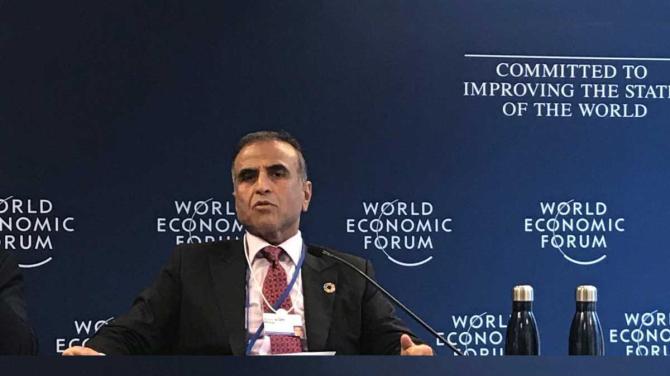
Group 1: Bharti Group Performance - The Bharti group was the biggest gainer among India's top business conglomerates in calendar year 2025, with a combined market capitalisation increase of 37.3% to Rs 14.7 trillion from Rs 10.7 trillion at the end of December 2024 [3][4] - Bharti Airtel, the flagship company, saw its market capitalisation rise by 40.1% to Rs 12.67 trillion from Rs 9.05 trillion at the end of December 2024 [4] Group 2: Comparison with Other Business Groups - The combined market capitalisation of the country's 10 largest family-owned business groups increased by 10% to Rs 126.4 trillion from Rs 114.9 trillion at the end of CY24 [5] - Vedanta, owned by Anil Agarwal, was the second-biggest gainer with a market capitalisation increase of 36.3% to around Rs 5 trillion from Rs 3.67 trillion [5] - Reliance Industries, led by Mukesh Ambani, ranked third with a market capitalisation increase of 24.7% to Rs 23.4 trillion from Rs 18.73 trillion [7] Group 3: Market Trends and Sector Performance - Traditional industries such as manufacturing, mining, and infrastructure saw gains, with the Bajaj group up 21.1%, Kumar Mangalam Birla up 17%, and Mahindras up 17% [9] - The Tata group, despite retaining the top position, experienced a decline of 10.9% in market capitalisation to around Rs 27.7 trillion [10] - The Adani group lost its third rank to the Bharti group, while the Vedanta group climbed four places to ninth rank from 13th [10]
Telefónica (NYSE:TEF) 2025 Earnings Call Presentation
2025-11-04 10:00
Strategic Goals - Telefónica aims to become a "best-in-class European Telco" with profitable scale through its Strategic Plan '26-'30[68, 75, 98] - The company's mission is to deliver the best digital experience to its customers[60] - The company's vision is to become a world-class European Telco with profitable scale[64] Strategic Pillars & Targets - The plan focuses on six strategic pillars: Expand B2C offering, Scale B2B, Evolve Technological Capabilities, Simplify Telefónica's Operating Model, and Develop Talent[81, 85, 91] - The company aims for a 1.5-2.5% CAGR in revenues and adjusted EBITDA between 2025 and 2028, and 2.5-3.5% CAGR between 2028 and 2030[245, 247] - Telefónica targets a reduction in CapEx/Revenues down to approximately 12% between 2026 and 2028, and further down to approximately 11% in 2030[245, 247] - The company is targeting a 3-5% CAGR in Free Cash Flow (FCF) between 2025 and 2028[268, 301] Key Initiatives - Telefónica plans to grow its B2B share of total group revenue to approximately 26% by 2028 and approximately 27% by 2030[320, 321] - The company intends to improve the average NPS (Net Promoter Score) in ES, BR & DE by +10 points by 2028 and +6 points by 2030[319] - Telefónica is targeting a 10.2% Digital Services revenue CAGR between 2025 and 2028[320] Efficiency & Financial Strategy - The company plans a 25% reduction in OpEx related to the operating model in Corporate Centre and Global Business Units[215, 327] - Telefónica is committed to maintaining an investment-grade credit rating and targets a leverage ratio (Net debt / EBITDAaL) of approximately 25x in 2028[275, 294] - The company's dividend policy targets a payout of 40-60% of FCF base for dividend, with a DPS (Dividend Per Share) of €015 in 2026[286, 301]

Kyivstar, Mastercard partner to support digital payments in Ukraine
Yahoo Finance· 2025-10-16 11:40
Core Insights - Kyivstar has formed a strategic partnership with Mastercard to enhance Ukraine's financial infrastructure and digital payment services [1][3] - The collaboration will leverage Starlink Direct to Cell technology to improve connectivity in underserved areas, facilitating financial transactions [2][4] - The partnership aims to develop new financial products using Big Data and analytics, focusing on personalized consumer offers and financial scoring solutions [4][5] Group 1: Partnership Objectives - The partnership seeks to strengthen the resilience of payment infrastructure and support the growth of the digital economy in Ukraine [5][6] - Specific agreements for individual projects will be signed, emphasizing shared strategic goals [4] - The collaboration will promote cashless payments among small and medium enterprises [5] Group 2: Technological Innovations - Starlink Direct to Cell technology will be tested within payment systems to enhance accessibility and resilience of financial services [2][3] - Advanced e-commerce technologies will be implemented to ensure high security standards and improve customer experience [4] - The partnership combines Mastercard's global payment expertise with Kyivstar's strengths in digital product development [3][6]
Communiqué des groupes Bouygues Telecom, Free-Groupe iliad et Orange suite au rejet de leur offre par Altice France
Globenewswire· 2025-10-15 20:09
Core Viewpoint - Bouygues Telecom, Free-Groupe iliad, and Orange have noted the rejection of their non-binding joint offer for the acquisition of a significant portion of Altice France's telecom activities, submitted on October 14 [1] Group 1: Offer and Market Impact - The three operators remain convinced of the relevance of their proposal and the industrial project they are pursuing, which aims to preserve a competitive ecosystem benefiting consumers while promoting continued investments in national telecom infrastructure [2] - Bouygues Telecom, Free-Groupe iliad, and Orange are maintaining their offer and wish to create a constructive dialogue with Altice Group and its shareholders to explore how the project could prosper [3] Group 2: Company Profiles - Orange is a leading global telecommunications operator with a revenue of €40.3 billion in 2024 and 124,600 employees as of June 30, 2025, serving 300 million customers across 26 countries [4] - Free-Groupe iliad, established in the early 1990s, generated a revenue of €10.0 billion in 2024 and serves 51 million subscribers, with significant operations in France, Italy, and Poland [6] - Bouygues Telecom, a subsidiary of Bouygues Group, reported a revenue of €7.8 billion in 2024, employing 11,200 staff and serving 27.1 million mobile and 5.3 million fixed-line customers [8]