
《三峡新移民》

Search documents
一江碧水入画来
Xin Lang Cai Jing· 2026-01-12 20:06
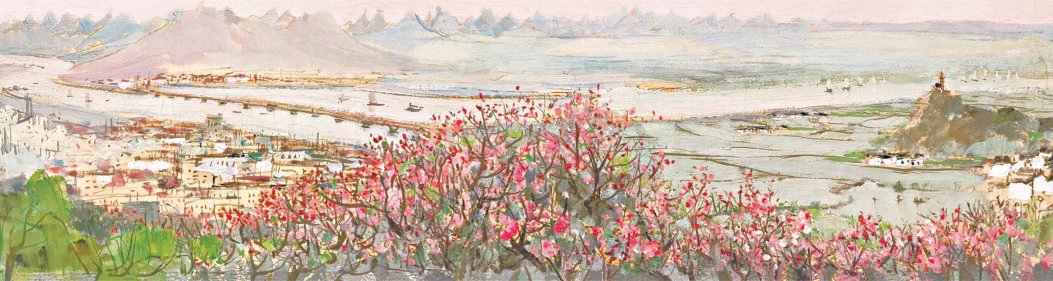
Core Viewpoint - The article discusses the significance of the Yangtze River in Chinese art, highlighting various artistic expressions and historical contexts that reflect the river's cultural and historical importance [9][14]. Group 1: Historical Context of Yangtze River in Art - The Yangtze River has been a subject of artistic expression since ancient times, with notable works from various dynasties, including the Southern Song Dynasty's "Yugong Mountain and River Map" [9]. - The "Yangtze River Ten Thousand Miles Map" has been a recurring theme in Chinese painting, with artists like Xia Gui and Zhao Fu being among the earliest to depict it [9]. - The article mentions significant historical events associated with the Yangtze River, including the Japanese bombing of Chongqing during World War II, which is captured in Wu Zuoren's painting "Chongqing Bombing" [10]. Group 2: Modern Artistic Expressions - The exhibition "Clear Water East Flow" at the National Art Museum of China will showcase over 150 pieces of art related to the Yangtze River, including contemporary works by artists focusing on the river theme [9]. - Artists like Li Hu and Zong Qixiang have depicted the Yangtze River's cultural and historical narratives through their works, emphasizing realism and emotional depth [10]. - The construction of major bridges like the Wuhan Yangtze River Bridge and Nanjing Yangtze River Bridge inspired a wave of artistic creations reflecting national pride and socialist construction [10]. Group 3: Artistic Movements and Themes - The article highlights the 1960s as a significant period for artists who captured the beauty of the Three Gorges, with notable figures like Fu Baoshi leading expeditions to create iconic works [11]. - The Three Gorges have become a symbol in art, with many artists exploring its natural beauty and cultural significance, as seen in works by Li Hu and Zong Qixiang [12]. - The article also notes the evolution of artistic representation of the Yangtze River, from traditional ink paintings to modern photography, reflecting the river's ongoing relevance in contemporary art [13].

现实主义画家刘小东:以画笔记录时代肌理
Jing Ji Guan Cha Bao· 2025-05-11 01:26
Core Perspective - Liu Xiaodong is a representative figure of contemporary realism in Chinese oil painting, known as the pioneer of "new realism" and has gained significant attention from collectors since the 1990s [1] Group 1: Artistic Philosophy and Techniques - Liu Xiaodong's work is rooted in realism, focusing on the survival states of ordinary people and the subtle textures of societal changes, employing a "现场写生" (on-site sketching) approach [2] - His art emphasizes deep engagement with reality rather than grand narratives, highlighting the lives of marginalized individuals such as migrant workers and gamblers [2] - His technique combines classical oil painting rigor with modern artistic freedom, often completing sketches in one go to preserve the original vitality of brushstrokes [3] Group 2: Market Performance and Recognition - Liu Xiaodong's works reflect the dynamics of contemporary Chinese art, with significant sales such as "Three Gorges New Immigrants" selling for 22 million yuan in 2006, setting a record for contemporary Chinese oil paintings [5] - His subsequent works have continued to break records, with "Battlefield Sketch - New Eighteen Arhats" selling for 55.73 million HKD in 2008 and "Violation" fetching 66.2 million HKD in 2014, solidifying his market position [6] Group 3: International Influence and Contributions - Liu Xiaodong is recognized as a pioneer of "new realism" in contemporary Chinese art, influencing a generation of young artists and breaking away from dogmatic concepts in the art world [6][7] - His practice demonstrates the enduring vitality of realism in contemporary art, connecting pre-modern history with collective memory amidst globalization [7] - Liu Xiaodong's contributions extend to academia as a professor at the Central Academy of Fine Arts, where he nurtures new generations of realist painters and promotes the "new realism" style [8]