
现实主义

Search documents
欧洲该醒醒了!理想主义与现实主义的永恒张力
付鹏的财经世界· 2026-01-23 23:05
Core Viewpoint - The article discusses the tension between idealism and realism in global politics, particularly focusing on the limitations of both extreme social Darwinism and utopian ideals in explaining human society and international relations [1][2][6]. Group 1: Theoretical Perspectives - Extreme social Darwinism leads to destructive competition, undermining social cohesion and human values, while the ideal of a utopian society overlooks the necessity of competition for innovation and progress [1][2]. - Both extremes fail to provide a comprehensive understanding of human society, highlighting the need for a balance that acknowledges competition while ensuring ethical boundaries [2][6]. Group 2: International Relations Dynamics - The notion of "equality among nations" is criticized as an unrealistic ideal, as powerful countries can dominate agendas through coercion and unilateral actions, undermining true equality [3][4]. - The disparity between wealthy and poorer nations reflects a similar inequality among individuals, complicating negotiations and often leading to superficial agreements that do not resolve fundamental conflicts [3][4]. Group 3: European Integration and Challenges - The European Union's integration efforts, while aimed at fostering cooperation and economic interdependence, face significant challenges due to internal disparities and decision-making inefficiencies [8][9]. - The EU's focus on consensus and regulatory coordination has led to reduced competitiveness compared to more centralized decision-making systems like those in the US and China [9][10]. Group 4: Realism vs. Idealism in Europe - The article highlights the decline of European competitiveness as it clings to idealistic values while failing to adapt to the realities of global power dynamics, leading to a potential loss of influence [14][17]. - The ongoing internal conflicts within the EU, exacerbated by differing economic structures and priorities, threaten the viability of its integration model [10][12]. Group 5: Future Outlook - The article suggests that without a shift from idealistic approaches to a more pragmatic understanding of power dynamics, Europe risks marginalization in the global arena [20][23]. - Historical patterns indicate that overly tight integration without addressing underlying differences may lead to fragmentation, echoing past political dissolutions [21][22].

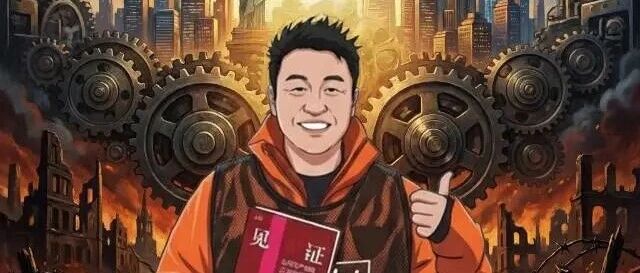
郁亮给万科留下了什么?
3 6 Ke· 2026-01-09 02:14
Core Viewpoint - The resignation of Yu Liang, the Executive Vice President of Vanke, marks a significant transition in the company's leadership, reflecting on his contributions and the strategic changes during his tenure [3][4][14]. Group 1: Leadership Transition - Yu Liang, born in 1965, has been with Vanke for 36 years and has played a crucial role in its growth, transitioning from various positions to CEO and Chairman [3]. - His leadership saw Vanke's sales and asset scale grow rapidly, despite being surpassed by competitors like Country Garden and Evergrande [4]. - The establishment of systems like the "partner system" during his tenure has been pivotal in aligning management and employee interests with the company's growth [4]. Group 2: Management Style and Philosophy - Yu Liang is characterized as a pragmatic leader, contrasting with the idealistic approach of the founder Wang Shi, focusing on practical execution rather than high-level rhetoric [5][6]. - His experience in financial management has allowed him to recognize and leverage Vanke's strengths effectively, emphasizing the importance of realizing value quickly [8][9]. Group 3: Financial Strategy and Market Position - Under Yu Liang's leadership, Vanke maintained a strong credit reputation, enabling it to secure low-cost financing, which was crucial during the real estate boom [9][10]. - The company adopted an asset-driven approach, functioning similarly to a financial institution, focusing on credit generation and asset transactions for profit [10]. - This strategy led to significant asset acquisitions, positioning Vanke as a major player in the land market, although it raised concerns about sustainability during market downturns [10][14]. Group 4: Personal Impact and Legacy - Yu Liang's personal interests, such as cycling and running, became part of his public persona, influencing the corporate culture at Vanke [13]. - His recent withdrawal from the spotlight amid company challenges reflects a shift in his role and the perception of his leadership [14][15]. - The evaluation of Yu Liang's tenure is complex, with both successes and challenges that will shape Vanke's future [14].

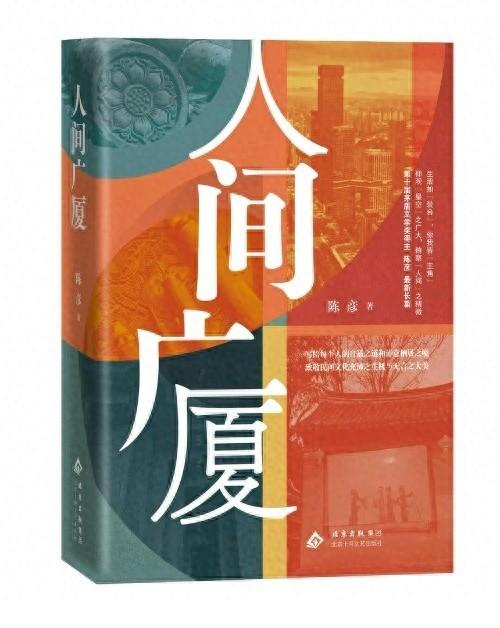
《人间广厦》:他们说,分房是一场战争
Bei Jing Ri Bao Ke Hu Duan· 2025-12-28 14:08
Core Viewpoint - The novel "Human Mansion" by Chen Yan explores the theme of housing allocation as a metaphor for human desires, struggles, and the quest for a sense of belonging, intertwining various cultural elements to reveal the complexities of human nature [2][10]. Summary by Sections Plot Overview - The story revolves around a thirty-story building and the chaotic housing allocation process at the "West Capital Cultural Art Research Institute," highlighting the desperation and moral dilemmas faced by its diverse characters [2][10]. - The first chapter, titled "Housing Allocation is a War," depicts the urgency and conflicts arising as the retiring director is pressured to finalize housing distribution before retirement, leading to intense competition among the staff [2][10]. Character Analysis - The protagonist, Director Man Tingfang, is portrayed as a reluctant leader caught in the turmoil of housing allocation, representing the struggle between personal integrity and institutional pressures [5][10]. - Supporting characters like the opportunistic Deputy Director Ying Tianchang and the dedicated folk artists Xi Chunlai and He Xinnang illustrate contrasting approaches to life and values, from self-serving calculations to genuine dedication to cultural preservation [8][9][10]. Themes and Symbolism - The novel employs dual narratives, juxtaposing the chaotic housing allocation with a quiet archaeological dig led by Man's wife, Zhao Yiqiu, symbolizing the deeper quest for spiritual and historical understanding beyond material possessions [4][6][10]. - Cultural elements such as Qin opera, folk songs, and traditional crafts serve not only as a backdrop but also as integral to character development, reflecting their personalities and values [4][9]. Conclusion - "Human Mansion" transcends the literal theme of housing allocation, delving into the essence of human existence, the importance of moral integrity, and the pursuit of a meaningful life, ultimately suggesting that true stability comes from within rather than from material wealth [10].
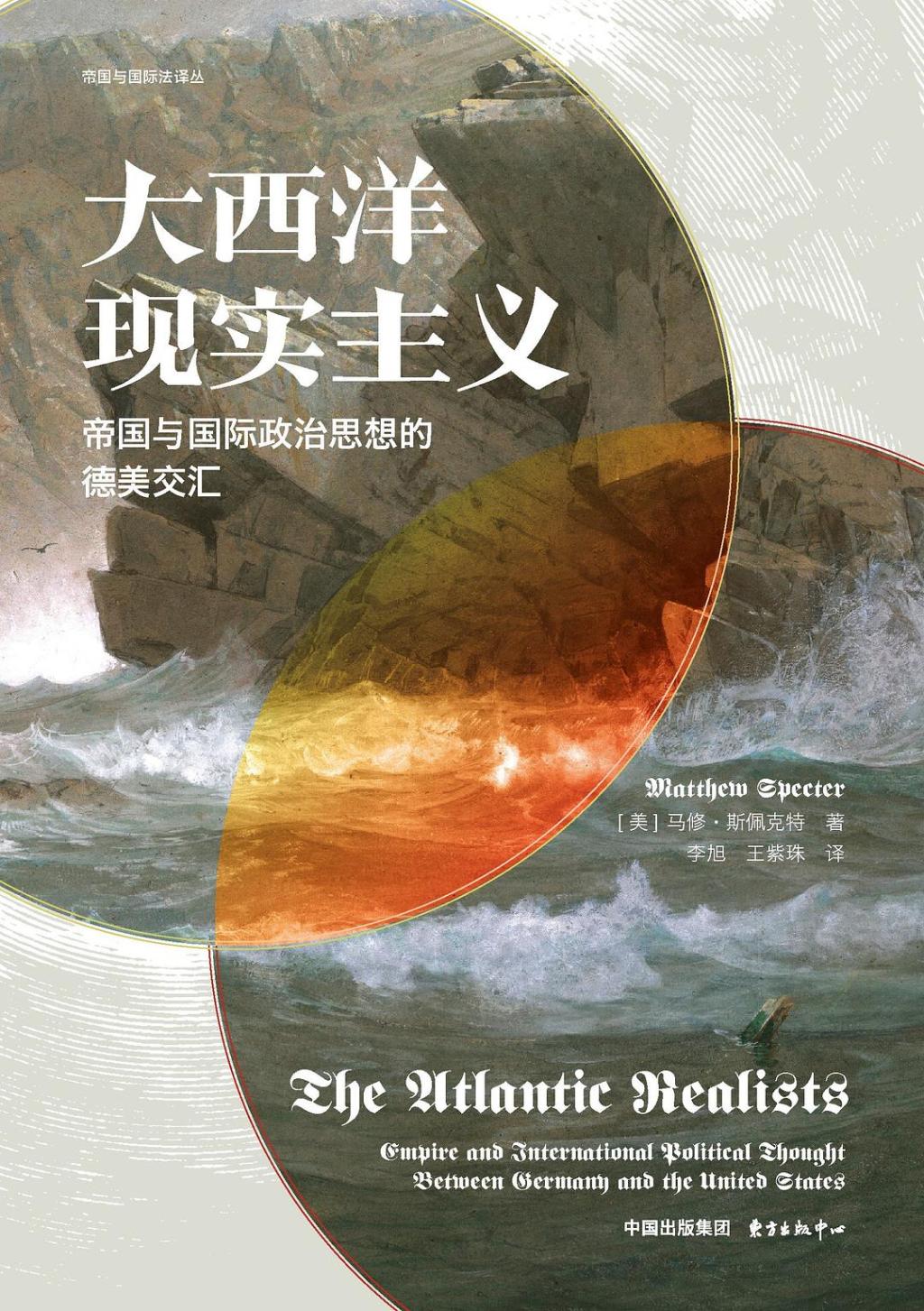
王紫珠评《大西洋现实主义》|从世界政策到地缘政治:跨越德美的成长小说
Xin Lang Cai Jing· 2025-12-02 04:09
Core Argument - The book "Atlantic Realism: The Intersection of Imperial and International Political Thought in Germany and America" by Matthew Specter explores the intertwining of ideas across the Atlantic, particularly focusing on the rise of realism in international relations and its implications for contemporary politics [3][4]. Group 1: Historical Context and Development of Realism - Realism is portrayed as a dominant theory in international relations, emphasizing power and interest-driven politics, resonating with current U.S. practices [4]. - The book presents a sociological perspective on realism, tracing its origins and evolution from the late 19th century to the late 20th century, highlighting its German-American connections [4]. - The concept of "Weltpolitik" (world policy) from Germany significantly influenced the development of realism, reflecting Germany's aspirations for global power during the late 19th century [11][12]. Group 2: Key Figures and Theoretical Contributions - The book discusses influential figures such as Carl Schmitt, Wilhelm Grewe, and Hans Morgenthau, detailing their contributions to realism and the personal experiences that shaped their thoughts [4][9]. - Friedrich Ratzel's "Lebensraum" (living space) theory and Alfred Mahan's naval theories are identified as critical components of Atlantic realism, merging German ideas with American contexts [14][12]. - The narrative emphasizes the importance of a transatlantic intellectual network that facilitated the exchange of ideas between German and American scholars, impacting U.S. foreign policy [15][16]. Group 3: Institutionalization and Impact on Policy - Post-World War II, realism transitioned from a theoretical framework to a significant influence on U.S. and European foreign policy, reflecting the pressures of the Cold War [20][21]. - The establishment of institutions like the German Council on Foreign Relations marked the institutionalization of realism, bridging academic and policy-making spheres [22][24]. - The book critiques the transformation of realism into a tool for state strategy, losing its critical and historical depth in the process [25][27]. Group 4: Contemporary Reflections and Future Directions - The text raises questions about the future of realism in international relations, suggesting it should maintain a balance between theoretical insight and practical application [27][28]. - It argues for a renewed focus on the moral and philosophical dimensions of realism, advocating for a critical engagement with power and human nature [28].

看到中美达成了共识,德国率先变脸,转向幅度之大,各方错愕
Sou Hu Cai Jing· 2025-11-02 07:46
Group 1 - The recent US-China talks resulted in unexpected outcomes, with both sides providing concessions without escalating tensions, indicating a strategic calculation behind the apparent win-win situation [1][5] - China achieved key results such as tariff extensions, partial reductions, and some sanctions being eased, while the US gained more negotiating space regarding rare earth exports [1][5] - The global implications of the US-China thaw are significant, as countries that previously relied on choosing sides must now navigate their own paths, leading to discomfort for Japan, South Korea, and the EU [5][8] Group 2 - Despite the easing of tensions, there remains an intense underlying competition, with China managing to withstand global tax pressures and maintain stability while others face increasing tax burdens [3][9] - Germany's rapid shift in stance reflects a realization of its precarious position, as it can no longer rely solely on ideological alignments with the US while facing its own industrial challenges [8][9] - The EU, particularly Germany, must reassess its economic relationship with China, focusing on practical cooperation in key industries like electric vehicles, energy, and AI, rather than ideological posturing [9][10] Group 3 - The current geopolitical landscape presents both pressure and opportunity for Europe, as it can no longer depend on US policies for protection and must engage in meaningful economic collaboration to influence global rules [14] - Germany's recent pivot towards realism signifies a shift from being a passive player to actively seeking beneficial partnerships, recognizing that cooperation is essential for economic survival [10][14] - The ongoing US-China détente provides a "repair window" for Europe to propose cooperation in sectors where mutual benefits can be realized, emphasizing the need for action over rhetoric [12][14]
贸易战2.5:市场太乐观了?
Hu Xiu· 2025-10-13 08:41
Group 1 - The article discusses the potential for prolonged trade friction between China and the U.S., with the APEC meeting not necessarily being a decisive moment for resolution [1][9][11] - There is a focus on the semiconductor and rare earth sectors as central to the ongoing tensions, highlighting their importance in both capital markets and geopolitical strategies [1][8] - The article emphasizes the need for understanding technology and its evolution as a critical factor in macroeconomic and geopolitical analysis [1] Group 2 - The U.S. government shutdown has led to a lack of employment data, while China's consumer spending has declined, indicating economic concerns on both sides [2] - China proposed a significant increase in direct investment in the U.S. during negotiations, aiming to ease restrictions on Chinese investments and trade [3][6] - The article notes that direct investment can deepen ties between nations, potentially fostering local support for Chinese interests in the U.S. [3] Group 3 - The importance of direct dialogue between ordinary citizens of both nations is highlighted as crucial for improving bilateral relations [4] - The U.S. appears to need China's manufacturing experience, reflecting a shift in the dynamics of international trade relationships [5] - The article points out that the U.S. has implemented further restrictions on semiconductors and shipping, increasing insecurity in trade relations [7][8] Group 4 - The article discusses the security dilemma and suspicion spiral in international relations, emphasizing the lack of trust between nations [21][22] - It notes that countries are increasingly creating non-military "weapons" in trade and technology to assert their influence [22][23] - The article suggests that the U.S. has opened a "Pandora's box" in trade relations, leading to a cycle of learning and adaptation among nations [23][30] Group 5 - The article raises questions about the negotiation power dynamics between buyers and sellers in a trade conflict, suggesting that sellers may hold more leverage due to control over key resources [24][25] - It discusses the significance of the U.S. dollar's status as a reserve currency and its implications for global trade [26][32] - The article concludes with observations on Trump's negotiation style and its impact on international relations, suggesting a decline in the credibility of threats made by the U.S. [35][36]
格蕾塔救不了加沙,也救不了欧洲人的良心
Hu Xiu· 2025-10-12 05:50
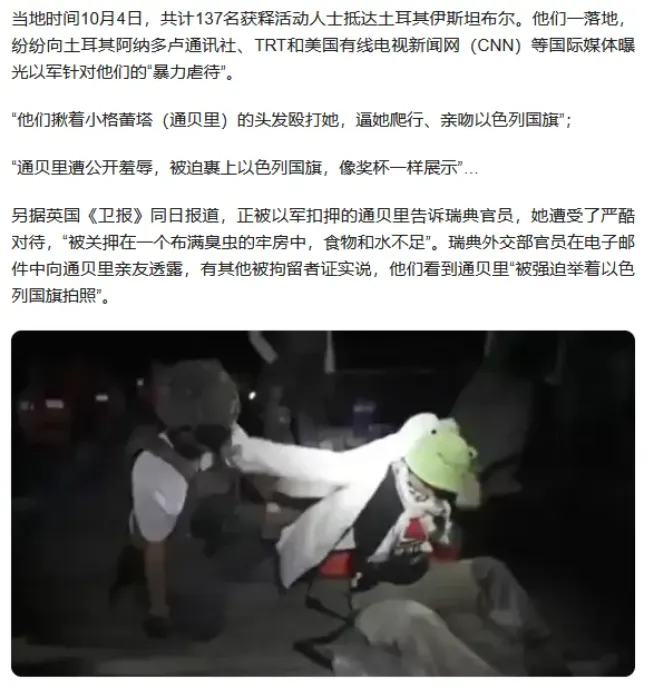
Core Points - The article discusses the absurdity of recent humanitarian efforts to aid Gaza, led by a coalition of European countries, which faced a predictable response from Israel, including the interception and detention of participants [1][3][5] - The scale of the current humanitarian fleet is significantly larger than previous attempts, receiving considerable political support in Europe, yet the outcome remains ineffective [3][5] - The article highlights the political dynamics within Israel, particularly Netanyahu's use of war to divert attention from internal pressures, suggesting that the ongoing conflict is more about political survival than military strategy [8][9] - The perception of Israel as a civilized nation defending against barbarism is critiqued, emphasizing that such narratives do not lead to civilized outcomes and can result in greater disasters [10][11] - The article argues that the current international order, which promotes a two-state solution, is unrealistic given the deep-rooted cultural, religious, and geopolitical conflicts that cannot be resolved through negotiation alone [17][18] - It points out the contradictions in Western leftist perspectives on the Israeli-Palestinian conflict, noting that their actions have not significantly changed the situation for the people of Gaza [20][21] - The article concludes that a realistic approach is necessary to address the complexities of the conflict, rather than relying on idealistic or simplistic solutions [22][23]
对于当前社会的理解,网文是面最好的镜子
虎嗅APP· 2025-09-11 13:41
Core Viewpoint - The article discusses the evolution of online literature in China, highlighting its reflection of societal changes and the impact of different historical periods on literary themes and genres [5][6]. Group 1: Evolution of Online Literature - Online literature has undergone significant transformations, paralleling the industrial and technological revolutions from the 1980s to the present [6][7]. - The article categorizes online literature into four main genres: Wuxia (martial arts), time travel, cultivation (Xianxia), and female-oriented narratives [8]. Group 2: Wuxia Literature - Wuxia literature represents the agricultural society, emphasizing collective values and the traditional master-apprentice relationship [10][12]. - The genre reflects a high moral standard and a strong sense of justice, rooted in the historical context of small artisan communities [12]. Group 3: Time Travel Literature - Time travel narratives resonate with the industrial era, often portraying protagonists who seek to improve the past using modern knowledge [13][18]. - The genre is experiencing a decline due to the rapid industrialization and the saturation of historical periods available for exploration [19][20]. Group 4: Cultivation Literature - Cultivation literature mirrors contemporary society, characterized by individualism and a hierarchical structure similar to modern corporate environments [21][23]. - The genre emphasizes personal growth and the importance of resources, reflecting a realistic approach to success and achievement [31]. Group 5: Female-Oriented Narratives - Female-oriented literature encompasses various genres but primarily focuses on themes of love and human nature, appealing to both male and female readers [33][34]. - This genre has proven commercially viable, with many popular adaptations originating from female-oriented narratives [33][36]. Group 6: Future of Online Literature - The article suggests that the future of online literature may align with China's advancements in science and technology, potentially leading to a resurgence of science fiction [38][39]. - The evolution of online literature serves as a mirror to societal changes, emphasizing the need to understand the underlying production forces shaping narratives [41][42].

“因为我也是‘无名之辈’”
Ren Min Ri Bao· 2025-07-17 22:02
Core Viewpoint - The film "无名之辈:否极泰来" directed by 饶晓志 explores the themes of ordinary people's struggles and choices in the face of adversity, continuing the narrative from the original film "无名之辈" released in 2018 [1][2] Group 1: Film Overview - "无名之辈:否极泰来" features the protagonist 陈三金, a small foreign trade businessman who finds himself in a bizarre yet real predicament due to a reality-show-like scam [1] - The film aims to provide not only visual enjoyment but also provoke thought and reflection among the audience [1] Group 2: Director's Perspective - 饶晓志 expresses concern over the lack of independent thinking and personal judgment in the internet age, where people often rely on external opinions for their value judgments [2] - He emphasizes the importance of personal interpretation and understanding of the world, advocating for a deeper engagement with one's own thoughts [2] Group 3: Future Projects - Following "无名之辈:否极泰来," another sequel titled "无名之辈:意义非凡" is set to be released by the end of the year, expanding the narrative to include broader themes and settings [4] - The new installment will take the story from 浙江义乌 to international locations like 泰国 and 意大利, reflecting the interconnectedness of individual fates in a global context [4]
第三十届上海电视节评出白玉兰奖 真实自有千钧之力
Ren Min Ri Bao· 2025-06-30 21:58
Group 1 - The core viewpoint of the articles highlights the significance of authenticity and emotional resonance in television dramas, as evidenced by the success of the award-winning series at the Shanghai Television Festival [1][2][3] - The 30th Shanghai Television Festival awarded notable works such as "My Alatai" and "Mountain Flowers Blooming" for their realistic portrayal of contemporary issues and historical narratives, reflecting a shift towards more meaningful storytelling [2][3] - The evaluation of the award-winning works emphasizes the importance of connecting with audience needs and societal realities, showcasing a trend towards realism in contemporary television [3][4] Group 2 - The competition for awards was intense, with several series receiving multiple nominations, indicating a vibrant and evolving television industry [2][4] - The judges and industry experts stress that regardless of the format, whether long or short dramas, the essence of good storytelling and meaningful themes remains paramount [4][5] - The ongoing evolution of television formats, including the rise of short dramas, is seen as complementary rather than a replacement for traditional long-form storytelling, with both having distinct roles in the industry [4][5]