
《儒林外史》

Search documents
重读汪曾祺的《名士与狐仙》
Xin Lang Cai Jing· 2026-01-01 16:40
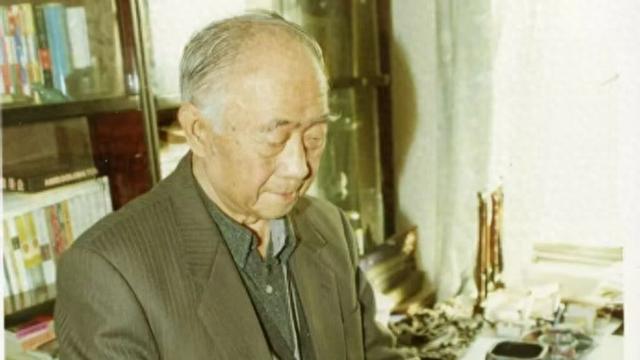
Core Viewpoint - The article reflects on the author's experiences with the renowned Chinese writer Wang Zengqi, particularly focusing on the publication of his works and the personal connections formed through literature [10][15]. Group 1: Publication Experience - The author recalls bringing Wang Zengqi's novel "Mingshi Yu Huxian" to publication in September 1996, highlighting the competitive nature of the newspaper industry at that time [4]. - The author received support from leadership to feature prominent writers, offering special remuneration for their contributions [4]. - Wang Zengqi's willingness to share his works and contacts with other writers, such as Lin Jinlan and Wang Meng, is noted, showcasing his collaborative spirit [5]. Group 2: Personal Connection and Reflection - The author expresses a deep appreciation for Wang Zengqi's writing, particularly after re-reading "Mingshi Yu Huxian" years later, gaining new insights into the author's life and literary style [10][11]. - The narrative includes personal anecdotes about Wang Zengqi's family background and how it influenced his writing, particularly the character Yang Yuhyin, which is based on real-life experiences [11][12]. - The author reflects on missed opportunities for deeper conversations with Wang Zengqi, emphasizing the value of understanding an author's background to enhance the reading experience [13].

我怎样走上文学研究之路(大家谈人生)
Ren Min Ri Bao· 2025-10-26 22:19
Core Viewpoint - The article reflects on the author's journey from a strong inclination towards science and mathematics in youth to a lifelong commitment to the study of ancient Chinese literature, influenced by personal experiences and circumstances [1][8]. Group 1: Early Influences and Education - The author developed an early interest in literature due to the influence of his father, despite initially favoring science subjects in school [1]. - During high school, the author excelled in mathematics and physics, but a lack of resources in rural areas led to a shift towards literature after being unable to self-study science [2][3]. - The author read extensively during the "Down to the Countryside Movement," focusing on classical literature, which provided emotional solace during difficult times [4][5]. Group 2: Academic Journey - After the restoration of the college entrance examination in 1977, the author enrolled in Anhui University and later transferred to Nanjing University to study ancient Chinese literature [6]. - The author was guided by Professor Cheng Qianfan, who emphasized the importance of foundational texts in classical literature, which shaped the author's academic path [6][7]. - The author's doctoral thesis on the Jiangxi Poetry School was a significant contribution to the field, marking a milestone in Chinese literary studies [7]. Group 3: Career and Legacy - The author became a faculty member at Nanjing University after successfully defending the first doctoral dissertation in literature in China [7]. - The author expresses a commitment to dedicating life to the research and popularization of classical literature, reflecting on the profound impact of literature on personal and professional life [8][9].