《唐诗三百首》

Search documents
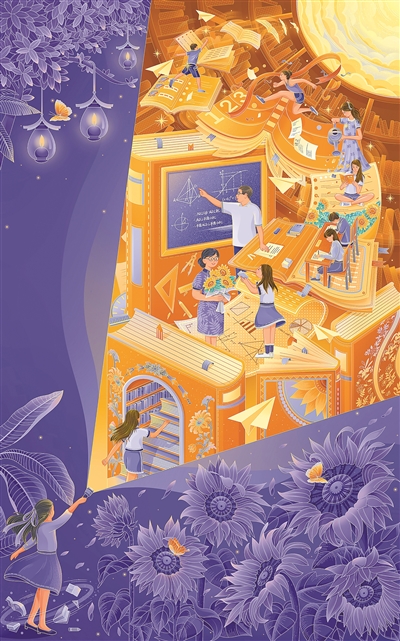
过一个书香春节
Xin Lang Cai Jing· 2026-02-19 17:50
Core Viewpoint - The articles reflect on the significance of reading and literature during the New Year, emphasizing the emotional and spiritual nourishment that books provide in a fast-paced world [1][2][3] Group 1: Importance of Literature - The act of reading is portrayed as a means to connect with historical and cultural wisdom, allowing individuals to engage in a silent dialogue with ancient poets and thinkers [1][2] - Classic works such as "The Book of Songs" and "A Hundred Years of Solitude" are highlighted for their profound insights into life, nature, and human experiences, showcasing the timeless relevance of literature [2][3] Group 2: Personal Reflection and Growth - The articles suggest that reading serves as a refuge from the chaos of modern life, offering a space for introspection and personal growth [1][3] - The experience of reading different genres, from philosophy to modern novels, is described as a journey that enriches the mind and soul, fostering a deeper understanding of oneself and the world [3]
从选本研究到“选本学”
Xin Lang Cai Jing· 2026-02-08 21:40
Core Viewpoint - The article discusses the significance and evolution of "anthologies" in Chinese literature, emphasizing their role in preserving cultural traditions and shaping literary criticism and education [2][3][4]. Group 1: Importance of Anthologies - Anthologies serve to preserve and disseminate excellent poetry and prose, creating a continuous cultural tradition [2]. - They play a crucial role in constructing literary lineage, influencing literary criticism and aesthetic direction [2]. - Anthologies have historically been important educational tools, with examples like "Tang and Song Eight Masters' Writings" and "Three Hundred Tang Poems" still having an impact today [2]. Group 2: Origins and Types of Anthologies - The origins of anthologies can be traced back to ancient texts like "Book of Songs" and "Book of Documents," with Confucius being credited for compiling the Six Classics [3]. - The earliest anthology practice is attributed to the Jin Dynasty's "Collection of Articles," while "Wenxuan" by Xiao Tong is recognized as a significant anthology [3]. - Anthologies can be categorized by various criteria, including time span (e.g., "Wenxuan" as a comprehensive anthology) and purpose (e.g., educational anthologies like "Thousand Family Poems") [4][5]. Group 3: Research Methods in Anthology Studies - Research on anthologies can be approached through internal and external studies, focusing on their generation and construction [7]. - The study of the "subtext" of anthologies, including prefaces, annotations, and publication styles, is essential for understanding their mechanisms and functions [8]. - Anthologies reflect literary criticism practices, showcasing the compiler's literary thoughts and aesthetic preferences through selected works and accompanying commentary [8]. Group 4: Limitations of Anthologies - Anthologies may limit readers' perspectives by presenting a curated selection of works, potentially narrowing their understanding of literary diversity [9][10]. - The subjective nature of selection can impose biases, affecting the representation of literary innovation and diversity [10]. - Anthologies often reflect the political and cultural contexts of their time, which can suppress alternative voices and perspectives [10]. Group 5: Emergence of Anthology Studies - The concept of "Anthology Studies" is proposed as a specialized field focusing on the critical analysis of anthologies as literary practices [10]. - This field aims to explore the intentions behind selections, the standards for inclusion, and the broader implications for literary thought and trends [10].
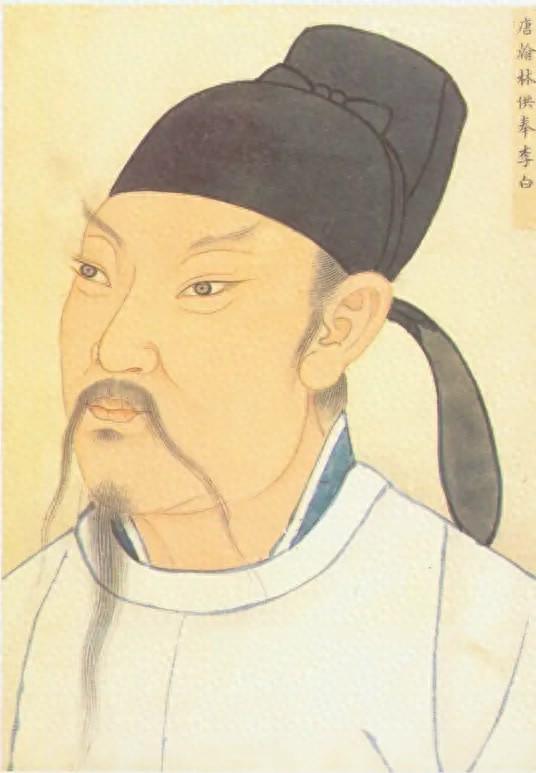
李白《独坐敬亭山》多译本信达雅互鉴,为中华古诗词出海提供价值参照
Xin Lang Cai Jing· 2026-02-06 04:31
Core Viewpoint - The article emphasizes the importance of translating Chinese classical poetry, particularly Li Bai's "Sitting Alone Before the Jingting Mountain," to enhance cultural exchange and understanding between China and the world, adhering to the translation principles of "faithfulness, expressiveness, and elegance" [1][24]. Translation Analysis Yang Xianyi and Dai Naidie's Translation - The translation captures the essence of the original poem, effectively conveying the sense of emptiness and solitude through phrases like "All the birds have flown away, so high" and "a lonely cloud drifts idly by," which reflect the poem's tranquil atmosphere [4][5]. - The language is simple and aligns with the original's style, avoiding excessive embellishments, thus maintaining the poem's minimalist aesthetic [5]. - The structure is compact, preserving the emotional core of the poem, particularly the mutual appreciation between the poet and the mountain [5]. James M. Cryer's Translation - This version emphasizes the exclusivity of the relationship between the poet and the mountain with the phrase "Only Ching-t'ing Shan and me," which highlights the emotional depth of solitude and companionship [11]. - The conversational tone and natural phrasing enhance the accessibility of the poem for English readers, while still maintaining the original's simplicity [12]. - The translation effectively conveys both the dynamic and the emotional state of the poet, creating a vivid imagery of the scene [12]. Xu Yuanchong's Translation - Xu's translation excels in rhythmic quality, achieving a consistent rhyme scheme that enhances the musicality of the poem, making it more appealing to English-speaking audiences [15]. - The translation elevates the meaning of "闲" (idle) to reflect the poet's state of mind, using "so free" to convey a deeper sense of spiritual freedom [16]. - The emotional interaction between the poet and the mountain is articulated in a layered manner, enhancing the philosophical depth of the original text [17]. Wang Yongli's Translation - This translation aims for precise imagery, using "flocks" to reflect the collective nature of the birds and "dissolve into the air" to capture the essence of disappearance, enhancing the sense of emptiness [22]. - The structure is designed for natural flow, with a clear progression of emotion and imagery, aligning with English poetic conventions [22]. - The choice of words aims for both literary quality and vivid imagery, achieving a dual elevation of meaning and thought [23]. Conclusion - The comparative analysis of these translations illustrates the successful application of the "faithfulness, expressiveness, and elegance" principles, showcasing the potential for Chinese classical poetry to resonate within the global cultural landscape [24].

正规图书频频出错,出版机构不能沦为认真做事的反面教材
第一财经· 2026-01-17 14:33
Core Viewpoint - The article highlights a series of quality issues in the book publishing industry, emphasizing the need for stricter quality control and adherence to established standards to maintain the integrity of published works [3][4][5]. Group 1: Recent Quality Issues - Several well-known publishers, including Shanghai Ancient Books Publishing House and Zhonghua Book Company, have faced significant quality problems, leading to the recall of multiple titles due to errors in editing and production [3][4]. - The latest incident involved the People's Posts and Telecommunications Publishing House, where a significant portion of images in a book were found to be AI-generated, raising concerns about the quality control processes in place [3][4]. Group 2: Importance of Quality in Publishing - Books serve as carriers of civilization and knowledge, making their quality paramount. Errors in published materials can mislead readers and have far-reaching consequences, especially in educational and classic literature [4][5]. - Regulations such as the "Book Quality Management Regulations" stipulate that the error rate in book editing must not exceed one in ten thousand, highlighting the industry's commitment to quality [5]. Group 3: Underlying Issues in the Publishing Industry - The repeated mistakes indicate systemic issues within publishing houses, including rushed publication cycles, inadequate review processes, and a lack of accountability among editorial staff [5][6]. - The current trend towards prioritizing speed and profit over quality reflects a broader societal impatience, which has infiltrated the publishing sector [5][6]. Group 4: Call to Action for Publishers - The publishing industry must take on greater social responsibility, returning to its roots of quality and respect for the written word. Historical figures like Lu Feikui exemplify the commitment to high-quality publishing [6]. - To restore its reputation, the industry needs to establish robust quality control systems, enhance training for editorial staff, and prioritize social benefits over mere profitability [6].

壹快评|正规图书频频出错,出版机构不能沦为认真做事的反面教材
Di Yi Cai Jing· 2026-01-17 13:05
Core Viewpoint - The publishing industry is facing significant quality issues, with multiple renowned publishers experiencing serious errors in their publications, raising concerns about the industry's internal control mechanisms and commitment to quality [1][2][3]. Group 1: Recent Quality Issues - Several well-known publishers have recently faced quality problems, including Shanghai Ancient Books Publishing House, Zhonghua Book Company, and People's Posts and Telecommunications Publishing House, leading to the recall of multiple titles due to errors [1][2]. - Specific examples include over 300 errors in "The West Chamber" and AI-generated images in "Portrait Photography Pocket Book," which included significant mistakes such as six fingers or toes [1][2]. Group 2: Industry Standards and Regulations - The publishing industry is governed by strict regulations, such as the "Book Quality Management Regulations," which stipulate that the error rate in publishing must not exceed one in ten thousand [2]. - New regulations effective from September 1, 2025, will require AI-generated images to be clearly labeled, emphasizing the importance of compliance with industry standards [2]. Group 3: Internal Control and Responsibility - The repeated errors indicate a failure in internal control mechanisms within publishing houses, possibly due to rushed publication cycles and inadequate review processes [2][3]. - There is a call for publishing institutions to take greater social responsibility and to return to a focus on quality, emphasizing the need for rigorous training and management of editorial staff [3][4]. Group 4: Societal Reflection and Future Directions - The current quality issues in publishing reflect a broader societal trend towards haste and superficiality, which can compromise the integrity of published works [3]. - The industry is urged to uphold its foundational role in civilization transmission by prioritizing quality and respecting the reader, thereby restoring its reputation and societal value [4].
【著作者说】 在诗歌里相遇
Xin Lang Cai Jing· 2026-01-09 16:41
Group 1 - The evolution of Chinese poetry can be categorized into four main forms: four-character, ci and fu, five-character, and seven-character poetry, with notable representatives for each form [1] - The "Nineteen Old Poems" is recognized for its ability to express shared human emotions, reflecting on aspirations and the inevitability of separation, making it a timeless literary work [2] - The distinction between poetry and literature is questioned, emphasizing that poetry transcends mere technical aspects and serves as a means for self-discovery and understanding of human existence [3] Group 2 - The appreciation of ancient Chinese poetry is rooted in traditional critical methods, which are often more impactful than modern lengthy analyses, though understanding these critiques can be challenging due to language barriers [4] - The notion that anyone can engage with poetry, regardless of their literary prowess, is highlighted, suggesting that poetry serves as a medium for personal awakening and connection with others [5]
在书中体会辽阔人生
Xin Lang Cai Jing· 2026-01-02 22:39
Core Viewpoint - The narrative emphasizes the profound impact of reading and literature on personal growth and resilience throughout different life stages, illustrating how books serve as a source of inspiration and comfort in challenging times [1][2][3] Group 1: Childhood and Early Influences - The protagonist's childhood home, a simple earthen house, is depicted as a nurturing environment where reading flourished despite material poverty [1] - The use of a large cabinet as a makeshift desk symbolizes the resourcefulness and determination to pursue education amidst limited resources [1] - Nature and the changing seasons are intertwined with the reading experience, enhancing the connection between literature and the world outside [1] Group 2: Adult Life and Reflection - After finishing school, the protagonist returns to farming, highlighting the struggle to balance work and the desire for education [2] - Rediscovering an old book, "Hans Christian Andersen's Fairy Tales," evokes memories of childhood and provides emotional relief from life's burdens [2] - The act of reading under a kerosene lamp at night signifies the enduring love for literature and its role in fostering courage to face life's challenges [2] Group 3: Lifelong Learning and Wisdom - As the protagonist ages, the reflections on reading history and contemporary literature reveal the lessons learned about life, history, and human nature [3] - The impact of classic works, such as "Records of the Grand Historian" and "The Comprehensive Mirror for Aid in Government," illustrates the importance of understanding history to navigate the present [3] - The protagonist finds solace and clarity in literature, suggesting that a well-stocked personal library can enrich life and provide a sense of purpose [3]
经典出版当有“如履薄冰”之心
Xin Lang Cai Jing· 2025-12-26 21:02
Core Viewpoint - The recent errors in classic texts published by reputable institutions like Zhonghua Book Company and Shanghai Ancient Books Publishing House have raised concerns about the accuracy and responsibility in the publishing industry, particularly regarding the transmission of cultural heritage [1][2][3]. Group 1: Errors in Publication - Zhonghua Book Company acknowledged that their edition of "Three Hundred Tang Poems" contained errors due to mistakes in simplified and traditional character conversion, which were not thoroughly corrected in subsequent reprints [1]. - Other notable errors were reported in "The West Chamber" and "Shishuo Xinyu (Middle School Edition)," indicating a pattern of inaccuracies across various classic texts [1][2]. Group 2: Impact on Cultural Transmission - The inaccuracies in these texts can distort the original meaning and understanding of classical literature, particularly affecting middle school students who rely on these authoritative versions for their introduction to traditional culture [2][3]. - The loss of textual accuracy not only undermines the respect for historical details but also threatens the authenticity of cultural transmission [2][4]. Group 3: Industry Standards and Practices - The issues highlight management gaps in the publishing process, where the pressure for quick turnaround and market efficiency may compromise quality control measures like the "three reviews and three proofs" standard [2][3]. - There is a call for the publishing industry to prioritize quality over speed, ensuring that every detail is meticulously verified to maintain the integrity of classic literature [3].
我怎样走上文学研究之路(大家谈人生)
Ren Min Ri Bao· 2025-10-26 22:19
Core Viewpoint - The article reflects on the author's journey from a strong inclination towards science and mathematics in youth to a lifelong commitment to the study of ancient Chinese literature, influenced by personal experiences and circumstances [1][8]. Group 1: Early Influences and Education - The author developed an early interest in literature due to the influence of his father, despite initially favoring science subjects in school [1]. - During high school, the author excelled in mathematics and physics, but a lack of resources in rural areas led to a shift towards literature after being unable to self-study science [2][3]. - The author read extensively during the "Down to the Countryside Movement," focusing on classical literature, which provided emotional solace during difficult times [4][5]. Group 2: Academic Journey - After the restoration of the college entrance examination in 1977, the author enrolled in Anhui University and later transferred to Nanjing University to study ancient Chinese literature [6]. - The author was guided by Professor Cheng Qianfan, who emphasized the importance of foundational texts in classical literature, which shaped the author's academic path [6][7]. - The author's doctoral thesis on the Jiangxi Poetry School was a significant contribution to the field, marking a milestone in Chinese literary studies [7]. Group 3: Career and Legacy - The author became a faculty member at Nanjing University after successfully defending the first doctoral dissertation in literature in China [7]. - The author expresses a commitment to dedicating life to the research and popularization of classical literature, reflecting on the profound impact of literature on personal and professional life [8][9].
我们的第一本书
Ren Min Ri Bao· 2025-04-22 22:11
Core Viewpoint - The articles celebrate the significance of the "first book" in the lives of various individuals, highlighting personal stories of authors, publishers, and readers, and emphasizing the transformative power of literature in shaping identities and experiences [4][5][9][13][20]. Group 1: Personal Stories of First Books - The first book often marks a pivotal moment in an individual's life, serving as a reflection of personal growth and emotional journeys [5][9]. - Authors like Mai Jia recount their experiences with their first published works, illustrating how these moments can mend familial relationships and foster a sense of identity [5][7]. - The narrative of a first book is not just about the act of writing but also about the emotional connections and memories associated with it, as seen in the stories shared by various individuals [4][6][12][20]. Group 2: The Role of Literature in Society - The articles discuss the current challenges faced by traditional novels in China, noting a decline in readership and the need for authors to adapt their writing styles to engage modern audiences [8]. - There is a call for writers to embrace a more accessible and engaging narrative style, moving away from pretentiousness to connect better with readers [8]. - The importance of literature as a means of cultural expression and personal reflection is emphasized, showcasing how it can inspire and influence societal values [4][19]. Group 3: Impact of Personal Experiences on Writing - Personal experiences, such as overcoming hardships or embarking on adventurous journeys, significantly influence the content and themes of the first books written by individuals [9][12]. - The act of writing is portrayed as a therapeutic process, allowing authors to confront their past and articulate their emotions through storytelling [5][11]. - The journey of writing a first book often involves perseverance and dedication, reflecting the broader human experience of striving for self-expression and understanding [12][20].