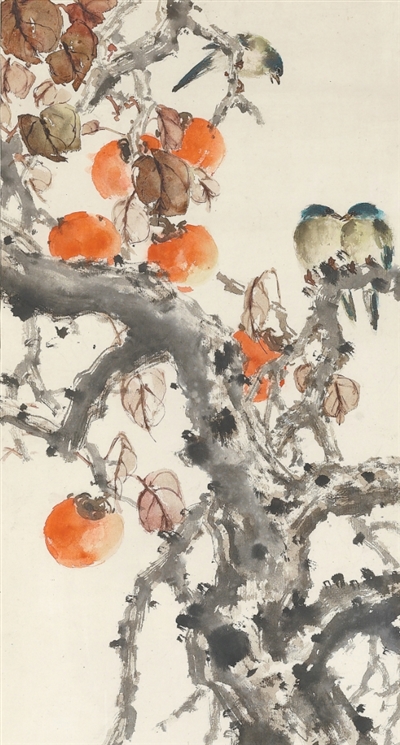
《六柿图》

Search documents
被中国遗忘的牧溪:日本的“画道大恩人”
Jing Ji Guan Cha Bao· 2026-02-05 06:50
(原标题:被中国遗忘的牧溪:日本的"画道大恩人") 文博时空 作者 尹博 《牧溪的柿子》 (美)加里 · 斯奈德 大厅的后墙上 侧门玻璃照亮的 是牧溪伟大的 水墨画《六柿图》 …… 我要说,这是世上最好的 柿子 …… 中国历史上,有这样一位谜一般的南宋禅僧画家——牧溪,我们不了解他的生卒年月,对其生平也不甚 了了,只知其俗姓李,佛名法常。在中国古代美术史中,牧溪长期被忽略,但在日本,牧溪却被推崇到 了极致,甚至被一些日本学者认为是日本的"画道大恩人"。不同民族对于画作的品位问题是相当有趣 的,一个民族喜爱什么样的画反映了这一民族的气质和审美,而牧溪显然是认识中日差异的一面澄澈的 镜子。 南宋 牧溪《达摩图》 日本天龙寺藏 日本名画家东山魁夷(其散文《一片树叶》曾入选苏教版语文教材)曾这样评价过牧溪: "牧溪的画有浓重的氛围,且非常逼真,而他却将这些包容在内里,形成风趣而柔和的表现,是很有趣 的,是很有诗韵的。因而,这是最适合日本人的爱好、最适应日本人的纤细感觉的。可以说,在日本的 风土中,牧溪的画的真正价值得到了承认。" 南宋 牧溪《叭叭鸟图》 日本私人收藏 纤细感觉的大和民族与牧溪的柿子画 提到日本审美的民 ...
好“柿”挂枝头(读画)
Ren Min Ri Bao· 2025-11-29 22:11
Core Viewpoint - The article highlights the cultural significance and artistic representation of persimmons in Chinese history, particularly through the artwork "Red Persimmons and Birds" by Gao Jianfu, showcasing the blend of traditional and modern techniques in Chinese painting [4][5][6]. Group 1: Cultural Significance - Persimmons have a long history in China and are not only appreciated for their taste but also hold a beloved place in Chinese culture, symbolizing longevity and abundance [4]. - The imagery of persimmons has been a popular subject among poets and artists throughout history, reflecting their cultural resonance [4]. Group 2: Artistic Representation - Gao Jianfu's painting "Red Persimmons and Birds" exemplifies a dynamic representation of nature, combining traditional Chinese techniques with Western influences, showcasing a vigorous old tree and vibrant persimmons [5]. - The use of bright red persimmons in the painting emphasizes vitality and life, while the presence of birds adds a sense of liveliness and interaction within the artwork [5][6]. Group 3: Emotional and Cultural Connection - The artwork conveys warmth and vitality amidst a desolate backdrop, symbolizing the enduring spirit of Chinese civilization and its cultural heritage [6]. - The painting serves as a reminder of the deep-rooted connection between nature and human emotions, reflecting the wisdom and warmth of Chinese culture [6].