
《华阳国志》

Search documents
古今修志人的一次对话
Xin Lang Cai Jing· 2026-02-08 08:13
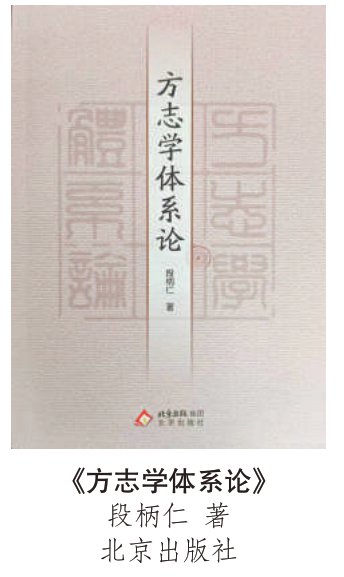
Core Viewpoint - The book "The System of Local Chronicles" by Duan Bingren provides a comprehensive framework for understanding the field of local chronicles, integrating historical evolution, practical methodologies, and theoretical foundations into a cohesive system [2][3][5]. Group 1: Historical Context and Development - The book traces the historical progression of local chronicles from their origins to their current forms, highlighting the evolution from ancient texts to modern compilations [3][4]. - It emphasizes the significance of local chronicles in Chinese culture, with over 10,000 ancient chronicles and more than 40,000 new ones published by 2020, representing about 10% of the total ancient texts in China [3][4]. Group 2: Theoretical Framework - The author categorizes local chronicles knowledge into three levels: core knowledge, derived knowledge, and theoretical knowledge, while also incorporating biographical dimensions [3][5]. - The book presents a structured approach to local chronicles, addressing their compilation methods, management standards, and application pathways, ultimately forming a complete theoretical system [3][5]. Group 3: Innovation and Modern Relevance - The work is noted for its innovative approach, moving beyond fragmented discussions to integrate contemporary development concepts and modern academic vitality into the study of local chronicles [5]. - It aims to rejuvenate the traditional discipline of local chronicles, ensuring its relevance and vitality in the modern academic landscape [5]. Group 4: Cultural Significance - The book serves as a key to understanding the cultural heritage embedded in local chronicles, illustrating how they reflect historical narratives and regional characteristics [4][5]. - It highlights the contributions of various scholars throughout history, showcasing the evolution of local chronicles and their role in documenting societal changes [4][5].

方寸古籍藏巴蜀 成都古籍珍品展邀你邂逅千年书香
Xin Lang Cai Jing· 2026-01-15 22:31
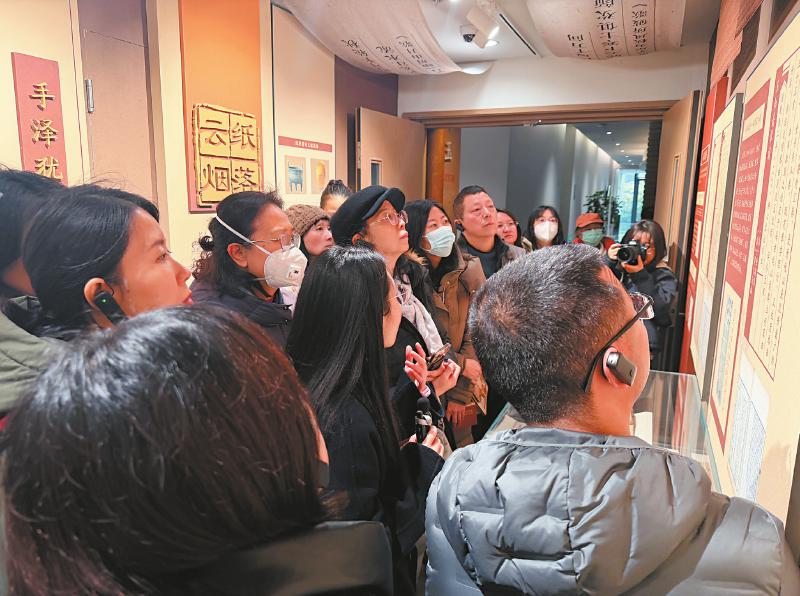
Core Viewpoint - The Chengdu Library has launched an exhibition titled "Washing the Classics with Gentle Breeze," showcasing over 20 rare ancient books from its collection, which includes more than 80,000 volumes, highlighting the importance of ancient book preservation and cultural heritage [1][2]. Group 1: Exhibition Overview - The exhibition is divided into three main sections: "Paper and Smoke," "Book Culture of Jin City," and "Seals and Treasures," utilizing various formats such as physical displays, graphic interpretations, and interactive experiences to present the ancient book treasures [1]. - The exhibition features early and distinctive versions of ancient books, including Ming dynasty editions, Qing dynasty manuscripts, and Japanese reprints, allowing visitors to explore the historical context of Sichuan [1][2]. Group 2: Cultural Significance - The "Book Culture of Jin City" section includes unique documents like Sichuan opera scripts and agricultural texts, reflecting the socio-economic changes and folk customs of Chengdu during the late Qing and early Republic periods [2]. - The "Paper and Smoke" section presents a visual history of ancient Chinese publishing techniques through various formats, from handwritten manuscripts to colorful printed editions [2]. - The "Seals and Treasures" section focuses on the protection and transmission of ancient books, showcasing the significance of book seals and the cultural exchange represented by Japanese reprints [2]. Group 3: Future Plans - To balance cultural preservation and public engagement, original rare books will be displayed for a limited time, followed by exhibitions of carefully crafted replicas to continue showcasing the beauty and richness of ancient texts [2]. - The Chengdu Library plans to host ongoing cultural promotion activities centered around ancient books and publish related works to creatively integrate traditional Chinese culture into modern life [2].
《三国的星空》有哪些硬伤
Hu Xiu· 2025-10-10 02:51
Core Viewpoint - The article discusses the historical inaccuracies and creative liberties taken in the animated film "The Stars of the Three Kingdoms," particularly regarding the relationship between Emperor Xian of Han and Cao Cao, which may mislead audiences about historical events [4][12][19]. Summary by Sections Historical Context - The film is based on the historical backdrop of the Three Kingdoms period, focusing on the relationship between Cao Cao and Yuan Shao, culminating in the Battle of Guandu [1]. - The narrative introduces the controversial "clothing edict" incident, where Emperor Xian allegedly issued a secret edict to assassinate Cao Cao, which is depicted in a way that suggests a close alliance between the two [4][10]. Analysis of Historical Sources - The article references key historical texts, including "Records of the Three Kingdoms," "Book of the Later Han," "Comprehensive Mirror in Aid of Governance," and "Chronicles of Huayang," to analyze the authenticity of the clothing edict [5][7]. - It highlights that while some texts suggest the edict's existence, others imply it may have been fabricated by Dong Cheng, leading to ambiguity about Emperor Xian's intentions [9][10]. Critique of the Film's Portrayal - The film's portrayal of a close friendship between Emperor Xian and Cao Cao is criticized as historically implausible, given the documented animosity and political tension between them [12][15]. - The article argues that the film's attempt to "whitewash" Cao Cao's character contradicts historical accounts of his violent actions, which have shaped his reputation as a ruthless leader [19]. Implications for Future Productions - The article warns that misrepresenting historical figures can lead to audience dissatisfaction and market rejection, suggesting that creators should approach historical narratives with caution and respect for the source material [20][19].