
《三国志》

Search documents
哔哩哔哩(BILI):广告动能强劲
citic securities· 2026-03-06 12:45
Investment Rating - The report provides a positive outlook on Bilibili, indicating strong advertising momentum and an overall favorable performance in Q4 2025 [4]. Core Insights - Bilibili's Q4 2025 performance exceeded expectations, with total revenue and adjusted net profit growing by 8% and 94% year-on-year, reaching 8.3 billion yuan and 878 million yuan respectively. The primary driver of this growth was a 27% increase in advertising revenue, attributed to traffic growth and enhanced advertising inventory [4]. - The mobile gaming segment saw a 14% decline in revenue due to a lack of new hit titles, but there are expectations for improvement in 2026 with new game launches and international expansion [5]. - Advertising revenue growth is expected to continue, driven by increased inventory and AI enhancements, with a 27% year-on-year increase in Q4 2025 [6]. - Value-added services revenue grew by 6% year-on-year, supported by stable growth in live streaming and creator monetization [7]. Summary by Sections Advertising - Q4 2025 advertising revenue reached 3 billion yuan, up 27% year-on-year, benefiting from optimized advertising products and increased efficiency. The demand for game advertising remains strong, and AI applications are expected to further boost growth in 2026 [6]. Mobile Games - Mobile gaming revenue fell by 14% to 1.5 billion yuan due to high base effects from the previous year and a lack of new blockbuster titles. However, upcoming game launches and international market entry are anticipated to improve revenue [5]. Value-Added Services - Revenue from value-added services increased by 6% to 3.3 billion yuan, driven by growth in live streaming and creator monetization. The number of creators earning income also rose significantly [7]. Catalysts - Normalization of game license approvals, deepening collaborations with e-commerce platforms, and accelerated monetization of story-mode advertisements are identified as key catalysts for future growth [8].

去年全国营业性演出票房收入超616亿元
Xin Lang Cai Jing· 2026-01-13 21:57
Group 1 - The core viewpoint of the articles indicates that the Chinese performance market is experiencing robust growth, with significant increases in both the number of performances and box office revenue for 2025 [1][2] - The total number of commercial performances in China for 2025 is projected to reach 640,400, representing a year-on-year growth of 6.58% [1] - Box office revenue for the same year is expected to be 61.655 billion yuan, reflecting a year-on-year increase of 6.39% [1] Group 2 - Large-scale performances (over 5,000 attendees) are anticipated to generate box office revenue of 32.448 billion yuan in 2025, driven by supportive local policies and the integration of performance projects with regional tourism [1] - The musical theater segment is expected to see a box office revenue increase of 7.55% in 2025, highlighting a growing market for this art form [2] - The tourism performance sector is projected to achieve box office revenue of 17.442 billion yuan in 2025, indicating its significance in the overall performance market [2]
2025年全国营业性演出票房收入超616亿元
Xin Hua Wang· 2026-01-13 10:03
Core Insights - The Chinese performance industry is experiencing robust growth, with a projected 640,400 performances and ticket revenue of 61.655 billion yuan in 2025, reflecting year-on-year increases of 6.58% and 6.39% respectively [1] Group 1: Market Overview - The large-scale performance market (over 5,000 attendees) is expected to generate ticket revenue of 32.448 billion yuan in 2025, driven by supportive local policies and the integration of performance projects with regional tourism [1] - The "ticket economy" is enhancing consumer willingness to spend, positioning large performances as a significant driver of local cultural and tourism consumption [1] Group 2: Artistic Trends - The market for stage arts is showing a high degree of commercialization, with musical theater ticket revenue projected to grow by 7.55% in 2025 [1] - Mainstream themes in productions are becoming more vibrant, with works like "Finding Li Ergou" and "Under the Night in Harbin" showcasing high-quality performances that enrich the cultural landscape [1] - Traditional cultural elements are gaining popularity, with national style musicals such as "The Knight and the Flower" and "The Great Status King" resonating with audiences [1] Group 3: Theatre and Tourism Performances - The drama market is characterized by a dual approach of classic adaptations and original contemporary themes, with new productions like "Romance of the Three Kingdoms" and "Peony Pavilion" gaining market attention [2] - The ticket revenue for large and medium-sized tourism performances is projected to reach 17.442 billion yuan in 2025, with innovative elements like drones and fireworks enhancing audience engagement [2] - The integration of national trend IPs with cultural tourism is revitalizing traditional arts, making them more appealing to modern audiences [2]
118亿身价女股神?乙女游戏之母?她才是游戏行业真正的大女主
3 6 Ke· 2025-11-27 11:33
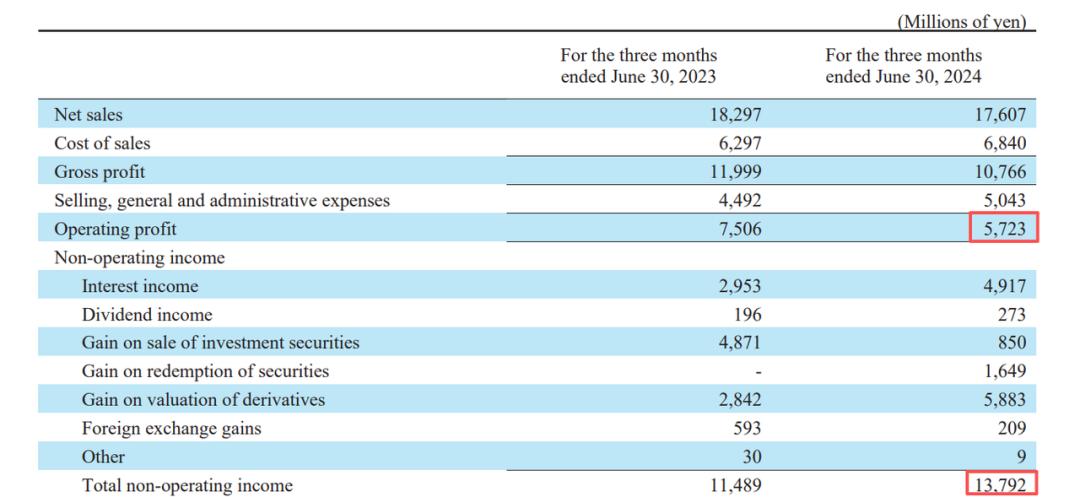
Core Insights - Koei Tecmo, co-founded by Keiko Erikawa, has revised its profit forecast for Q2 of FY2026, expecting profits to double compared to initial estimates, driven by better-than-expected game performance and a significant increase in operating profit from 8 billion yen to 17.5 billion yen [1][2]. Group 1: Financial Performance - Koei Tecmo's non-operating income reached 13.792 billion yen in Q1 FY2024, significantly higher than the operating profit of 5.723 billion yen during the same period [2][3]. - In FY2021, Koei Tecmo achieved a total profit of 39.3 billion yen, with 14.9 billion yen coming from stock sales, indicating that investment income accounted for nearly 40% of total profits [2][4]. Group 2: Investment Strategy - The company has maintained a "no debt, no loss, no layoffs" record since its establishment, attributed to Erikawa's adept stock investment skills [4][20]. - Koei Tecmo manages an investment fund of approximately 120 billion yen, allowing it to sustain operations even during periods of low game sales by using stock market gains as a buffer [4][20]. Group 3: Historical Context and Development - Koei Tecmo transitioned from dye wholesale to computer games in 1980, with its first game, "Kawanakajima no Kassen," selling around 10,000 copies, a notable achievement at the time [14][17]. - The company launched its first "otome game," "Angelique," in 1994, establishing a significant presence in the female-oriented gaming market [24][26]. Group 4: Leadership and Recognition - Keiko Erikawa has been recognized by Masayoshi Son, founder of SoftBank, as a highly respected entrepreneur and was appointed as the first external director of SoftBank Group [20][38]. - Erikawa's investment acumen has positioned her among the top female stockholders in Japan, with a personal wealth estimated at approximately 16.5 billion USD [36][38].

《三国的星空》有哪些硬伤
Hu Xiu· 2025-10-10 02:51
Core Viewpoint - The article discusses the historical inaccuracies and creative liberties taken in the animated film "The Stars of the Three Kingdoms," particularly regarding the relationship between Emperor Xian of Han and Cao Cao, which may mislead audiences about historical events [4][12][19]. Summary by Sections Historical Context - The film is based on the historical backdrop of the Three Kingdoms period, focusing on the relationship between Cao Cao and Yuan Shao, culminating in the Battle of Guandu [1]. - The narrative introduces the controversial "clothing edict" incident, where Emperor Xian allegedly issued a secret edict to assassinate Cao Cao, which is depicted in a way that suggests a close alliance between the two [4][10]. Analysis of Historical Sources - The article references key historical texts, including "Records of the Three Kingdoms," "Book of the Later Han," "Comprehensive Mirror in Aid of Governance," and "Chronicles of Huayang," to analyze the authenticity of the clothing edict [5][7]. - It highlights that while some texts suggest the edict's existence, others imply it may have been fabricated by Dong Cheng, leading to ambiguity about Emperor Xian's intentions [9][10]. Critique of the Film's Portrayal - The film's portrayal of a close friendship between Emperor Xian and Cao Cao is criticized as historically implausible, given the documented animosity and political tension between them [12][15]. - The article argues that the film's attempt to "whitewash" Cao Cao's character contradicts historical accounts of his violent actions, which have shaped his reputation as a ruthless leader [19]. Implications for Future Productions - The article warns that misrepresenting historical figures can lead to audience dissatisfaction and market rejection, suggesting that creators should approach historical narratives with caution and respect for the source material [20][19].
兴趣是最好的老师
Hu Xiu· 2025-09-10 05:47
Group 1 - The article discusses the current state of middle school education, emphasizing the importance of student interests, particularly in gaming and anime [1][2] - It highlights the conflict between parents and children regarding gaming, where parents often blame games for poor academic performance [3][4] - The author reflects on their own positive experiences with gaming and technology during childhood, suggesting that these experiences fostered a love for learning and exploration [4][6] Group 2 - The author argues that gaming and technology should not be viewed as detrimental but rather as tools for exploration and learning [8][10] - The article critiques the utilitarian mindset of many parents, who believe that every activity must have immediate educational benefits [8][10] - It emphasizes the need for parents to understand and engage with their children's interests in gaming and technology to foster a healthy relationship with these mediums [12][14] Group 3 - The author proposes strategies for parents to introduce quality gaming experiences to their children, suggesting that exposure to high-quality games can mitigate the allure of addictive mobile games [13][14] - The article discusses the importance of educating children about the gaming industry, including its economic aspects, to foster a deeper understanding and critical thinking [14][15] - It highlights the social aspect of gaming, noting that many children are drawn to games not just for entertainment but also for social interaction [16][18] Group 4 - The article concludes by addressing the broader implications of parental attitudes towards children's interests, advocating for a more supportive and understanding approach [20] - It stresses the importance of personal growth for parents in order to effectively guide their children, suggesting that parental development is crucial for fostering a positive educational environment [20]