
《可爱的中国》

Search documents
“生命是用来创造的”(人物)
Ren Min Ri Bao· 2025-12-03 22:29
Core Viewpoint - The article highlights the lifetime achievements of Qiao Zhen, an esteemed voice actor in Chinese cinema, who was awarded the China Federation of Literary and Art Circles Lifetime Achievement Award at the 38th Golden Rooster Awards, emphasizing his dedication to the art of voice acting and his philosophical approach to life and creativity [2]. Group 1: Career Highlights - Qiao Zhen graduated from Shanghai Theatre Academy in 1965 and began his career at Shanghai Film Studio, later transitioning to voice acting at Shanghai Dubbing Studio in 1970, where he has voiced over a thousand characters in a career spanning more than 60 years [2][3]. - He is known for his ability to portray diverse characters, including the sensitive officer Roy in "Brief Encounter" and the charming officer Osvaldo in "Yessenia," showcasing his versatility and dedication to each role [3]. Group 2: Artistic Philosophy - Qiao Zhen's artistic philosophy revolves around the concept of "clearing the mind and observing the way," focusing on capturing the soul of characters and achieving a deep connection with them [5]. - He believes that every live performance brings new feelings, which cannot be replicated by AI technology, emphasizing the irreplaceable nature of human expression in art [5]. Group 3: Cultural Contributions - Qiao Zhen has a profound appreciation for Chinese culture, often performing classical poetry, notably Bai Juyi's "Song of Everlasting Regret" and "Pipa Song," which he interprets with dramatic flair, creating vivid imagery and emotional depth [6]. - He has also contributed to the creation of the recitation drama "Red Proverb," which highlights the works of revolutionary figures, showcasing the power of belief and beauty through his performances [6]. Group 4: Personal Resilience - Despite facing significant health challenges, including three bouts of cancer, Qiao Zhen has demonstrated remarkable resilience, using his life experiences to enhance his artistic expression [7]. - His performances often reflect his personal struggles, adding depth and authenticity to his interpretations of classic works, such as Lu You's "Chai Tiao Feng" and Li Bai's "The Difficult Road to Shu" [7].


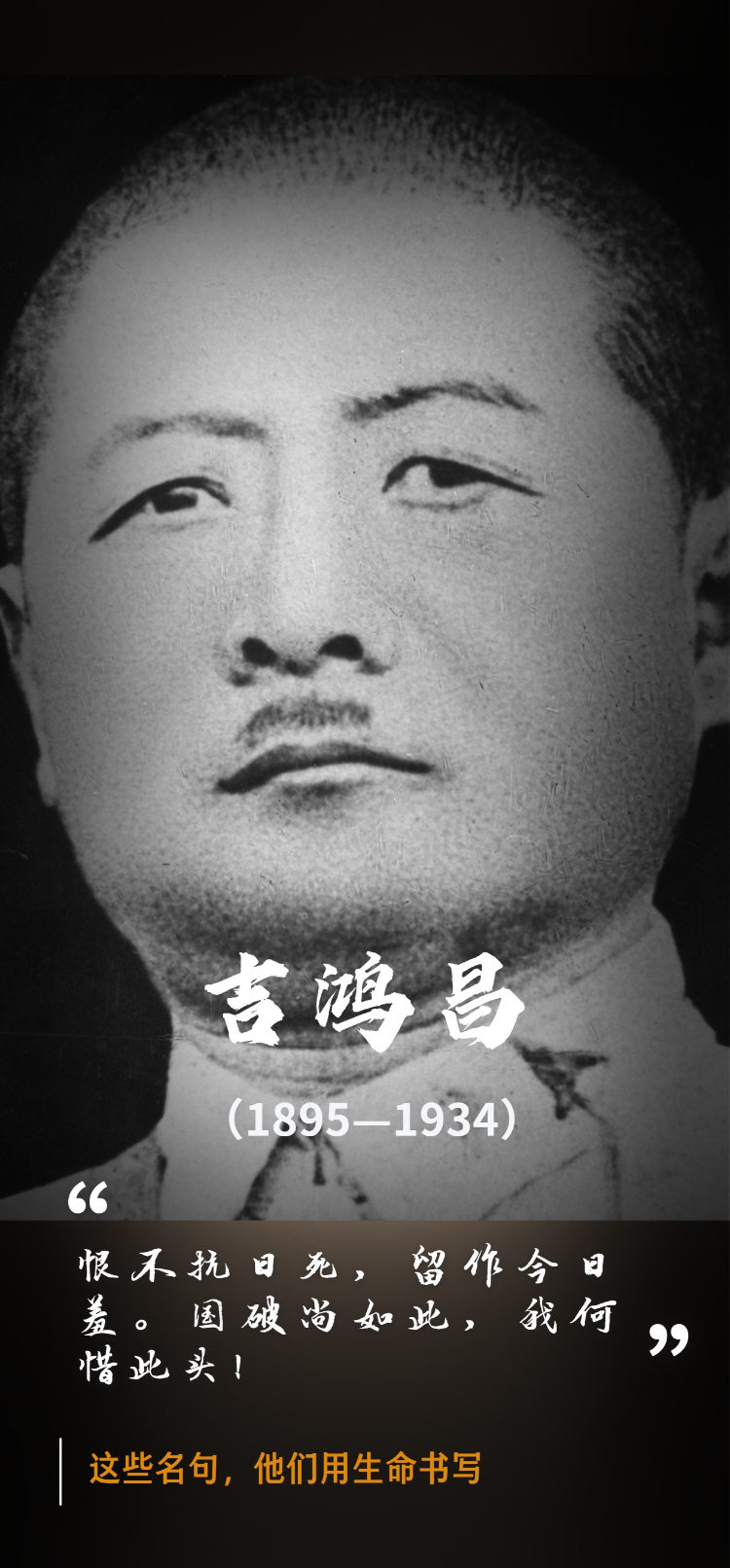
这些名句,他们用生命书写
Xin Hua Wang· 2025-09-30 02:19
Core Viewpoint - The articles commemorate the sacrifices and heroic deeds of Chinese revolutionary martyrs, highlighting their unwavering beliefs and dedication to the cause of liberation and justice [1]. Group 1: Historical Figures and Their Contributions - Ji Hongchang, a prominent anti-Japanese general and Communist Party member, expressed his patriotism through a powerful poem before his execution, emphasizing his commitment to the nation [4]. - Xia Minghan, a Communist Party member, bravely declared his dedication to the cause in a poem before being executed at the age of 28 [8]. - Zhao Yiman, a member of the Northeast Anti-Japanese United Army, wrote a heartfelt letter to her son before her execution, urging him to remember her sacrifice for the country [11]. - Fang Zhimin, a Communist leader, remained steadfast in his beliefs while imprisoned, writing influential works that reflected his commitment to communism and the struggle for justice [14]. - Ye Ting, a military leader, demonstrated courage during the encirclement by Nationalist forces and expressed his desire for freedom through his writings while imprisoned [17]. - Jiang Jie, known for her resilience against torture, continued her revolutionary work even after her husband's death, ultimately sacrificing her life at the age of 29 [19]. - Chen Ran, a young Communist martyr, maintained his loyalty to the party while enduring severe torture, ultimately being executed at the age of 26 [22].
免费的露天电影来啦!居民自己的社区“电影节”
Sou Hu Cai Jing· 2025-06-23 03:36
Core Viewpoint - The article highlights the vibrant community engagement through outdoor movie screenings in the Gumei area, emphasizing the cultural and social benefits these events bring to residents. Group 1: Community Engagement - The "Hi! Gumei" initiative provides a platform for residents to access new cultural experiences and community activities starting from April 25 [1] - Outdoor movie screenings have become a popular social event, transforming how residents interact, with conversations shifting from "Have you eaten?" to "What are we watching tonight?" [17] - The community atmosphere is enhanced by the presence of families and friends gathering to enjoy films together, fostering a sense of belonging [3][8] Group 2: Movie Experience - The screenings feature a mix of mainstream and diverse films, catering to various audience preferences, including family-friendly options and critically acclaimed titles [10] - The flexibility of the screening locations allows for quick adjustments in case of weather changes, ensuring uninterrupted cultural services [5] - Unique experiences, such as a sudden rain leading to an indoor screening, create memorable moments for attendees [8] Group 3: Cultural Impact - The outdoor movie events serve as a bridge between different generations, with older residents expressing nostalgia for classic films [12] - The integration of music and film events, such as the special screenings during the Qixi Festival, enhances cultural consumption and community life [15] - The initiative contributes to building a "15-minute cultural life circle," promoting creativity and discussion among residents [17] Group 4: Upcoming Events - The article announces upcoming outdoor movie screenings scheduled for June, inviting residents to participate and enjoy the summer nights [22] - Additionally, a drone skills competition is set to take place, showcasing the community's engagement with technology and innovation [23]

文字的力量(五洲茶亭)
Ren Min Ri Bao· 2025-06-05 22:02
Group 1 - The article emphasizes the power of words and their ability to connect individuals across time and space, highlighting their role in personal growth and cultural continuity [2][3][4] - It discusses how literature and poetry can resonate with readers, fostering a sense of identity and self-exploration, as seen in the works of various authors [4][5][6] - The text illustrates the historical significance of written language, from ancient inscriptions to modern literature, as a means of conveying wisdom and thought [3][5] Group 2 - The article reflects on the impact of literary figures and their contributions to society, showcasing how their works inspire future generations [5][6] - It mentions the importance of passing down knowledge and values through writing, as exemplified by the dedication of authors to nurture young minds [5][6] - The narrative encourages young readers to engage with literature, suggesting that their experiences with words can shape their futures and personal journeys [6]