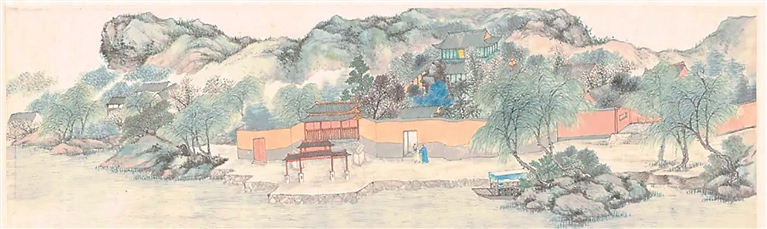
《太平御览》

Search documents
“秦淮”之名源六朝
Xin Lang Cai Jing· 2026-01-08 22:05
Core Viewpoint - The upcoming publication "New Chronicles of Qinhuai River" aims to explore the historical and cultural significance of the Qinhuai River, often referred to as the "mother river" of Nanjing, and its various names and interpretations throughout history [1]. Historical Significance - The Qinhuai River is compared to other major rivers like the Huangpu River in Shanghai and the Thames in London, serving as a natural, historical, and cultural symbol for Nanjing [1]. - The river was historically known as "Longzangpu," meaning "water that hides dragons," and has undergone various name changes over time, including "Huai Water" and "Little Jiang" during the Han Dynasty [2][3]. Name Origin - The name "Qinhuai" is believed to have originated during the Tang Dynasty, but evidence suggests it was used as early as the Six Dynasties period, as noted in historical texts [3]. - The term "Qinhuai" may be linked to legends about Qin Shi Huang, but its exact origin remains debated [2][3]. River Composition and Length - The Qinhuai River is composed of several sections, including the Jiujiang River, Lishui River, and the main stream, with a recognized length of 110 kilometers from its source to its confluence with the Yangtze River [4]. - There is a common misconception that the 110 kilometers includes all tributaries, but it specifically refers to the main river's length [4]. Cultural References - The phrase "Ten Li Qinhuai" refers to a specific segment of the river, approximately 4.5 kilometers long, celebrated for its beauty and cultural significance [5]. - Historical literary references to "Ten Li Qinhuai" can be traced back to the Southern Song Dynasty, with various poets and writers contributing to its cultural legacy [5][6]. Misconceptions - There is a misconception that the Qinhuai River was artificially created by Qin Shi Huang; however, experts confirm that most of the river is natural, with only certain sections being man-made [6].
文化中国 | 推动燕赵文化绽放时代新韵
Xin Lang Cai Jing· 2026-01-04 04:33
Core Viewpoint - The article emphasizes the importance of preserving, inheriting, and utilizing traditional Chinese culture, particularly focusing on the rich cultural heritage of Hebei province, which is integral to the Chinese civilization and national spirit [1]. Group 1: Cultural Heritage - Hebei is one of the important birthplaces of Chinese civilization, with a history that spans over two million years, showcasing a deep cultural lineage [2]. - The region's geographical position has allowed it to become a cultural corridor, fostering the integration of diverse cultural elements throughout history [2][3]. - The Great Wall and the Grand Canal are significant cultural symbols that have facilitated interaction and cultural exchange between agricultural and nomadic civilizations [3]. Group 2: Artistic Expression - The artistic and architectural imprints of Hebei reflect a blend of various cultural influences, showcasing the region's unique artistic style [4]. - Non-material cultural heritage, such as paper-cutting and traditional crafts, embodies the fusion of agricultural and nomadic artistic elements [4]. Group 3: Revolutionary Spirit - Hebei is recognized as a revolutionary land, having played a crucial role in the history of the Communist Party of China and the development of revolutionary culture [13]. - The region's revolutionary spirit is characterized by resilience and a commitment to the collective struggle for national independence and social justice [14][19]. Group 4: Cultural Development Initiatives - Hebei aims to strengthen its cultural identity by implementing various initiatives, including the protection of cultural heritage sites and the promotion of traditional arts [20][21]. - The province plans to enhance cultural tourism by integrating cultural elements into tourism development, thereby fostering a deeper connection between culture and economic growth [23].

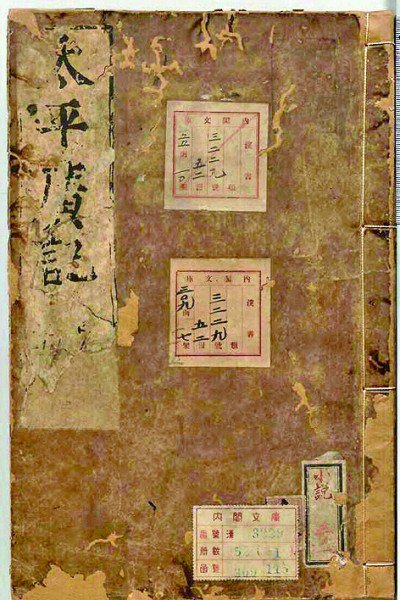
《太平广记》
Xin Lang Cai Jing· 2025-12-25 19:23
Group 1 - "Taiping Guangji" is a large anthology of ancient novels compiled during the Northern Song Dynasty, consisting of 500 volumes and categorized into 92 major categories and over 150 subcategories [7] - The book includes a significant number of supernatural stories, with 55 volumes dedicated to deities, 15 to female deities, 33 to retribution tales, 25 to gods, and 40 to ghosts [7] - Many notable works from the Six Dynasties and Tang Dynasty have been preserved through "Taiping Guangji," including famous pieces like "Li Wa Chuan," "Wu Shuang Chuan," and "Huo Xiao Yu Chuan" [7] Group 2 - The anthology has had a considerable impact on the development of Chinese novels and dramas, with storytellers in the Southern Song Dynasty already familiar with "Taiping Guangji" [7] - Various novels and dramas from the Song, Yuan, Ming, and Qing Dynasties have drawn inspiration from the stories within "Taiping Guangji" [7] - Notable evaluations of "Taiping Guangji" highlight its comprehensive collection of novels from the Six Dynasties to the early Song Dynasty, making it a valuable resource for research [8]
坚定文化自信 建设文化强国丨典籍流传 功在千秋从历劫重生到典藏全球的《四库全书》
Zhong Yang Ji Wei Guo Jia Jian Wei Wang Zhan· 2025-11-21 00:34
Core Viewpoint - The exhibition "Eternal Cultural Heritage" showcases the historical significance and cultural journey of the "Siku Quanshu" (Complete Library of the Four Treasuries), emphasizing its role in preserving Chinese civilization and its connection to national identity [3][12]. Group 1: Exhibition Overview - The exhibition is part of the 20th anniversary series of Zhejiang Province's cultural construction initiatives and is co-hosted by several cultural organizations [3]. - It features five thematic units that chronologically outline the history of the "Siku Quanshu," including its compilation, preservation during wars, and global dissemination [3]. Group 2: Historical Context - The "Siku Quanshu," completed during the Qianlong era, is recognized as the largest collection of ancient Chinese literature, comprising 34,610 titles and 79,309 volumes, with a significant portion being classified as "classical literature" [6][9]. - The project involved extensive efforts to collect and correct texts, contributing significantly to the preservation of Chinese literary heritage [6][9]. Group 3: Cultural Significance - The "Siku Quanshu" serves as a cultural summary of ancient Chinese scholarship, reflecting the intertwining of literary and national identity [7][11]. - The exhibition highlights the dedication of scholars and collectors throughout history who have worked to safeguard and restore these texts, particularly during tumultuous periods [10][11]. Group 4: Modern Implications - The ongoing publication project of the "Siku Quanshu" aims to continue the legacy of cultural preservation and enhance cultural confidence in contemporary society [12][13]. - The completed editions are now housed in various prestigious institutions worldwide, facilitating international scholarly exchange and reinforcing the global presence of Chinese culture [13].