《康熙字典》

Search documents
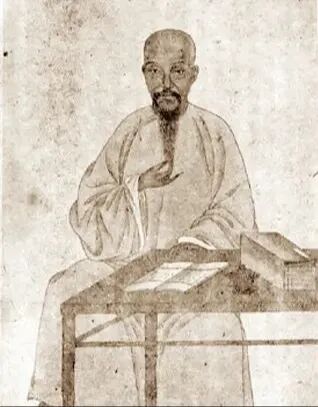
参与编纂《康熙字典》的贵州才子——周起渭
Xin Lang Cai Jing· 2026-02-17 01:43
Core Viewpoint - The article reflects on the life and contributions of the renowned poet Zhou Qiwei (also known as Zhou Yuhuang) from Guizhou during the late Ming and early Qing dynasties, highlighting his literary achievements and influence in the poetic community [1][6]. Group 1: Historical Context - Zhou Qiwei was born in 1664 in Qilong Zhai, Guizhou, and came from a family with a history of serving as local officials [3]. - His family faced a decline in power due to the Qing dynasty's policies, leading them to adapt by focusing on education and self-cultivation [1][3]. Group 2: Education and Early Achievements - Zhou Qiwei displayed exceptional intelligence from a young age, gaining recognition with his poem "Denghua Shi" at the age of fifteen and achieving the highest rank in the provincial examination at twenty-three [3]. - His education at the "Tongye Shuwu" (桐野书屋) played a significant role in shaping his literary talents [3][5]. Group 3: Literary Contributions - Zhou Qiwei's poetry often focused on themes of nature and historical reflection, inheriting the "spiritual charm" concept from Wang Shizhen, emphasizing artistic beauty and profound meaning [8][10]. - His notable works include "Wanshou Si Dazhong Ge" and "Chibi Yifeng Deng Su Gong Ting Fang Ge," which explore historical events and personal reflections, showcasing his unique insights [10]. Group 4: Legacy and Influence - Zhou Qiwei was recognized as a leader in the literary community, mentoring many talented individuals and being praised for his integrity and commitment to promoting talent [6][12]. - His contributions to the "Kangxi Dictionary" as an editor further solidified his legacy in Chinese literature, with the dictionary remaining a significant scholarly resource for over three centuries [10][12].

AI赋能古籍校对 以数字之钥开启传统文化“新生之门”
Xin Lang Cai Jing· 2026-02-01 17:16
Core Insights - The integration of AI in the proofreading of ancient texts is significantly enhancing efficiency, allowing for the collaboration of thousands of university students and volunteers [1][2] - AI serves as a "digital key" that revitalizes traditional culture, enabling the preservation and transmission of ancient wisdom in a modern context [1][2] Group 1: AI's Role in Cultural Preservation - AI is transforming the proofreading process of ancient texts like the "Yongle Dadian" and the "Kangxi Dictionary," increasing efficiency by several times compared to traditional methods [1] - The historical reliance on manual labor for ancient text organization has been improved with AI, which addresses the slow speed and errors associated with earlier computer text entry methods [1] Group 2: Human-AI Collaboration - While AI enhances efficiency, it is not infallible; experts are still needed to verify rare characters and special contexts, highlighting the importance of human oversight [1] - The collaboration between AI and humans allows individuals to focus on deeper interpretation and creative transformation of cultural content, representing an ideal state of "human-machine collaboration" [1]
江山如画 | 千册辞书,联结跨越国界的共同文脉
Zhong Guo Xin Wen Wang· 2025-11-27 01:47
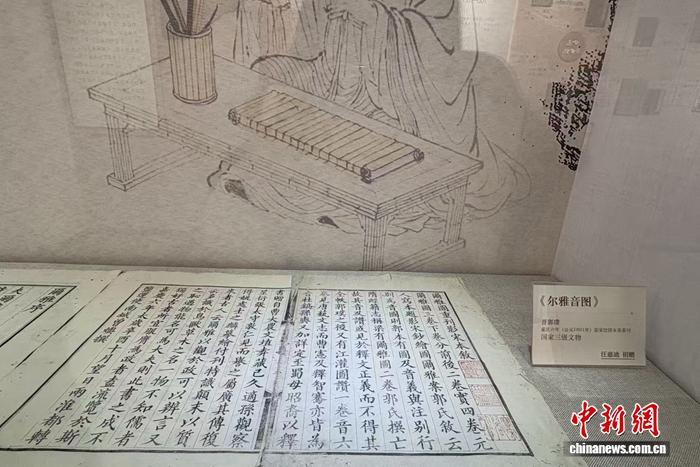
Core Insights - The establishment of the Changzhou Modern Dictionary Museum aims to preserve and promote the cultural significance of dictionaries in China, showcasing their historical and educational value [2][4]. Group 1: Museum Overview - The Changzhou Modern Dictionary Museum officially opened in November 2023 after two years of construction, covering an area of approximately 1,200 square meters [2]. - The museum features five main exhibition areas: "The Light of Dictionaries in Civilization," "A Grand View of New China Dictionaries," "Life Imprints in Dictionaries," "Dictionaries in Life," and "Changzhou's Connection to Dictionaries," systematically presenting the development and cultural value of dictionaries [2]. Group 2: Donations and Collections - To date, 32 publishing and research institutions, along with 40 individuals, have donated nearly 1,000 types of dictionaries, totaling over 3,000 volumes, ranging from the late Qing Dynasty to the early 21st century [4]. - The collection includes all versions of the "Xinhua Dictionary," the first independently compiled large-scale English-Chinese dictionary "English-Chinese Dictionary," and rare editions such as the stone-printed version of "Kangxi Dictionary" from the Guangxu era [4]. Group 3: Cultural Significance - The museum reflects the long-standing connection between Changzhou and dictionaries, emphasizing the importance of dictionaries in the transmission of traditional Chinese culture, as highlighted by Lu Erkui, the first editor of "Ciyuan," who was born in Changzhou [5]. - Future plans include enhancing the collection and preservation of dictionaries, as well as conducting research, exchanges, and training to encourage public engagement with dictionaries [5].