《悠悠岁月》

Search documents
2025年诺贝尔文学奖,揭晓!
Jing Ji Guan Cha Bao· 2025-10-10 02:23
Core Points - The 2025 Nobel Prize in Literature is awarded to Hungarian writer László Krasznahorkai for his compelling and visionary work that reaffirms the power of art against a backdrop of apocalyptic terror [1] Group 1: Award Details - The award comes with a prize of 11 million Swedish Krona [1] - László Krasznahorkai was born on January 5, 1954, in Hungary [1] - His debut work, "Satan's Tango," published in 1985, gained him significant acclaim and was later adapted into a 7-hour epic film in collaboration with Hungarian director Béla Tarr [1] Group 2: Notable Works and Achievements - Krasznahorkai's major works include "War and War" and "The Melancholy of Resistance" [1] - He received the International Booker Prize in 2015 [1] - The article also lists previous Nobel Prize winners from the last five years, highlighting their contributions and notable works [2][3]
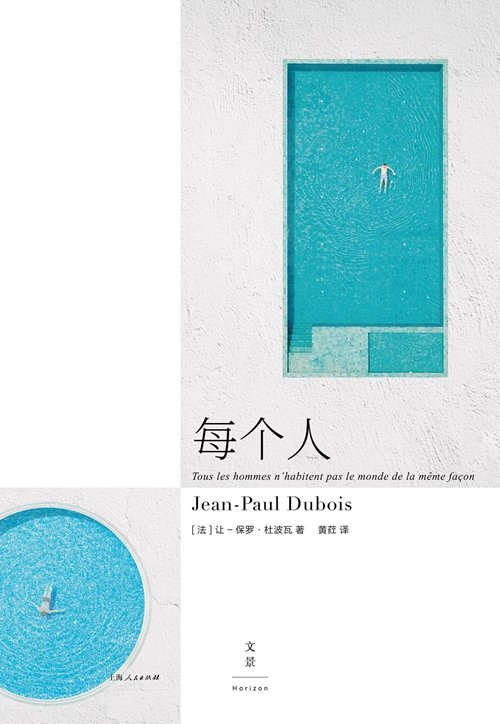
让-保罗·杜波瓦:在最后,命运的虚无将我们啮尽
Xin Lang Cai Jing· 2025-06-12 12:44
Core Viewpoint - Jean-Paul Dubois won the prestigious Prix Goncourt in 2019 for his novel "Everyone," which reflects on themes of division and personal history through the life of the protagonist, Paul Hansen, a Franco-Canadian man navigating his dual heritage and experiences in both France and Canada [1][5][6]. Group 1: Author Background - Before becoming a novelist, Dubois worked as a journalist in various fields including sports, courts, and cinema, and has a background in sociology [3]. - His experiences living in North America for fifteen years as a journalist for "Le Nouvel Observateur" influenced his early writings, which were collections of essays about that period [3][17]. Group 2: Novel's Themes and Characters - The protagonist, Paul Hansen, is depicted as a product of two contrasting worlds: the revolutionary atmosphere of 1950s France and the industrialized environment of Thetford Mines in Canada [5][10]. - The narrative explores the theme of division, stemming from Hansen's upbringing in a family torn apart by differing values, particularly between his traditional father and avant-garde mother [6][10]. - The novel portrays Hansen's life in prison, where he reflects on his past and the impact of his family dynamics on his identity [5][11]. Group 3: Societal Commentary - Dubois critiques the modern world through Hansen's experiences, illustrating how individuals with traditional values struggle to adapt to a rapidly changing society [14][15]. - The narrative suggests a sense of nihilism, where both the old and new worlds fail to provide solace or improvement, leading to a pervasive sense of despair [15][20]. - The character's journey reflects a broader commentary on the human condition, emphasizing the struggle against authority and the search for personal meaning in a fragmented world [17][22].