《成都》

Search documents
嘉禾望岗 照见城市情感空间的意义
Xin Lang Cai Jing· 2026-02-05 20:15
Core Insights - The song "Jiahe Wanggang" has gained widespread popularity, highlighting the emotional connection people have with urban spaces, particularly the Jiahe Wanggang subway station in Guangzhou, which serves as a significant transportation hub [1] - The increasing urbanization in China, projected to have 67.89% of the population living in urban areas by 2025, enhances the demand for emotional resonance and shared memories among city dwellers [1] Group 1 - The emotional needs of individuals are becoming more pronounced as they seek meaningful connections in urban environments, which can manifest through various forms such as songs, landmarks, and cultural experiences [1] - The rise of "emotional consumption" and "happy economy" reflects a shift in consumer demands towards emotional resonance, scene-based consumption, and cultural identity, impacting various sectors including toys, pets, health, and entertainment [2] - Cities are now required to address emotional needs and create spaces that resonate with citizens, as competition among cities increasingly hinges on emotional appeal and spiritual engagement rather than solely on economic metrics [2] Group 2 - Emotional spaces in cities, such as community areas and transformed industrial zones, contribute to a "network of emotions" that enrich urban life, providing warmth, memory, and storytelling [2] - The enhancement of spiritual life and the pursuit of emotional fulfillment are essential goals for human development, necessitating more emotional spaces in cities for relaxation and healing [2]
广州如何接住《嘉禾望岗》流量
21世纪经济报道· 2026-02-01 14:00
Core Viewpoint - The song "Jiahe Wanggang" has become a cultural symbol for Guangzhou, resonating deeply with the emotions of young residents and reflecting their experiences of struggle, farewell, and hope [1][2][6]. Group 1: Song Impact and Emotional Resonance - The song "Jiahe Wanggang," performed by Hai Lai A Mu and composed by Wu Huan, has quickly gained popularity, becoming an emotional symbol for many young people in Guangzhou [1]. - The song's release coincided with the end of the year, tapping into feelings of nostalgia and anticipation for reunions, transforming a transportation hub into an emotional landmark [2]. - The song has sparked a significant increase in online searches, with a fivefold rise in keyword searches on Baidu, particularly among young adults aged 20-39 [5][6]. Group 2: Urban Significance of Jiahe Wanggang Station - Jiahe Wanggang Station is a crucial transportation hub in Guangzhou, serving as a key interchange for multiple metro lines and connecting major transport portals like the airport and train station [5]. - The station consistently ranks among the top in daily passenger volume, with an average of 326,100 passengers, peaking at 434,000 during the National Day holiday [5]. - The station's significance is further highlighted by its role as a starting point for many young people moving to Guangzhou, encapsulating their journeys and experiences [8]. Group 3: Cultural and Economic Opportunities - The success of "Jiahe Wanggang" presents an opportunity for Guangzhou to enhance its cultural identity and attract talent, as the city ranks fourth in talent attraction among major cities in China [8]. - The song has the potential to evolve into a cultural IP, leading to the development of related stories, creative products, and tourism routes, thereby creating sustainable brand assets for the city [11]. - Suggestions include creating immersive emotional experiences at the station and utilizing technology to deepen the connection between physical spaces and emotional memories [11][12].


2026成都新年音乐会奏响
Xin Lang Cai Jing· 2025-12-29 19:18
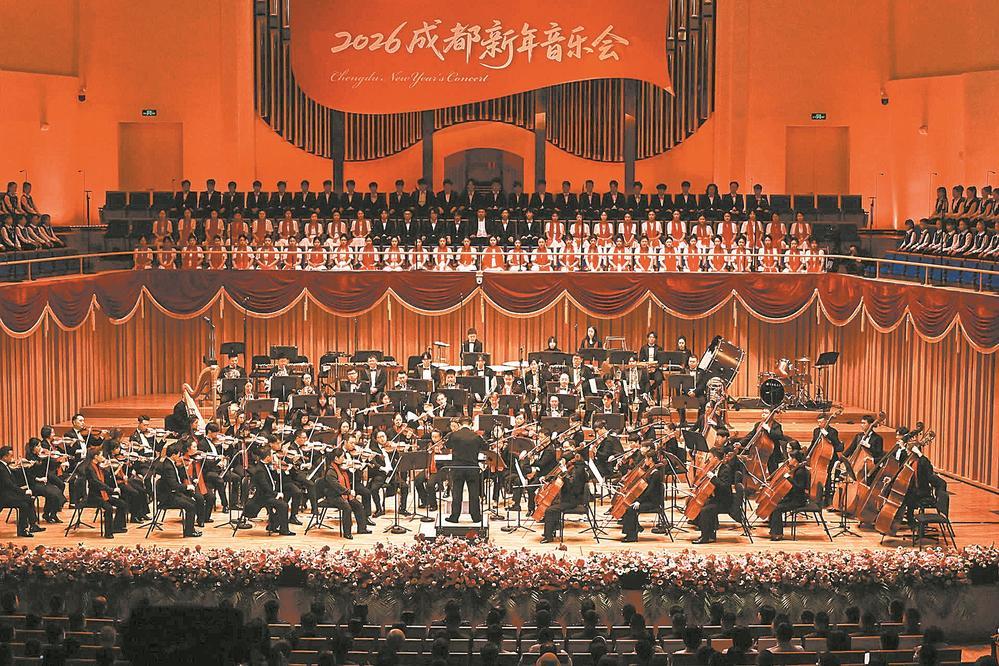
Core Viewpoint - The 2026 Chengdu New Year Concert serves as a cultural celebration, showcasing the city's development and honoring its citizens' contributions through a vibrant musical experience [1][2]. Group 1: Event Overview - The concert took place on December 29, 2025, at the Chengdu City Music Hall, marking a significant cultural event in the city [1]. - The theme of the concert was "Vibrant Chengdu, Multitude of Sceneries," emphasizing innovation, creativity, vitality, and warmth [2]. - The event featured 14 classical and original pieces, starting with the symphonic work "Glory and Dreams," symbolizing the journey towards bright aspirations [2][3]. Group 2: Audience Engagement - The concert attracted representatives from various sectors, including military, education, and healthcare, alongside local citizens, fostering a sense of community [2]. - Attendees expressed their enjoyment and the growing tradition of participating in the New Year concert as a way to welcome the new year [2][5]. Group 3: Musical Highlights - The concert included renowned pieces such as "The Blue Danube," "Carmen Fantasy," and "The Yellow River" piano concerto, showcasing a blend of international classics and local compositions [3][4]. - The performance concluded with the popular songs "Chengdu" and "Radetzky March," leaving the audience with a sense of fulfillment and joy [4].
全网模仿马頔,但没人再听《南山南》
3 6 Ke· 2025-05-20 00:55
Core Viewpoint - The popularity of folk music, exemplified by artists like Ma Di, is declining as audiences shift towards short video music trends, leading to a diminished interest in traditional folk songs like "Nan Shan Nan" [1][5][11]. Group 1: Evolution of Folk Music - Folk music experienced a resurgence around 2020, particularly through shows like "The Summer of Bands," but has since returned to obscurity [6]. - The first generation of folk musicians, such as Lao Lang and Xiao Ke, created a collective memory through their campus folk songs, which resonated with themes of youth and freedom [8]. - The rise of the internet has transformed how folk music is consumed, with many contemporary folk songs gaining popularity through covers and social media [10]. Group 2: Current Trends and Challenges - Contemporary folk artists are increasingly distancing themselves from the genre, seeking creative freedom and expressing dissatisfaction with repetitive themes in folk music [11][13]. - The audience for folk music has shifted, with many former listeners now favoring short, catchy songs that dominate social media platforms [13][15]. - Compared to rock music, which has evolved and diversified, folk music struggles to maintain relevance in a rapidly changing musical landscape [13].

民谣不火了,是因为「爷们儿要脸」吗?
36氪· 2025-05-12 13:07
Core Viewpoint - The article discusses the evolution and current state of the Chinese folk music scene, particularly focusing on the impact of popular songs like "South of the South" and the artists behind them, highlighting the tension between artistic integrity and commercial success [4][11][20]. Group 1: Popularity of Folk Music - The peak popularity of folk music occurred between 2013 and 2017, largely due to the "Folk Music Three Illusions" represented by songs like "South of the South" [6][14]. - The rise of folk music was significantly influenced by television shows, with "South of the South" gaining fame through performances on "The Voice of China" [8][11]. - Folk music's mainstream success has led to a perception that it lacks depth, with artists like Ma Di expressing discomfort with their most popular works [11][19]. Group 2: The Dichotomy of Folk Music - The article contrasts the concepts of "circulation" and "popularity" in folk music, suggesting that while folk music has become popular, it may not reflect the true essence of the genre [12][13]. - Artists like Ma Di and Zhao Lei have moved away from their earlier hits, seeking to create music that resonates more deeply with their artistic values rather than commercial trends [20][19]. - The influx of new artists into the folk scene has led to a proliferation of songs that mimic earlier hits, further complicating the genre's evolution [18][19]. Group 3: Challenges Facing Folk Music - The article notes that while folk music has enjoyed periods of popularity, it faces challenges in maintaining relevance against genres like rock and rap, which have seen a resurgence [24][25]. - The technical aspects of folk music are often criticized, with the genre perceived as easier to produce compared to rock or rap, leading to a decline in its artistic credibility [27][29]. - Despite efforts to revitalize folk music through various platforms, such as the "Our Folk Music" show, the genre struggles to capture the same audience engagement as other music styles [26][30].