《战马》

Search documents
奔马之上,生命向前——关于力量、美与新年的祈愿
经济观察报· 2026-02-17 01:26
Core Viewpoint - The article explores the multifaceted symbolism of horses in Chinese culture, representing both heroism and sacrifice, and reflects on the resilience and harsh realities of life through the lens of historical and contemporary narratives [5][17]. Historical Significance of Horses - Horses have played a crucial role in expanding human physical boundaries and supporting political power throughout Chinese history, as evidenced by their frequent mention in ancient texts like the "Book of Songs" [6]. - The depiction of horses evolved from symbols of labor and hardship in early literature to representations of valor and grandeur during the Tang Dynasty, highlighting their strategic importance in warfare [6][8]. Cultural Narratives - In traditional narratives, horses are inseparable from heroes, embodying loyalty and bravery, as seen in historical figures like Guan Yu and Zhang Fei [7]. - The artistic representation of horses in stone carvings and paintings reflects their status as symbols of military might and national pride, particularly during the Han and Tang dynasties [8][9]. Modern Interpretations - Contemporary portrayals of horses, such as in Xu Beihong's works, integrate Western artistic techniques, emphasizing the spirit of resilience and national identity during times of crisis [9]. - The film "War Horse" by Spielberg presents a narrative that transcends the battlefield, focusing on the emotional bond between humans and horses amidst the horrors of war [12][13]. Realities of Life - Documentaries like "Weather on the Mongolian Steppe" depict the harsh realities faced by individuals in rural settings, where horses are seen as essential to survival rather than symbols of glory [14]. - The tragic story of a young girl named Puje illustrates the burdens of life in a pastoral society, where the loss of horses can have devastating consequences for families [14][16]. Conclusion - The article concludes with a reflection on the enduring significance of horses in both myth and reality, urging a recognition of the struggles and aspirations of individuals in contemporary society [19][20].

奔马之上,生命向前——关于力量、美与新年的祈愿
Jing Ji Guan Cha Bao· 2026-02-16 08:07
Core Perspective - The article reflects on the symbolic significance of horses in Chinese culture, representing both strength and sacrifice, and emphasizes the duality of their roles as heroes and victims throughout history [1][2][3]. Historical Context - The history of Chinese civilization is intertwined with the horse, which expanded human physical boundaries and supported political power [3]. - In ancient poetry, horses are depicted as both companions in battle and symbols of human suffering, illustrating the burdens they carried [3][4]. Cultural Significance - The reverence for horses is embedded in numerous Chinese idioms and literary narratives, linking them to heroism and warfare [4]. - Artistic representations of horses in stone carvings and paintings reflect their importance in military and cultural contexts, showcasing their strength and the emotional bonds between humans and horses [5][6]. Modern Interpretations - In contemporary art, horses are portrayed in various forms, including films that explore the emotional connections between humans and horses, such as Spielberg's "War Horse," which presents a narrative of hope amidst the horrors of war [10][11]. - Documentaries like "Mongolian Grassland Weather" provide a stark contrast, depicting the harsh realities of life where horses are seen as essential to survival rather than symbols of glory [14][15]. Symbolism of Sacrifice - The myth of the "Silkworm Horse" illustrates the theme of sacrifice, where the horse becomes a guardian through emotional bonds, highlighting the often-overlooked narratives of loss and devotion [7][9]. - The tragic story of a young girl and her horse emphasizes the sacrifices made in rural life, reflecting the deeper, often painful realities behind the romanticized image of horses [16][18]. Conclusion and Reflection - The article concludes with a call for resilience and courage in facing life's challenges, drawing parallels between the enduring spirit of horses and the human experience [25][26][28].
英媒:不要把童年创伤留在“记忆阁楼”
Huan Qiu Shi Bao· 2025-11-03 23:01
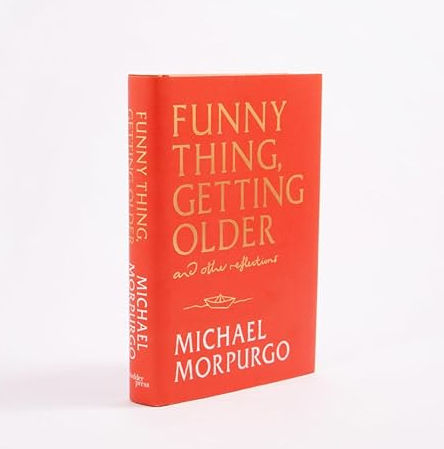
Core Viewpoint - The article discusses the life and reflections of British children's author Michael Morpurgo, who has recently published a collection of essays and poems titled "It's Fun to Get Old," exploring themes of childhood, nature, writing, peace, war, and aging [1]. Group 1: Personal Background - Michael Morpurgo was born in 1943 and has authored nearly 150 works, including the novel "War Horse," which was adapted into a film by Steven Spielberg [1]. - Morpurgo's childhood was marked by challenges, including living in a lower-middle-class family and experiencing his parents' divorce, which led to feelings of insecurity and a desire for approval from his stepfather [3][4]. Group 2: Literary Journey - Morpurgo describes his new book as a non-chronological collection of life experiences, aiming to present a more objective narrative compared to his previous autobiographical works [3]. - He emphasizes that all his books have autobiographical elements, with nine of his characters named Michael, reflecting his personal experiences [3]. Group 3: Reflections on Life and Writing - Morpurgo believes storytelling has been a refuge throughout his life, despite the often sad themes in his works, which children can accept [3]. - He acknowledges the impact of his childhood traumas but has chosen to focus on positive memories, stating that everyone is, in some way, affected by their childhood [4].