《森林之歌》

Search documents
贵阳交响乐团奏响2026新年音乐会
Xin Lang Cai Jing· 2026-01-01 19:47
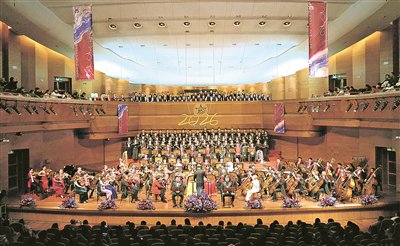
Group 1 - The 2026 New Year Concert by the Guiyang Symphony Orchestra will take place on December 31, 2025, at the Guiyang Grand Theatre [2] - The concert will be conducted by Zhang Guoyong and feature soloists including soprano Gong Shuang, tenor Wang Chuan, and bass Guan Zhijing, along with choirs from Xi'an Symphony Orchestra, Northwest Minzu University, and Shuo Guo·Yi Ming Choir [2] - The concert program includes significant works such as Shostakovich's "Festive Overture," the milestone Chinese art song "Three Wishes of the Rose," and Rossini's humorous aria "Largo al Factotum" [2] Group 2 - The second half of the concert will feature a seven-movement cantata "Song of the Forest," composed by Shostakovich in 1949, depicting the theme of harmony between humans and nature [2] - The concert aims to celebrate the festive spirit and attracted over 1,200 attendees [2]

用交响乐开启新年仪式感 贵阳交响乐团奏响2026新年音乐会
Xin Lang Cai Jing· 2026-01-01 07:30
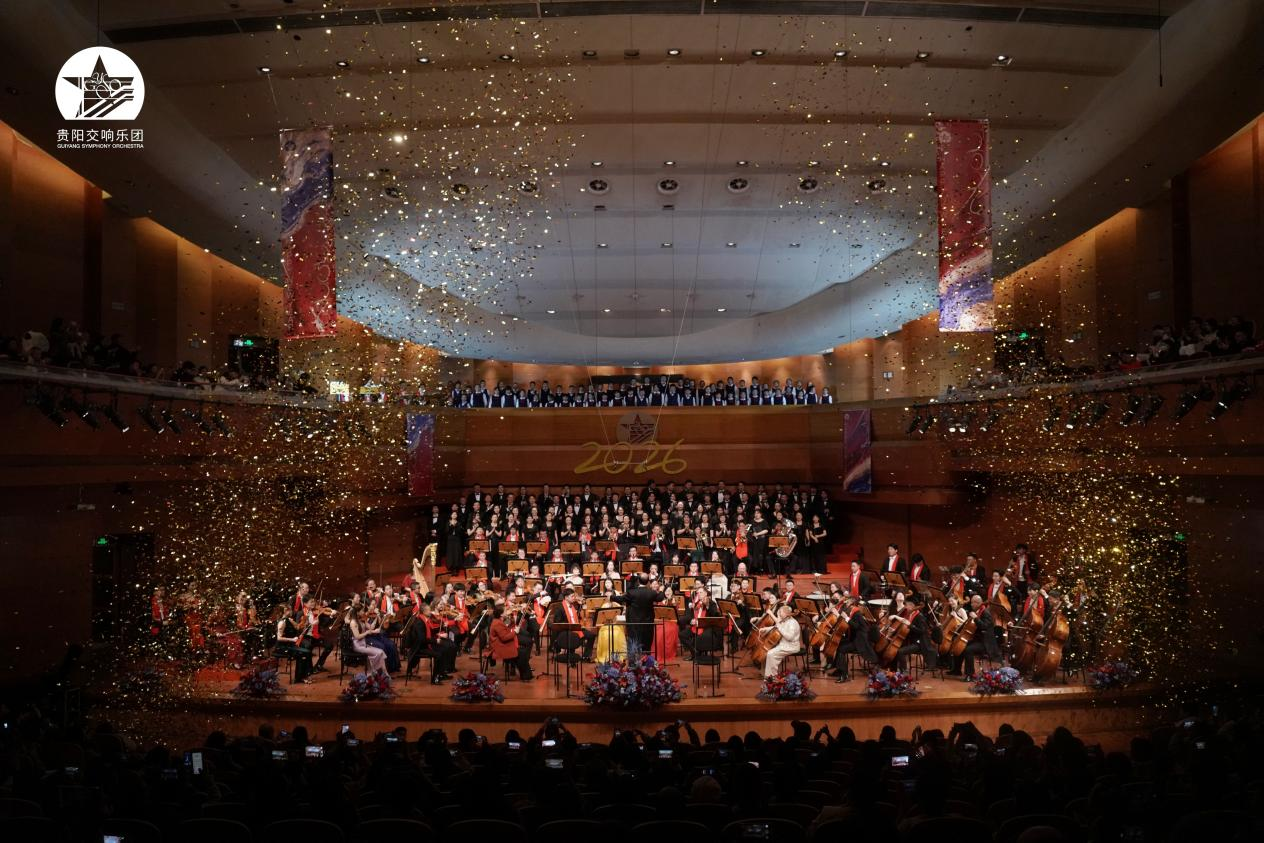
Group 1 - The Guiyang Symphony Orchestra's New Year concert on January 1, 2026, was a full house, creating an unforgettable moment for the audience in the "City of Music" [1] - The concert was conducted by the renowned conductor Zhang Guoyong, featuring famous singers Gong Shuang, Wang Chuan, and Guan Zhijing, who performed several classic music pieces from both Eastern and Western traditions [3] - The second half of the concert included a collaboration with the Xi'an Symphony Orchestra Choir, Northwest Minzu University Choir, and Shuo Guo Yi Ming Choir, performing Shostakovich's cantata "The Song of the Forest," which immersed the audience in the charm of classical music [3] Group 2 - Audience members expressed their enjoyment, with one local resident mentioning it was their family's second consecutive year attending the concert, while a visitor from outside the province highlighted the orchestra's reputation and described the experience as a memorable New Year celebration [10]
以“形式美”装饰生活(深观察)
Ren Min Ri Bao Hai Wai Ban· 2025-11-19 23:09
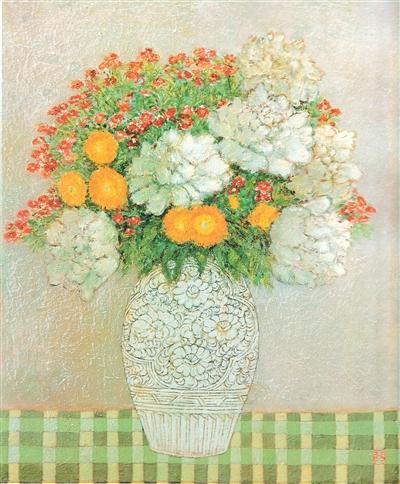
Core Viewpoint - The exhibition "People's 'Form': The Artistic Journey of Tsinghua University Academy of Fine Arts" showcases the evolution of art at Tsinghua University, highlighting the contributions of several generations of artists who blend traditional and modern elements to serve the aesthetic needs of the people [2][4][11]. Group 1: Exhibition Overview - The exhibition features 103 artworks and 163 sets of documents, illustrating the artistic lineage of Tsinghua University Academy of Fine Arts, formerly known as Central Academy of Arts and Crafts [2]. - It aims to trace the development of 20th-century Chinese design and art, reflecting on how artists have integrated beauty into national destiny and daily life [4][9]. Group 2: Artistic Contributions - Artists like Pang Xunqin, Lei Guiyuan, Zhang Guangyu, and Zhang Di have played pivotal roles in innovating art forms that resonate with the social transformations in China [4][5]. - Pang Xunqin's works, such as the watercolor "Son of the Earth," depict the struggles of rural life, while his later oil painting "Bottle Flower" merges Western techniques with Eastern aesthetics [5]. - Zhang Guangyu draws inspiration from folk art, creating modern interpretations of traditional stories, exemplified by his design drafts for the animated film "Havoc in Heaven" [5][6]. Group 3: Cultural Exploration - The artists' journeys into various regions of China have led to the creation of vibrant works that reflect the diversity of Chinese culture [6][10]. - Zhang Di's works, such as "Cangshan Pastoral Song," showcase a blend of Western modern art and traditional Chinese styles, emphasizing a new direction for Chinese painting [6][10]. Group 4: Artistic Philosophy - The exhibition embodies the philosophy of "Kite Without a String," representing the continuous exploration of artistic forms while maintaining a connection to cultural and social realities [7]. - The concept of "People's Form" emphasizes the role of art in addressing societal needs and enhancing the quality of life, echoing the ideals of Cai Yuanpei's "art education for national salvation" [4][11]. Group 5: Public Art Initiatives - The mural group at Beijing Capital International Airport, created in 1979, exemplifies the integration of art into public spaces, showcasing themes of national identity and cultural heritage [10]. - The designs reflect a commitment to serving the public through art, illustrating the aspiration for a beautiful life among the people [10][11].