
《沁园春·长沙》

Search documents
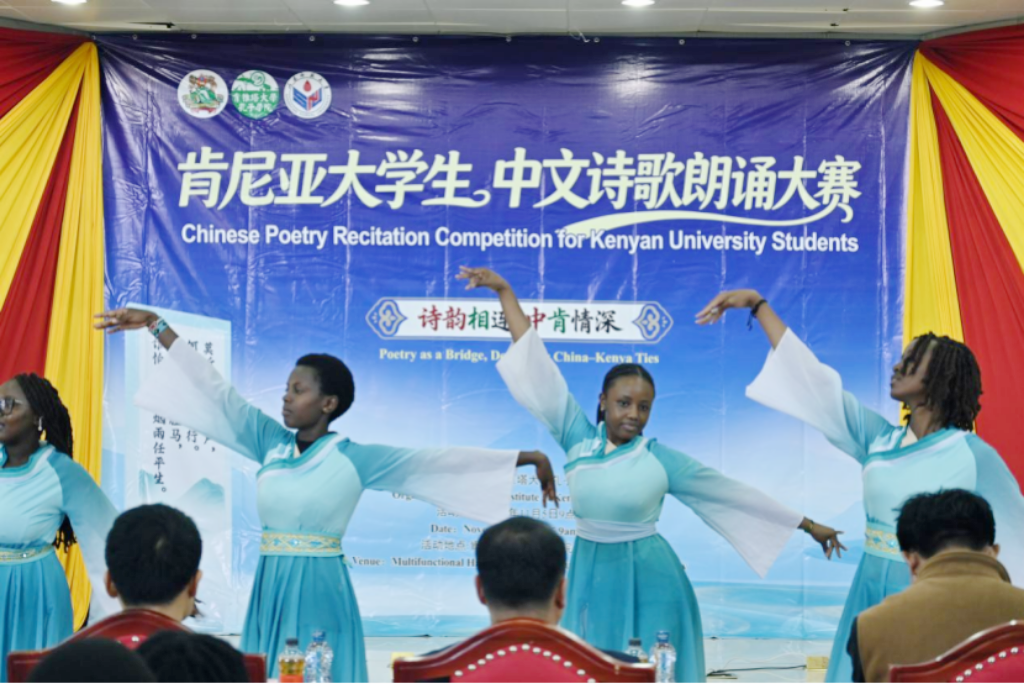
首届肯尼亚大学生中文诗歌朗诵比赛举行
人民网-国际频道 原创稿· 2025-11-07 08:00
Group 1 - The first Chinese poetry recitation competition for Kenyan university students was held at Kenyatta University Confucius Institute on November 5 [1] - Leonard Chacha, the foreign director of the Confucius Institute, emphasized the importance of Chinese as a "golden key" for youth to access a broader world and build cultural bridges [2] - The competition featured various classic and modern poems, showcasing the cultural connection between Kenya and China, with Gloria Nyondo Gicheki from Kenyatta University winning the championship for her rendition of "Qinyuan Chun·Changsha" [2] Group 2 - The event was described as not only a competition of language skills but also a cultural dialogue facilitated through poetry, highlighting the emotional connection and understanding conveyed by the participants [2]

毛泽东诗绘如画江山
Ren Min Wang· 2025-08-07 01:11
Core Viewpoint - The articles explore Mao Zedong's deep appreciation for nature, particularly mountains and rivers, reflecting his emotional connection to the landscapes of China and how these elements influenced his poetry and political thoughts [1][2][3][4][5]. Group 1: Appreciation of Nature - Mao Zedong's hometown, Shaoshan, is described as a beautiful landscape that shaped his sensitivity to natural beauty [1]. - His poetry often features vivid imagery of both mountains and rivers, showcasing his dual love for these elements [2]. - The natural scenery serves as a backdrop to significant historical events in Mao's life, illustrating the intertwining of his personal experiences with the broader narrative of China's revolutionary struggle [3]. Group 2: Political and Cultural Reflections - Mao's poetry transitioned from depicting the struggles of old China to celebrating the achievements of the new China, reflecting the transformation of the nation [4]. - His works convey a sense of hope and renewal, emphasizing the importance of the younger generation in continuing the revolutionary spirit [5]. - The imagery in his poetry often serves to express his political ideals and philosophical reflections, demonstrating how nature can symbolize broader societal themes [5].