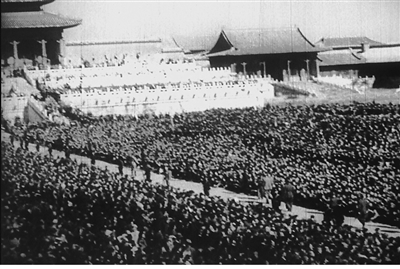
《燃烧的影像》

Search documents
当抗战纪录片拨动年轻人心弦(艺海观澜)
Ren Min Ri Bao· 2025-11-27 22:30
Core Viewpoint - The documentary "Mountains and Rivers as Evidence" has unexpectedly resonated with the youth, highlighting the importance of connecting historical narratives with contemporary values and ensuring the transmission of the spirit of resistance through generations [1] Group 1: Impact on Youth - Young audiences are increasingly engaged with anti-Japanese war documentaries, realizing the depth of sacrifice behind historical events [1] - The fragmented understanding of history among the youth necessitates a more immersive and emotional storytelling approach [2] Group 2: Narrative Techniques - New documentaries focus on micro-narratives that highlight the fates and resilience of heroes, ordinary soldiers, and civilians, making historical accounts more relatable and emotionally impactful [2] - The use of personal letters and stories, such as General Zuo Quan's letters to his family, adds a human touch to the historical narrative [2] Group 3: Technological Advancements - Documentaries are leveraging advanced technologies like CG reconstruction, digital HD, and AI restoration to enhance viewer experience and bring historical figures back to life [3] - The restoration of 13,000 frames from endangered films using 4K technology allows for a vivid portrayal of historical events, creating a dual memory of macro and micro perspectives [3] Group 4: Generational Transmission - The Z generation is embracing innovative storytelling methods to carry forward the spirit of resistance, using social media and new media technologies to engage with history [4] - The transformation of historical records into documentaries reflects a shift in how memories are preserved and shared, ensuring that the spirit of bravery and resilience continues to inspire future generations [4]
燃烧的影像 不灭的记忆(抗战文艺作品巡礼)
Ren Min Ri Bao· 2025-07-03 00:31
Core Viewpoint - The documentary "Burning Images" serves as a powerful visual narrative of the Chinese people's struggle during the Anti-Japanese War, highlighting the importance of preserving historical memories through film [4][8]. Group 1: Historical Context - The Anti-Japanese War lasted from 1931 to 1945, resulting in over 35 million casualties in China, marking a significant awakening of the Chinese nation [3]. - The documentary includes footage from various stages of the war, capturing key events and figures, and aims to evoke deep emotional responses from viewers [3][5]. Group 2: Documentary Production - The China Film Archive digitized and organized over 500 wartime documentaries, ultimately producing "Burning Images" from 284 films, which includes more than 133,000 frames [4][6]. - The production team consisted of over 100 members, including historians and experts, who meticulously verified the accuracy of each frame, likening their work to archaeological research [6][7]. Group 3: Impact and Reception - Since its release in 2015, "Burning Images" has been screened across various venues, resonating with audiences and serving as a historical testament [4][8]. - The documentary not only reflects on the past but also serves as a reminder of the importance of peace and the lessons learned from history [8].